View methods side by side.
Choose up to four methods. Add them using the search and share the comparison by copying its link.
| Criterion | 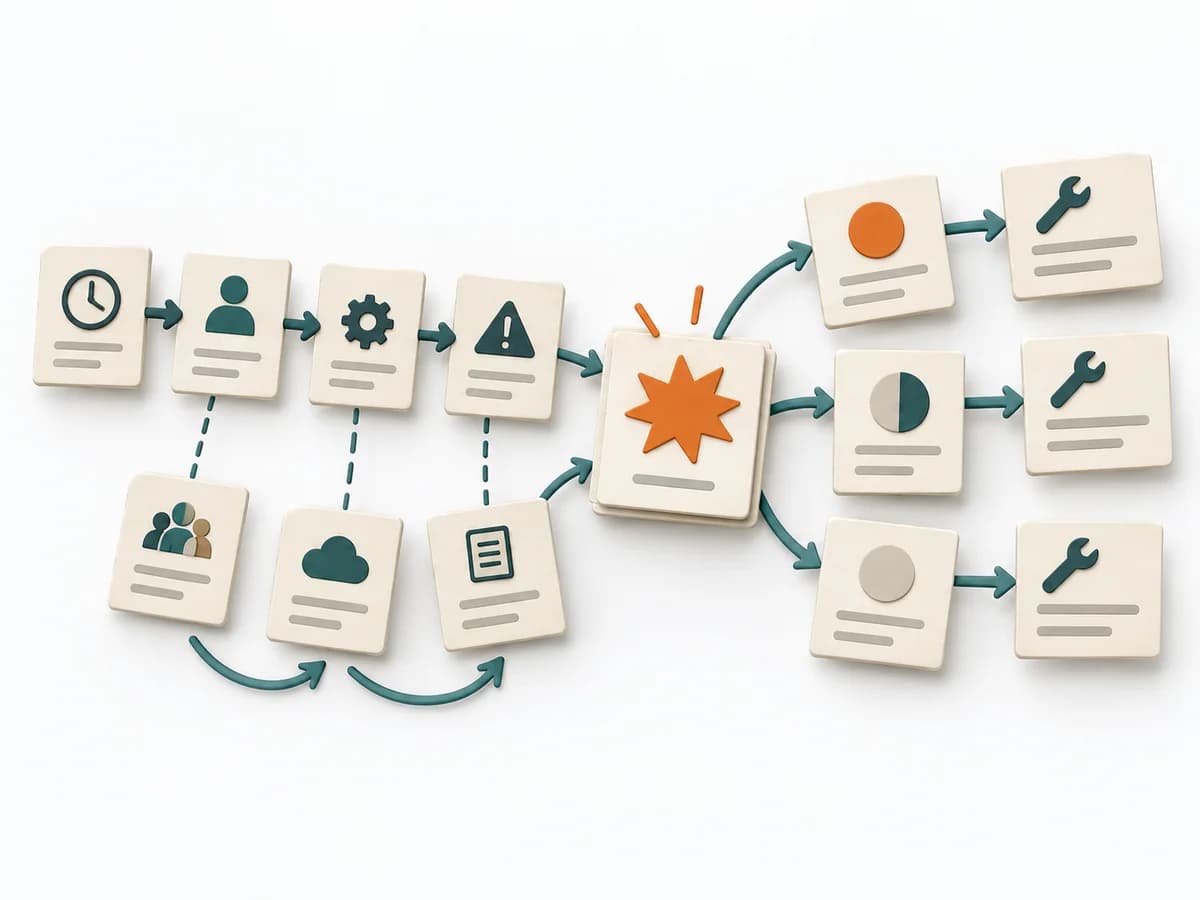 Operations Causal Factor Analysis |  Facilitation Dot Voting |  Facilitation Nominal Group Technique |  Operations Barrier Analysis |
|---|---|---|---|---|
Purposedifferent | For an event with a complicated course, the method breaks down the contributing factors along the timeline. It shows how conditions, decisions, and reactions together produce a course of events. | When a workshop has produced too many options and the group needs to condense quickly, dot voting makes preferences visible in a short time. It bundles individual votes into a solid signal for the next selection. | When loud voices could dominate a round, Nominal Group Technique protects individual thinking time from group effects. It collects ideas separately first and only then enables shared weighting. | For a risk that can only be managed through multiple layers of protection, the method examines the effectiveness of each barrier. It shows where safeguards are missing, too weak, or fail under real conditions. |
Complexitydifferent | High | Low | Medium | Medium |
Timedifferent | 2-6 h | 5-15 min | 60-120 min | 2-4 h |
Participantsdifferent | 3-10 | 3-20 | 5-12 | 2-6 |
Formatdifferent | Workshop + async | Workshop | Workshop | Workshop + async |
Outputdifferent | Event Timeline, Causal Factor Chart, Cause List, Corrective Actions | Ranked list, Consensus signal, Shortlist | Ranked Ideas, Clarified Options, Group Priority | Barrier Inventory, Failure Analysis per Barrier, Action Backlog |
Tagsno overlap | CausalityIncidentRoot causeTimeline | FacilitationVotingConsensusPrioritization | FacilitationPrioritizationVotingInclusion | Root causeSafetyIncident |