View methods side by side.
Choose up to four methods. Add them using the search and share the comparison by copying its link.
| Criterion |  Systems Thinking CATWOE Analysis | 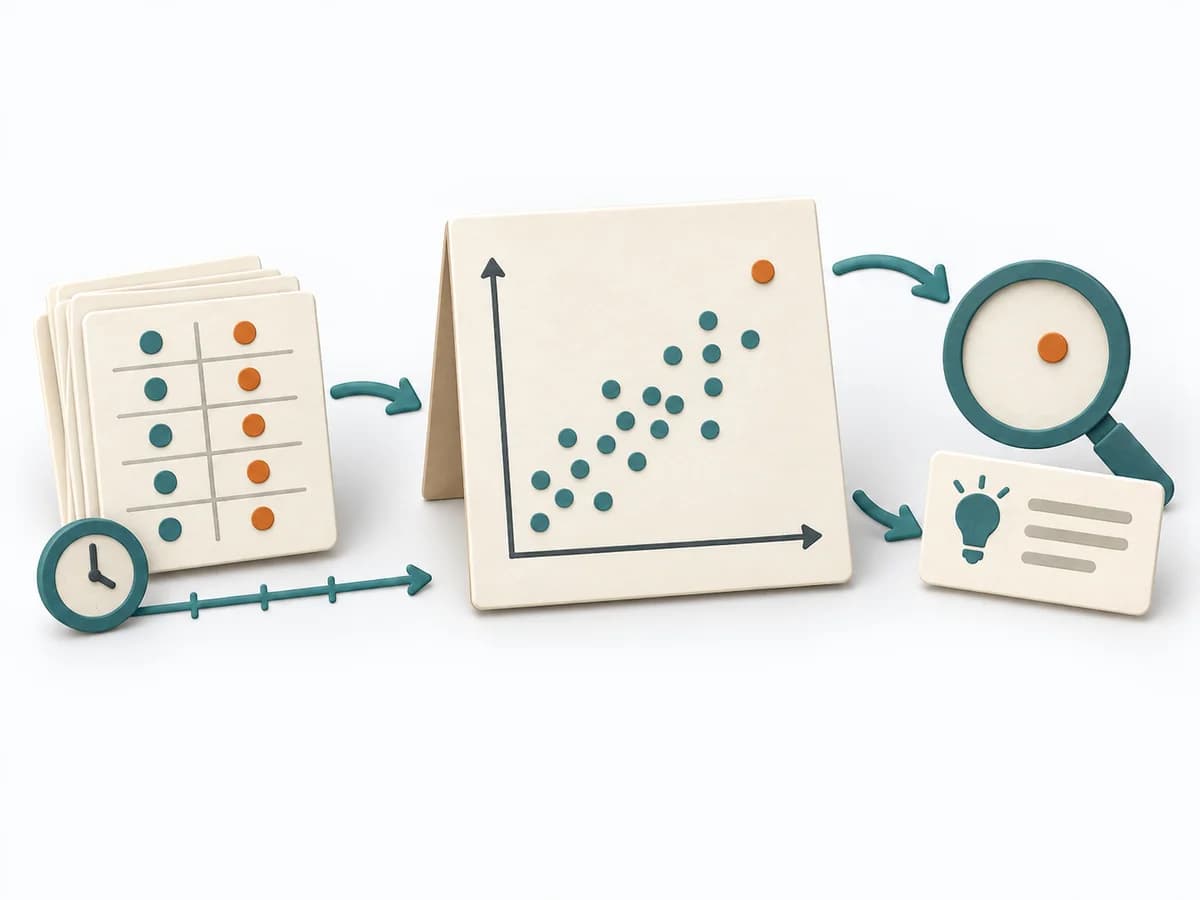 Operations Scatter Diagram |  Operations Root Cause Analysis | 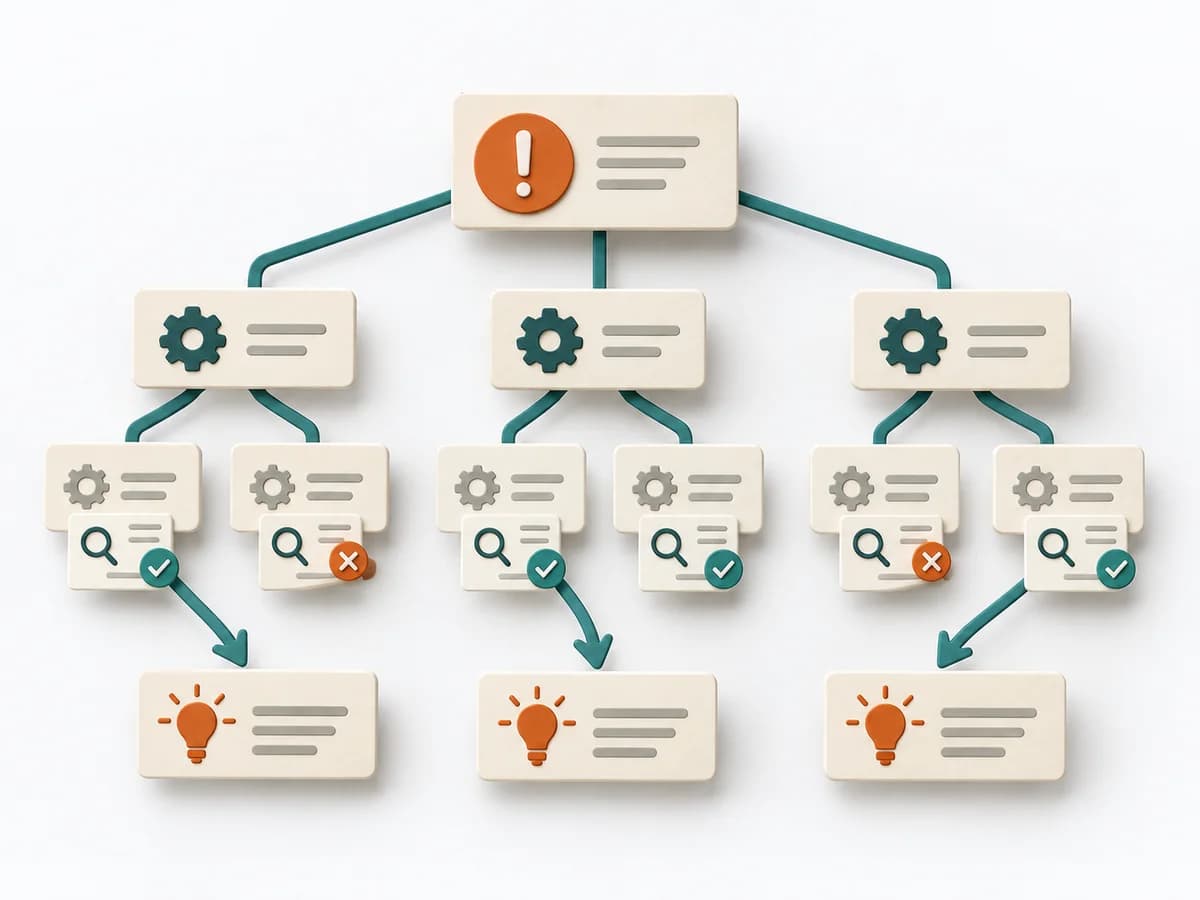 Operations Root Cause Tree Analysis |
|---|---|---|---|---|
Purposedifferent | CATWOE structures a problem from six viewpoints and prevents too narrow a view of the situation. Different experiences of the system become comparably discussable this way. | When the question is whether two measures are related, the method makes patterns in the data picture visible. It separates felt correlations from relationships that actually show up in the data. | When a problem keeps recurring and the cause stays unclear, the method exposes the underlying mechanism. It separates symptom, guess, and robust explanation from one another. | For a problem with several suspected causes, the method builds a causal structure instead of a mere list. It makes visible how causes connect and where the strongest points of leverage lie. |
Complexitydifferent | Medium | Low | Medium | Medium |
Timedifferent | 45-90 min | 30-90 min | 1-4 h | 1-3 h |
Participantsdifferent | 3-8 | 1-4 | 3-8 | 2-8 |
Formatdifferent | Workshop + async | Workshop + async | Workshop + async | Workshop |
Outputdifferent | CATWOE Canvas, Root Definition, Stakeholder Perspectives, Constraints | Scatter Plot, Korrelationsnotiz, Hypothesenliste | Problem Statement, Cause Hypotheses, Confirmed Causes, Action Plan | Cause Tree, Evidence Notes, Countermeasures |
Tagsno overlap | Systems thinkingFramingStakeholders | Root causeQualityVisualization | Root causeProblem solvingQualityIncident | Root causeTreeIncidentQuality |