View methods side by side.
Choose up to four methods. Add them using the search and share the comparison by copying its link.
| Criterion |  Systems Thinking CATWOE Analysis |  Decision Making Risk Matrix | 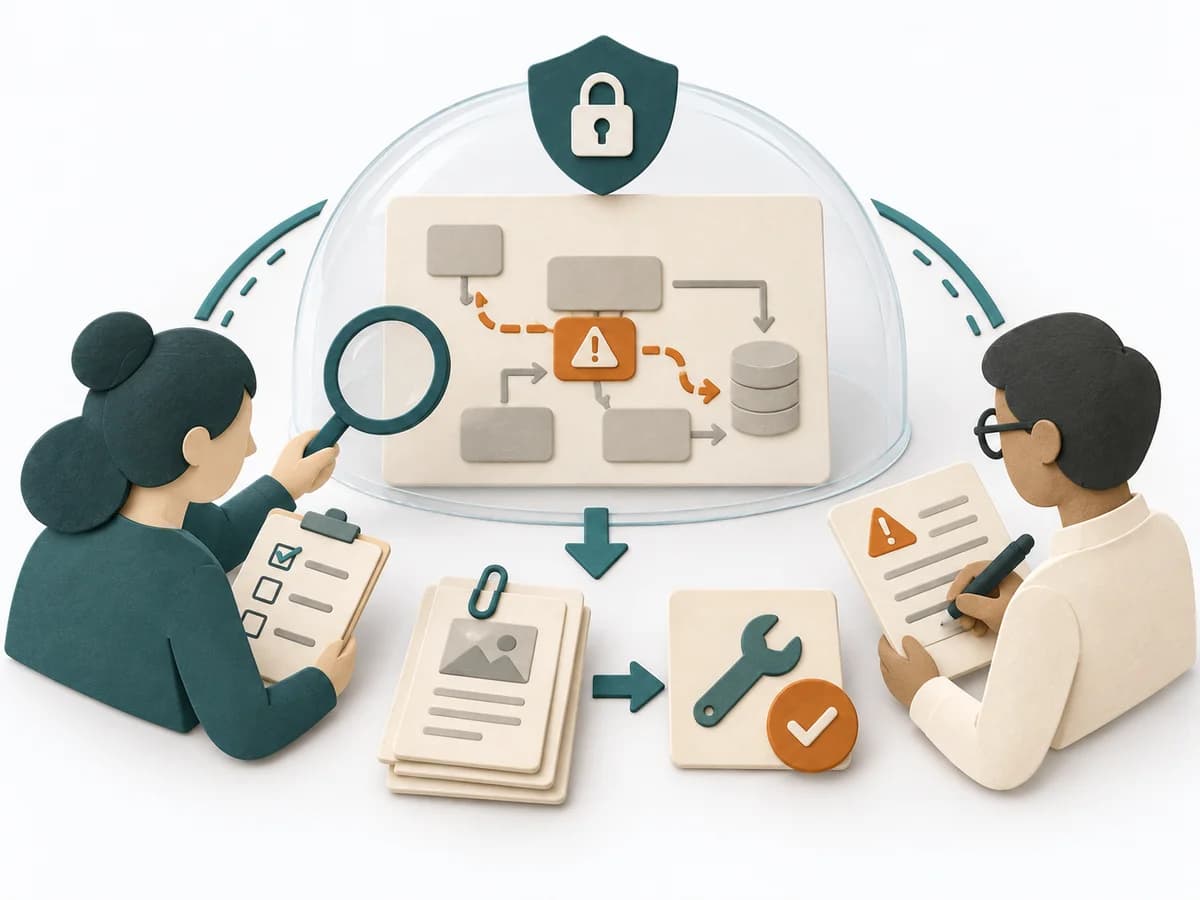 Decision Making Red Teaming |  Decision Making Assumption Surfacing |
|---|---|---|---|---|
Purposedifferent | CATWOE structures a problem from six viewpoints and prevents too narrow a view of the situation. Different experiences of the system become comparably discussable this way. | When a project faces many possible disruptions, it quickly becomes unclear which risks deserve attention first. It separates options, evaluation criteria, and open risks. The result is captured as a Risk Matrix and a Top Risk List. | For strategic decisions with high reach, agreement and gut feeling are often not enough. Red teaming brings deliberate opposition into the situation and tests where a plan breaks under real counterarguments. | Plans often contain assumptions that were never openly stated and remain dangerous precisely because of that. Assumption Surfacing makes these silent premises visible and prioritizes which of them carry the initiative or could sink it. |
Complexitydifferent | Medium | Low | High | Low |
Timedifferent | 45-90 min | 30-60 min | 1-4 h | 45-90 min |
Participantsdifferent | 3-8 | 3-10 | 3-8 | 2-8 |
Formatdifferent | Workshop + async | Workshop + async | Workshop | Workshop + async |
Outputdifferent | CATWOE Canvas, Root Definition, Stakeholder Perspectives, Constraints | Risk Matrix, Top Risk List | Challenge Findings, Risk Register, Mitigation Plan | Assumption List, Critical Assumptions, Learning Plan |
Tagsno overlap | Systems thinkingFramingStakeholders | RiskDecisionPrioritizationAssessment | RiskDecisionSensemaking | AssumptionsRiskDecisionDiscovery |