View methods side by side.
Choose up to four methods. Add them using the search and share the comparison by copying its link.
| Criterion |  Systems Thinking CATWOE Analysis |  Systems Thinking Intervention Mapping | 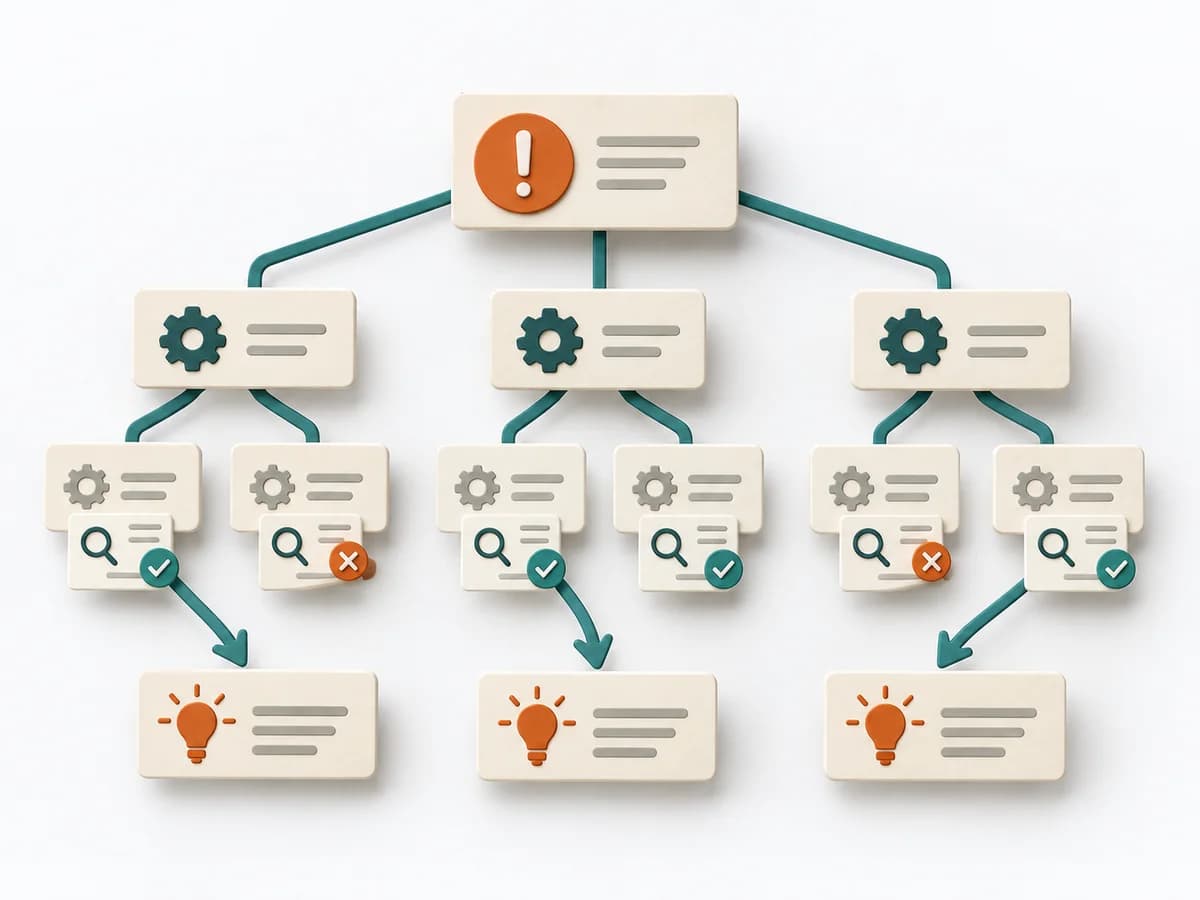 Operations Root Cause Tree Analysis |  Operations 5 Whys |
|---|---|---|---|---|
Purposedifferent | CATWOE structures a problem from six viewpoints and prevents too narrow a view of the situation. Different experiences of the system become comparably discussable this way. | Intervention Mapping translates a need for change into a planned, evaluable program. The method connects target group, determinants, actions, and measurement into a traceable chain. | For a problem with several suspected causes, the method builds a causal structure instead of a mere list. It makes visible how causes connect and where the strongest points of leverage lie. | For a single, hard-to-explain deviation, the method exposes the causal chain behind the visible symptom. It keeps the cause open until a controllable condition emerges instead of a mere description. |
Complexitydifferent | Medium | High | Medium | Low |
Timedifferent | 45-90 min | 1-5 Tage | 1-3 h | 15-30 min |
Participantsdifferent | 3-8 | 4-12 | 2-8 | 2-6 |
Formatdifferent | Workshop + async | Workshop + async | Workshop | Workshop |
Outputdifferent | CATWOE Canvas, Root Definition, Stakeholder Perspectives, Constraints | Logic Model, Change Objectives, Intervention Components, Evaluation Plan | Cause Tree, Evidence Notes, Countermeasures | Root cause notes, Countermeasures |
Tagsno overlap | Systems thinkingFramingStakeholders | ChangeSystems thinkingCapability | Root causeTreeIncidentQuality | Root causeIncidentLeanProblem solving |