View methods side by side.
Choose up to four methods. Add them using the search and share the comparison by copying its link.
| Criterion | 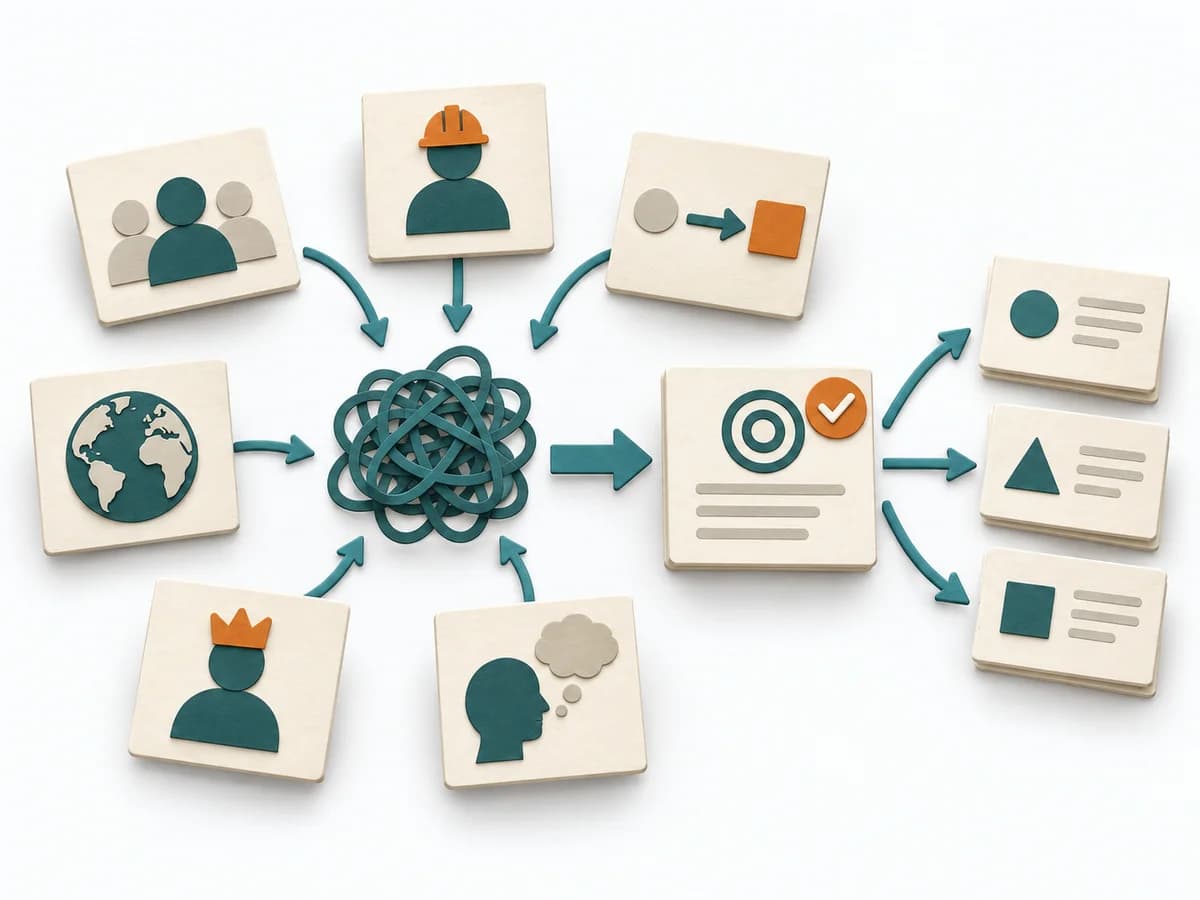 Systems Thinking CATWOE Analysis |  Knowledge Modeling IBIS | 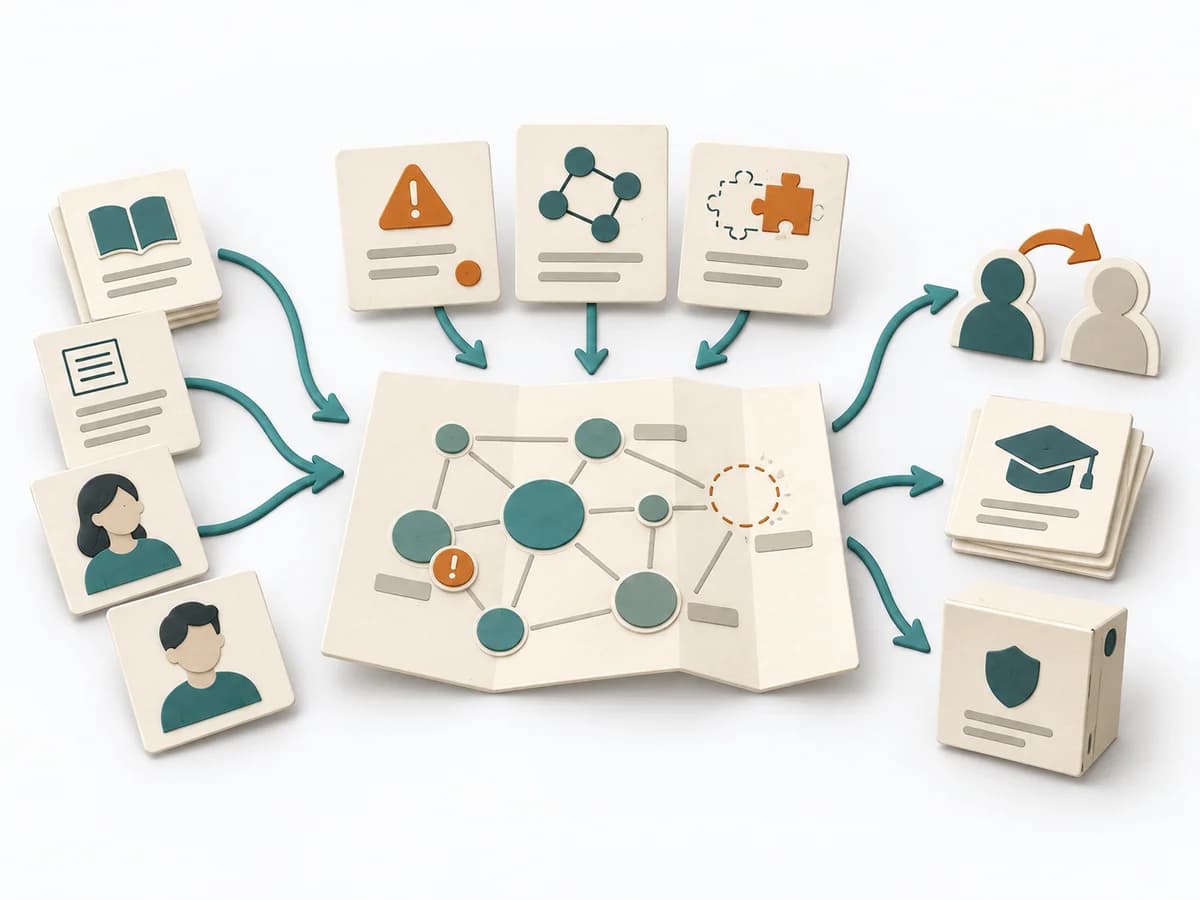 Knowledge Modeling Knowledge Mapping |  Decision Making Assumption Surfacing |
|---|---|---|---|---|
Purposedifferent | CATWOE structures a problem from six viewpoints and prevents too narrow a view of the situation. Different experiences of the system become comparably discussable this way. | IBIS structures thinking about complex questions as a sequence of issues, ideas, and arguments. The method keeps discussions open without forcing them into premature consensus. | Knowledge Mapping makes knowledge, gaps, and transfer paths visible across a field. It fits when expertise should not just exist but also be findable and transferable. | Plans often contain assumptions that were never openly stated and remain dangerous precisely because of that. Assumption Surfacing makes these silent premises visible and prioritizes which of them carry the initiative or could sink it. |
Complexitydifferent | Medium | Medium | Medium | Low |
Timedifferent | 45-90 min | 1-3 h | 1-3 h | 45-90 min |
Participantsdifferent | 3-8 | 2-8 | 3-12 | 2-8 |
Formatdifferent | Workshop + async | Workshop + async | Workshop | Workshop + async |
Outputdifferent | CATWOE Canvas, Root Definition, Stakeholder Perspectives, Constraints | Issue Map, Positions, Argument Notes | Knowledge Map, Critical Knowledge Areas, Transfer Plan | Assumption List, Critical Assumptions, Learning Plan |
Tagsno overlap | Systems thinkingFramingStakeholders | RationaleKnowledgeDecision | KnowledgeMappingRisk | AssumptionsRiskDecisionDiscovery |