View methods side by side.
Choose up to four methods. Add them using the search and share the comparison by copying its link.
| Criterion |  Systems Thinking CATWOE Analysis | 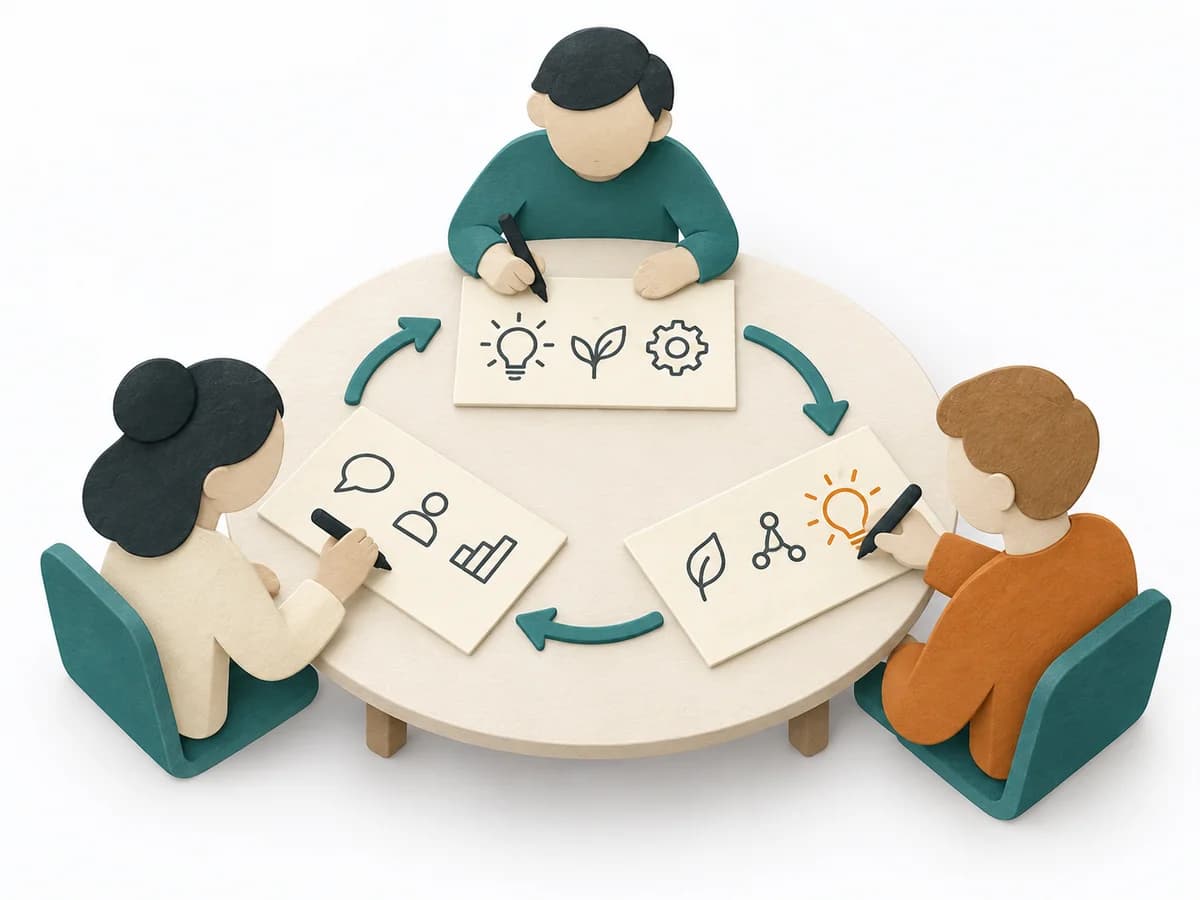 Innovation Brainwriting |  Knowledge Modeling Knowledge Mapping |  Knowledge Modeling Concept Mapping |
|---|---|---|---|---|
Purposedifferent | CATWOE structures a problem from six viewpoints and prevents too narrow a view of the situation. Different experiences of the system become comparably discussable this way. | When loud voices or hierarchy distort the idea search, the method creates a quiet entry into joint development. It gives everyone thinking space and gathers contributions without social brakes, making diversity more visible and easier to build on. | Knowledge Mapping makes knowledge, gaps, and transfer paths visible across a field. It fits when expertise should not just exist but also be findable and transferable. | Concept Mapping arranges terms and relationships in a network that makes subject-matter connections tangible. It fits when a topic needs to be understood structurally rather than linearly. |
Complexitydifferent | Medium | Low | Medium | Medium |
Timedifferent | 45-90 min | 15-30 min | 1-3 h | 1-2 h |
Participantsdifferent | 3-8 | 3-12 | 3-12 | 1-8 |
Formatdifferent | Workshop + async | Workshop + async | Workshop | Workshop + async |
Outputdifferent | CATWOE Canvas, Root Definition, Stakeholder Perspectives, Constraints | Idea sheets, Expanded concepts, Prioritized list | Knowledge Map, Critical Knowledge Areas, Transfer Plan | Concept Map, Relationship Labels, Knowledge Gaps |
Tagsno overlap | Systems thinkingFramingStakeholders | BrainstormingCollaborationInclusionIdeas | KnowledgeMappingRisk | KnowledgeConceptsMappingSensemaking |