View methods side by side.
Choose up to four methods. Add them using the search and share the comparison by copying its link.
| Criterion |  Systems Thinking CATWOE Analysis | 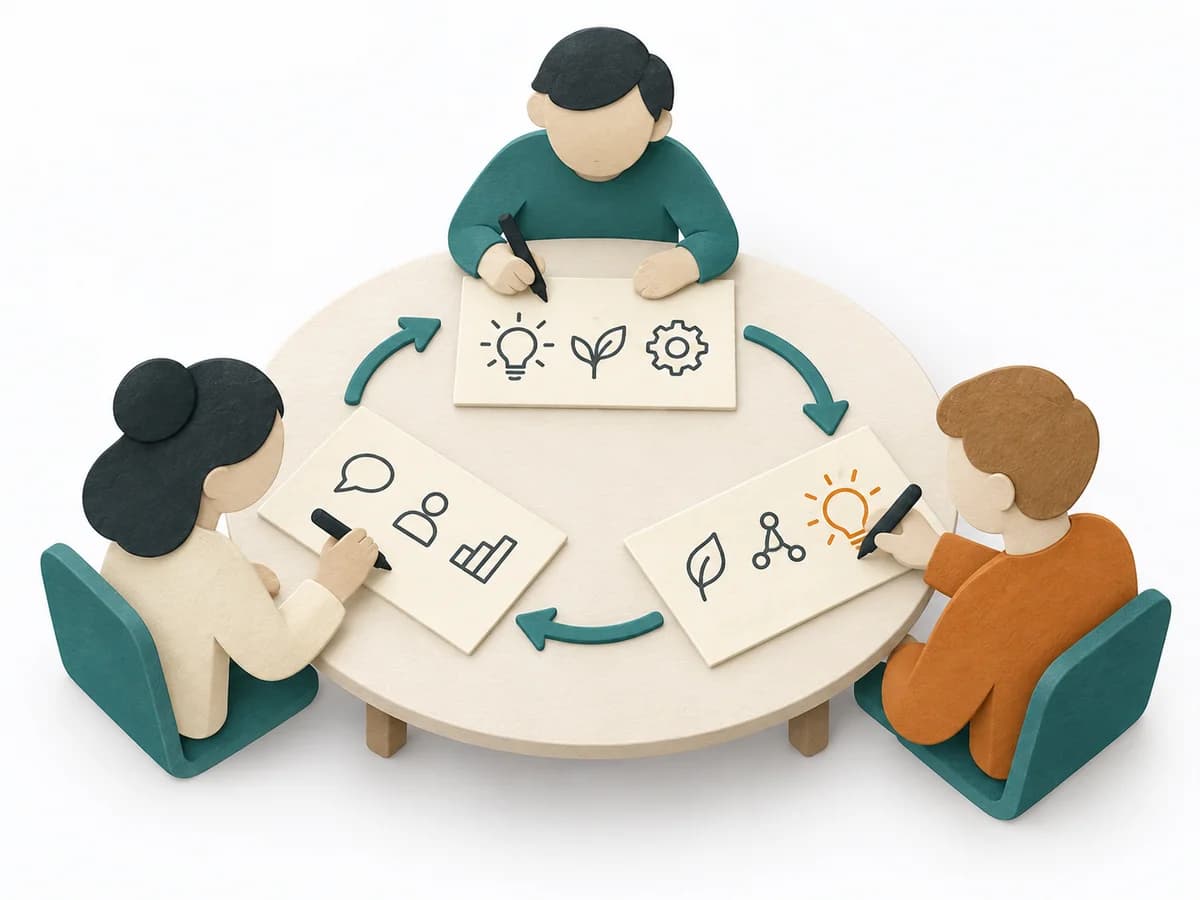 Innovation Brainwriting |  Knowledge Modeling IBIS |  Facilitation Mind Mapping |
|---|---|---|---|---|
Purposedifferent | CATWOE structures a problem from six viewpoints and prevents too narrow a view of the situation. Different experiences of the system become comparably discussable this way. | When loud voices or hierarchy distort the idea search, the method creates a quiet entry into joint development. It gives everyone thinking space and gathers contributions without social brakes, making diversity more visible and easier to build on. | IBIS structures thinking about complex questions as a sequence of issues, ideas, and arguments. The method keeps discussions open without forcing them into premature consensus. | When a topic is still unclear and too many thoughts surface at once, Mind Mapping creates an open surface for ordering them. It makes connections, subtopics, and starting points visible without fixing them too early. |
Complexitydifferent | Medium | Low | Medium | Low |
Timedifferent | 45-90 min | 15-30 min | 1-3 h | 15-45 min |
Participantsdifferent | 3-8 | 3-12 | 2-8 | 1-10 |
Formatsame | Workshop + async | Workshop + async | Workshop + async | Workshop + async |
Outputdifferent | CATWOE Canvas, Root Definition, Stakeholder Perspectives, Constraints | Idea sheets, Expanded concepts, Prioritized list | Issue Map, Positions, Argument Notes | Mind Map, Topic Clusters, Open Questions |
Tagsno overlap | Systems thinkingFramingStakeholders | BrainstormingCollaborationInclusionIdeas | RationaleKnowledgeDecision | BrainstormingIdeasMappingStructureFacilitation |