View methods side by side.
Choose up to four methods. Add them using the search and share the comparison by copying its link.
| Criterion |  Systems Thinking CATWOE Analysis | 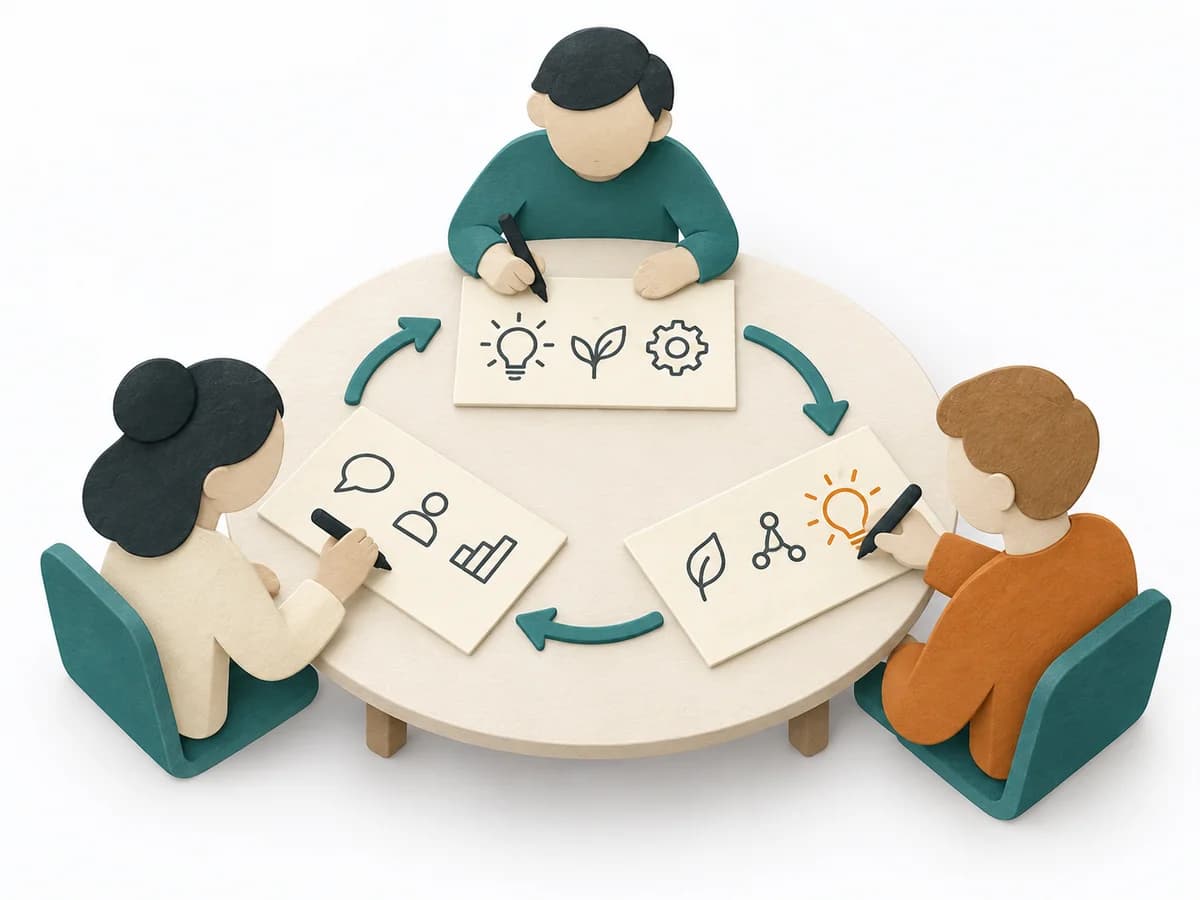 Innovation Brainwriting |  Decision Making Force Field Analysis |  Facilitation Alignment Mapping |
|---|---|---|---|---|
Purposedifferent | CATWOE structures a problem from six viewpoints and prevents too narrow a view of the situation. Different experiences of the system become comparably discussable this way. | When loud voices or hierarchy distort the idea search, the method creates a quiet entry into joint development. It gives everyone thinking space and gathers contributions without social brakes, making diversity more visible and easier to build on. | In change initiatives, supporting and restraining forces sit at the table at the same time. Force Field Analysis makes these tensions explicit and shows where change can be pushed forward by strengthening or relieving. | When several people work toward one goal but hold different mental maps, Alignment Mapping makes the discrepancies visible. It arranges goals, assumptions, and priorities so shared direction becomes verifiable. |
Complexitydifferent | Medium | Low | Low | Medium |
Timedifferent | 45-90 min | 15-30 min | 45-90 min | 1-2 h |
Participantsdifferent | 3-8 | 3-12 | 3-12 | 4-12 |
Formatdifferent | Workshop + async | Workshop + async | Workshop | Workshop |
Outputdifferent | CATWOE Canvas, Root Definition, Stakeholder Perspectives, Constraints | Idea sheets, Expanded concepts, Prioritized list | Force Field Map, Change Levers, Risk Notes | Alignment Map, Open Issues, Decision Questions |
Tagsno overlap | Systems thinkingFramingStakeholders | BrainstormingCollaborationInclusionIdeas | ChangeDecisionStrategy | AlignmentStakeholdersStrategyFacilitation |