View methods side by side.
Choose up to four methods. Add them using the search and share the comparison by copying its link.
| Criterion | 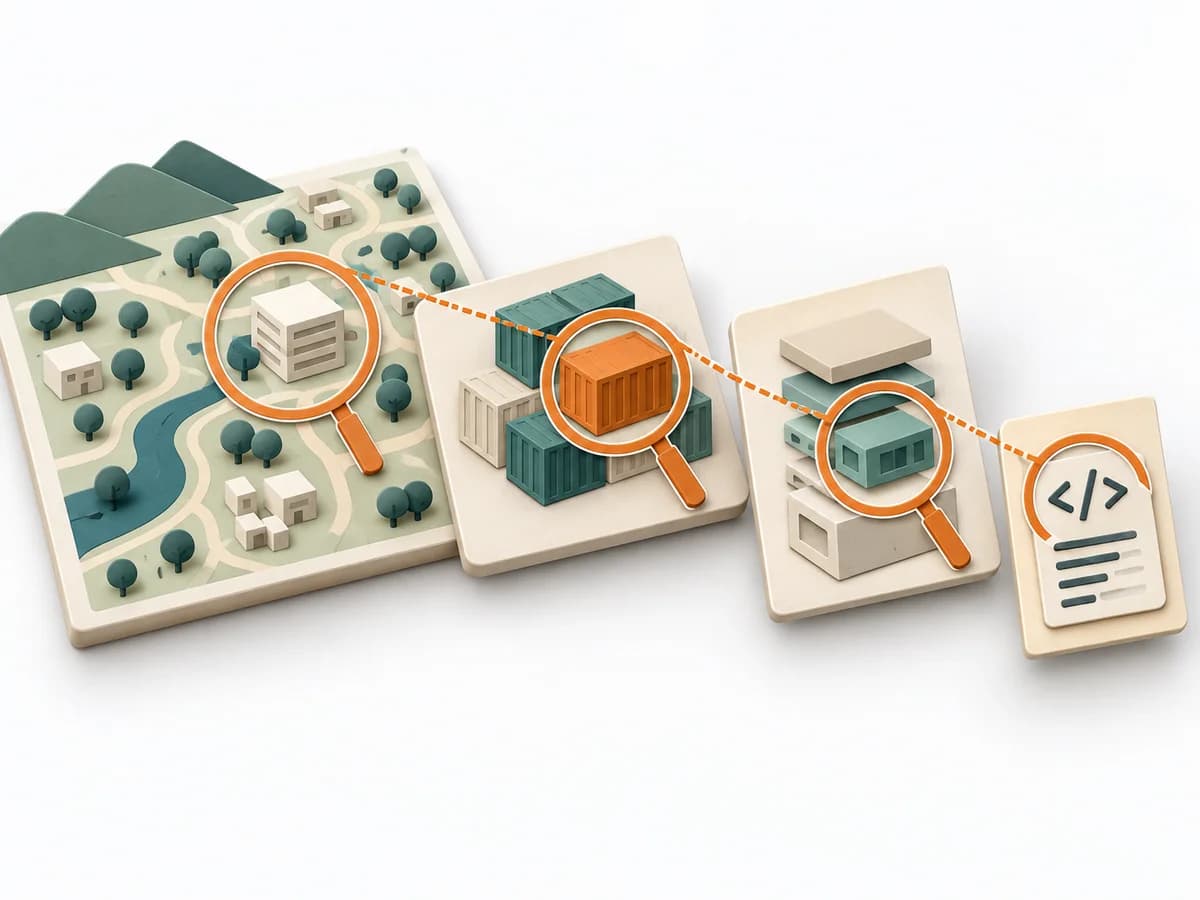 Architecture C4 Model |  Architecture Quality Attribute Workshop | 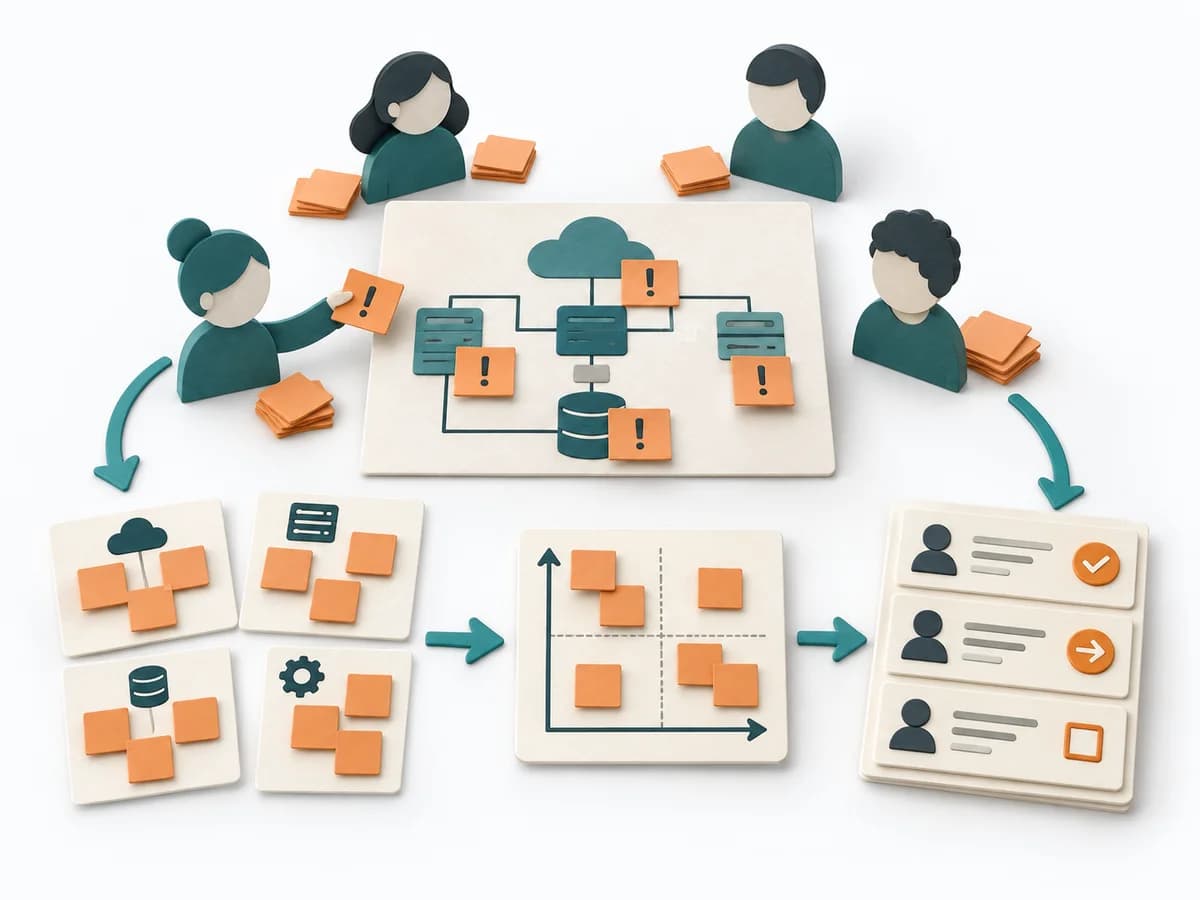 Architecture Risk Storming |  Product Discovery Assumption Mapping |
|---|---|---|---|---|
Purposedifferent | The C4 Model makes a system legible across several resolution levels, from context down to code. It suits situations where different audiences need to understand the same architecture from different altitudes. | A Quality Attribute Workshop translates quality requirements into concrete scenarios and architecture impulses. The method brings product, engineering, and operations to the same view of desired properties. | Helps clarify architecture context, options, and consequences in concrete terms. It organizes technical context, alternatives, and consequences. The result is captured as an Annotated Diagram, a Prioritized Risk List, and an Action Backlog. | When assumptions still sit unordered in the room, it weighs uncertainty against leverage. It makes visible which hypotheses should be checked first. |
Complexitydifferent | Low | Medium | Low | Medium |
Timedifferent | 1-4 h | 2-4 h | 60-90 min | 45-60 min |
Participantsdifferent | 1-5 | 5-15 | 4-12 | 2-8 |
Formatdifferent | Workshop + async | Workshop | Workshop | Workshop + async |
Outputdifferent | Context Diagram, Container Diagram, Component Diagram | Quality Scenarios, Priority List, Architecture Concerns | Annotated Diagram, Prioritized Risk List, Action Backlog | Assumption map, Test backlog, Risk ranking |
Tagsno overlap | ArchitectureCommunicationVisualization | RequirementsArchitectureWorkshop | RiskArchitectureWorkshopValidation | AssumptionsRiskExperimentsValidation |