View methods side by side.
Choose up to four methods. Add them using the search and share the comparison by copying its link.
| Criterion | 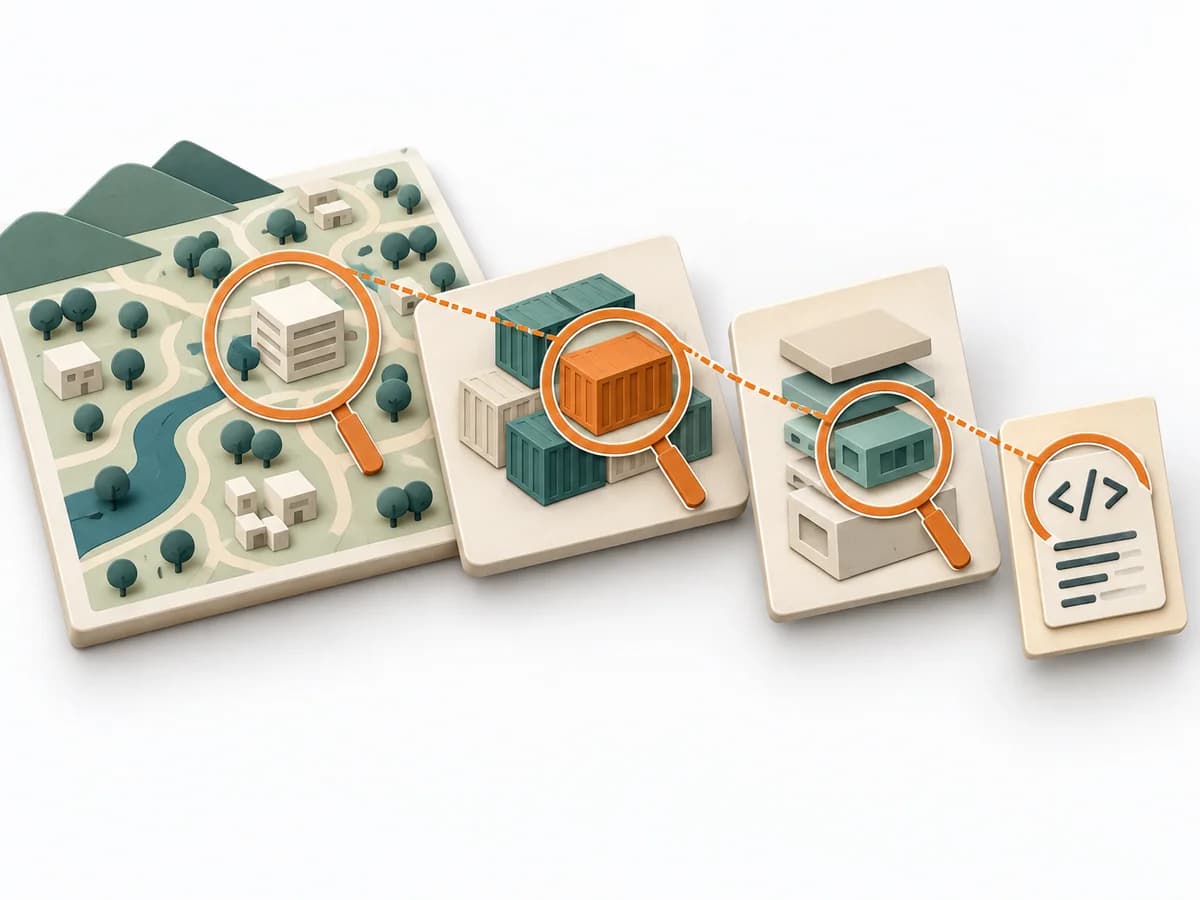 Architecture C4 Model | 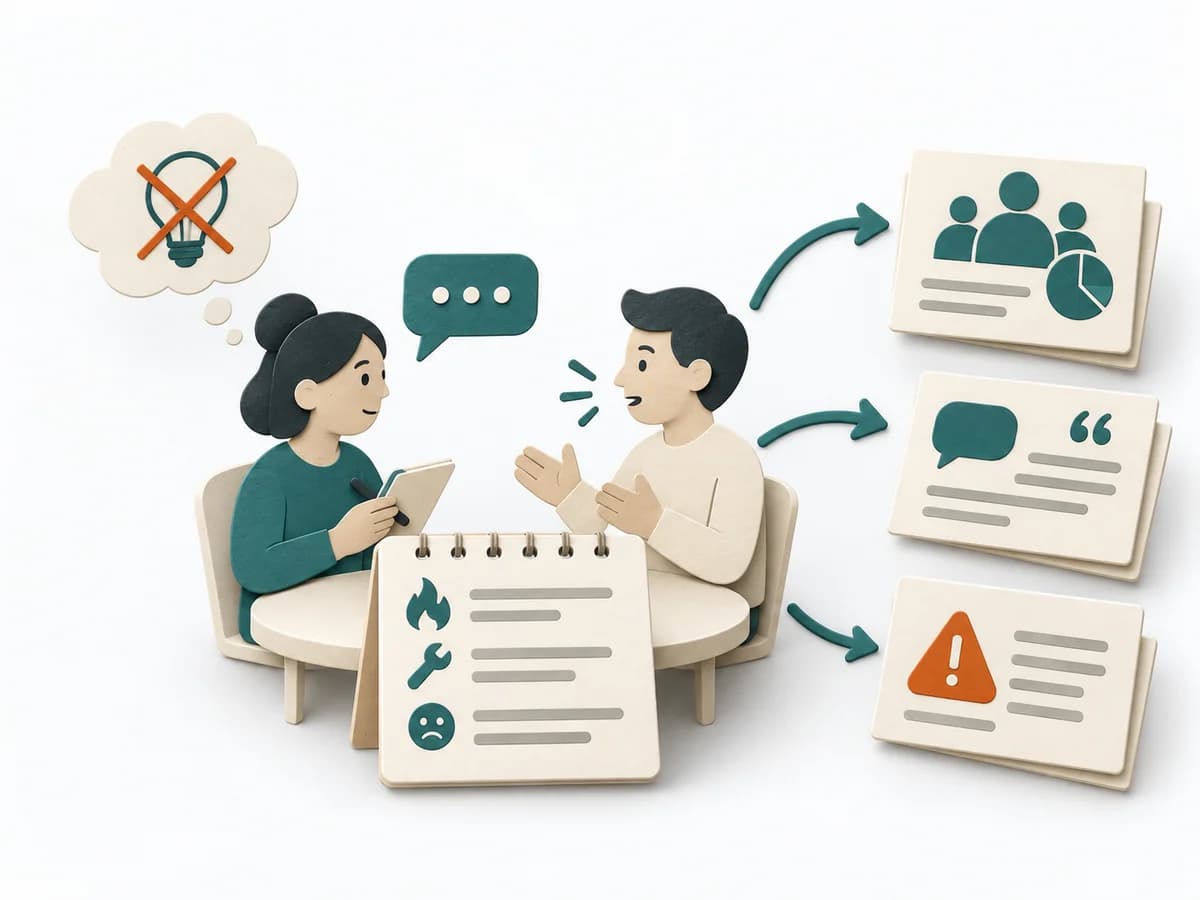 Product Discovery Problem Interview |  Product Discovery Assumption Mapping |  Decision Making Assumption Surfacing |
|---|---|---|---|---|
Purposedifferent | The C4 Model makes a system legible across several resolution levels, from context down to code. It suits situations where different audiences need to understand the same architecture from different altitudes. | When the picture of the problem still needs to become solid, it asks about real situations and consequences. It separates genuine suffering from mere interest in a solution. | When assumptions still sit unordered in the room, it weighs uncertainty against leverage. It makes visible which hypotheses should be checked first. | Plans often contain assumptions that were never openly stated and remain dangerous precisely because of that. Assumption Surfacing makes these silent premises visible and prioritizes which of them carry the initiative or could sink it. |
Complexitydifferent | Low | Medium | Medium | Low |
Timedifferent | 1-4 h | 30-60 min je Interview | 45-60 min | 45-90 min |
Participantsdifferent | 1-5 | 5-12 Interviews | 2-8 | 2-8 |
Formatsame | Workshop + async | Workshop + async | Workshop + async | Workshop + async |
Outputdifferent | Context Diagram, Container Diagram, Component Diagram | Problem Evidence, Risk Notes, Customer Segments | Assumption map, Test backlog, Risk ranking | Assumption List, Critical Assumptions, Learning Plan |
Tagsno overlap | ArchitectureCommunicationVisualization | DiscoveryInterviewsValidation | AssumptionsRiskExperimentsValidation | AssumptionsRiskDecisionDiscovery |