View methods side by side.
Choose up to four methods. Add them using the search and share the comparison by copying its link.
| Criterion |  Innovation Brainwriting |  Systems Thinking Leverage Points |  Decision Making Force Field Analysis | 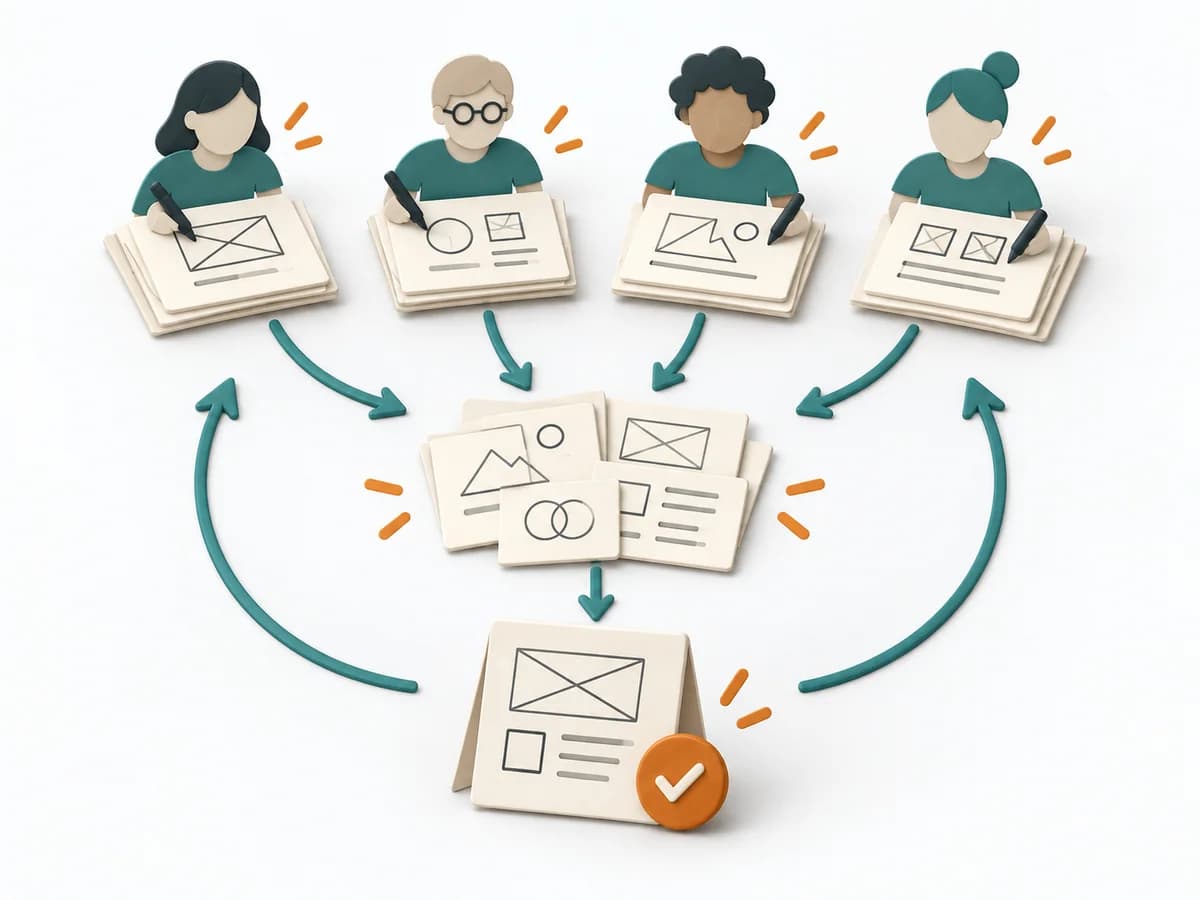 Innovation Design Charrette |
|---|---|---|---|---|
Purposedifferent | When loud voices or hierarchy distort the idea search, the method creates a quiet entry into joint development. It gives everyone thinking space and gathers contributions without social brakes, making diversity more visible and easier to build on. | Leverage Points show exactly where interventions in a system produce a disproportionate effect. It draws relationships, patterns, and feedback loops. The result is captured as a leverage map and action strategy. | In change initiatives, supporting and restraining forces sit at the table at the same time. Force Field Analysis makes these tensions explicit and shows where change can be pushed forward by strengthening or relieving. | In a tightly timed design process with many participants, the method pools several lines of thinking in a short time. It brings parallel design energy without letting the discussion tip into endless coordination. This quickly produces solid directions for architecture or space. |
Complexitydifferent | Low | High | Low | Medium |
Timedifferent | 15-30 min | Half day | 45-90 min | Halber Tag bis mehrere Tage |
Participantsdifferent | 3-12 | 3-12 | 3-12 | 10-50 |
Formatdifferent | Workshop + async | Workshop | Workshop | Workshop |
Outputdifferent | Idea sheets, Expanded concepts, Prioritized list | Leverage Map, Action Strategy | Force Field Map, Change Levers, Risk Notes | Sketches and Concepts, Consolidated Solution Sketch, Prioritized Direction |
Tagsno overlap | BrainstormingCollaborationInclusionIdeas | Systems thinkingChangeStrategy | ChangeDecisionStrategy | BrainstormingWorkshopCollaborationIdeation |