View methods side by side.
Choose up to four methods. Add them using the search and share the comparison by copying its link.
| Criterion | 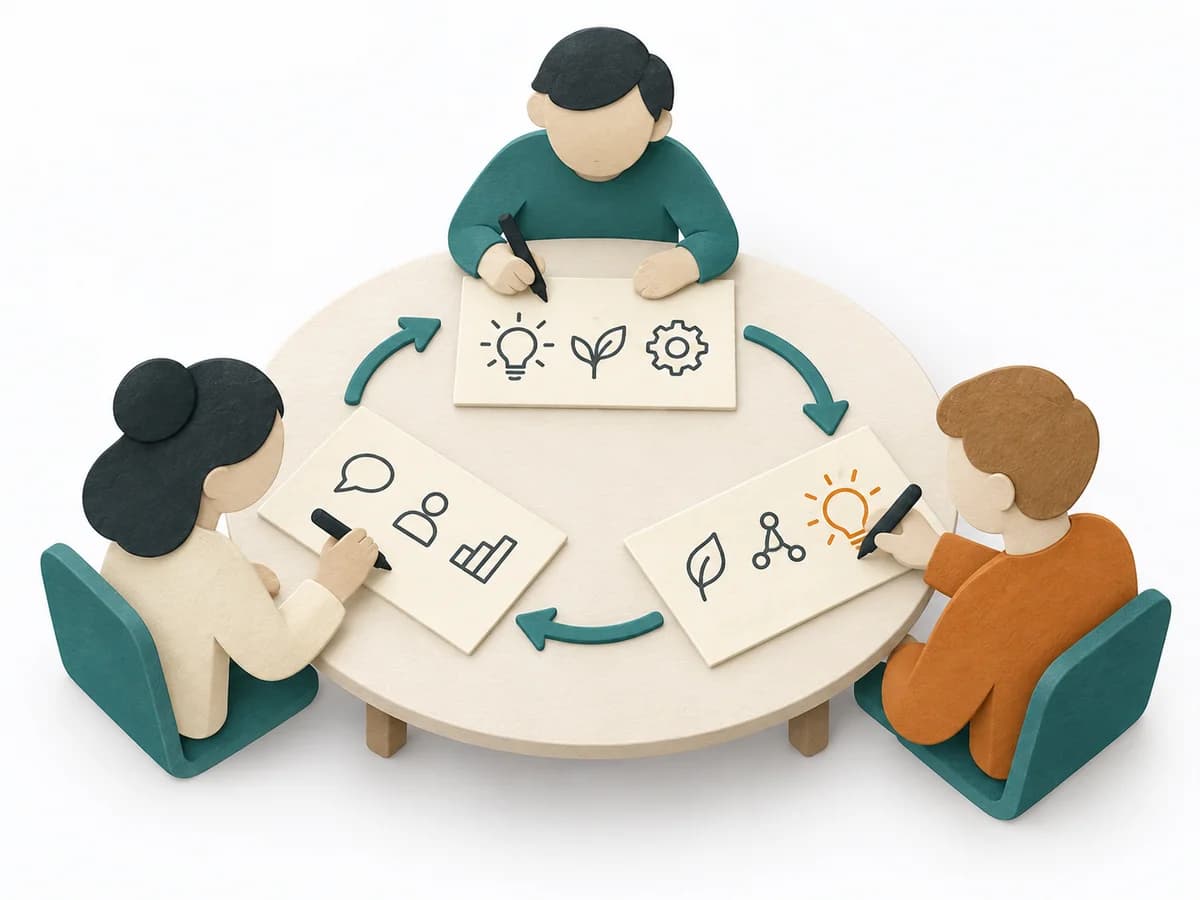 Innovation Brainwriting |  UX Design Lean UX Canvas | 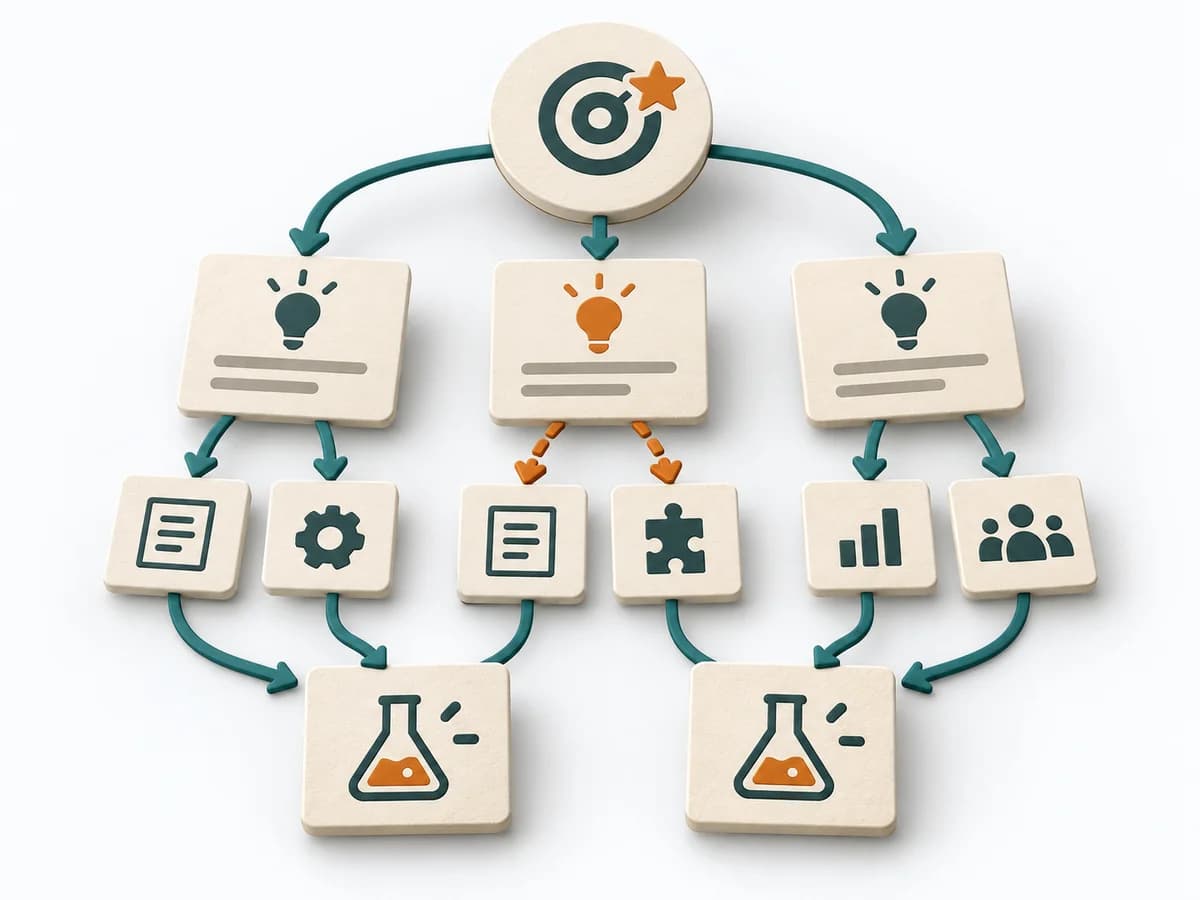 Product Discovery Opportunity Solution Tree | 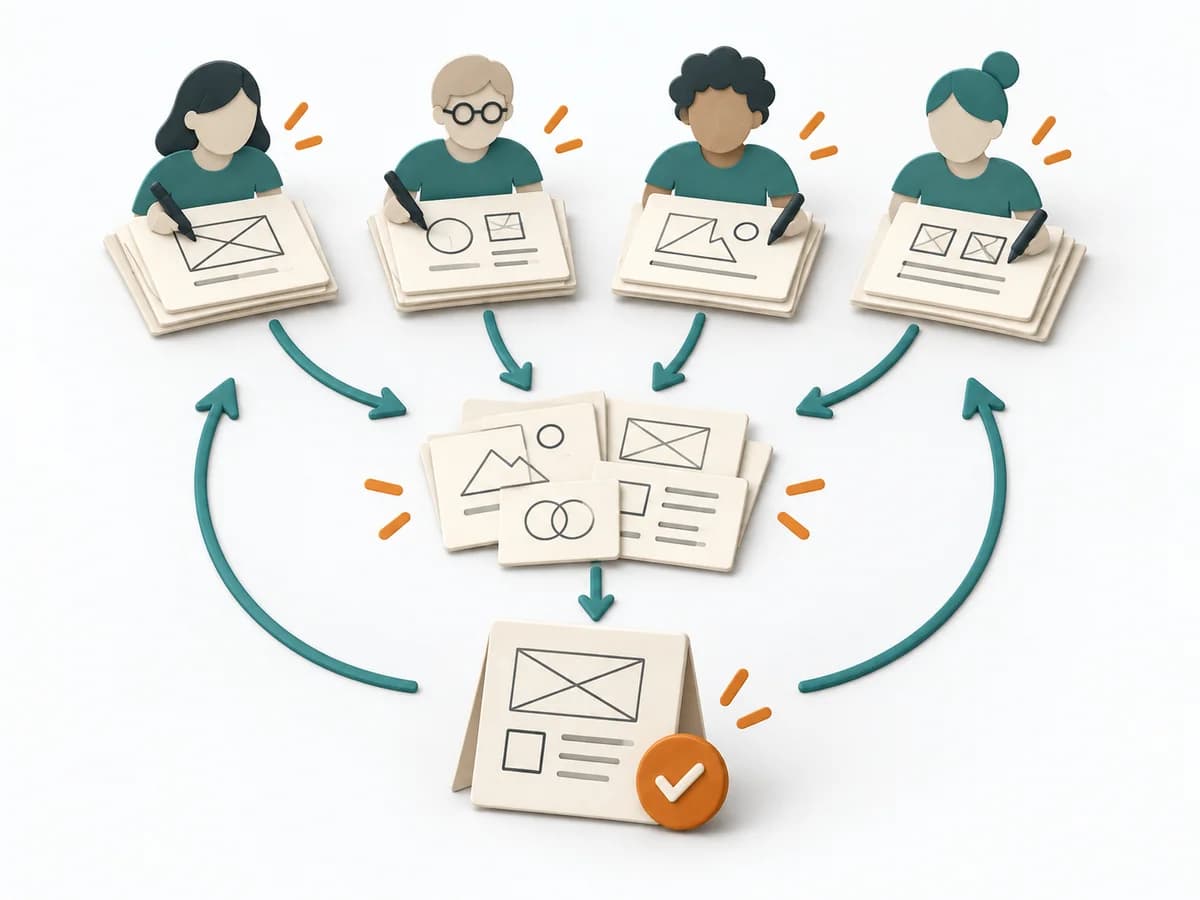 Innovation Design Charrette |
|---|---|---|---|---|
Purposedifferent | When loud voices or hierarchy distort the idea search, the method creates a quiet entry into joint development. It gives everyone thinking space and gathers contributions without social brakes, making diversity more visible and easier to build on. | The Lean UX Canvas helps clarify user behavior, touchpoints, and concept decisions. It makes assumptions and desired outcomes visible and captures the result as a completed canvas, hypothesis list, and first experiment. | When discovery keeps swinging between goals, ideas, and learning loops, it creates clear steering logic. It connects the desired outcome, opportunities, and experiments into a legible structure. | In a tightly timed design process with many participants, the method pools several lines of thinking in a short time. It brings parallel design energy without letting the discussion tip into endless coordination. This quickly produces solid directions for architecture or space. |
Complexitydifferent | Low | Medium | Medium | Medium |
Timedifferent | 15-30 min | 2-3 h | 1-2 h Setup, laufend | Halber Tag bis mehrere Tage |
Participantsdifferent | 3-12 | 3-8 | 2-6 | 10-50 |
Formatdifferent | Workshop + async | Workshop + async | Workshop + async | Workshop |
Outputdifferent | Idea sheets, Expanded concepts, Prioritized list | Completed Lean UX Canvas, Hypothesis list, First experiment | Opportunity Solution Tree, Experiment Backlog, Learning Log | Sketches and Concepts, Consolidated Solution Sketch, Prioritized Direction |
Tagsno overlap | BrainstormingCollaborationInclusionIdeas | CanvasHypothesisOutcomesDiscovery | DiscoveryOutcomesExperimentsOpportunity | BrainstormingWorkshopCollaborationIdeation |