View methods side by side.
Choose up to four methods. Add them using the search and share the comparison by copying its link.
| Criterion |  Innovation Brainwriting | 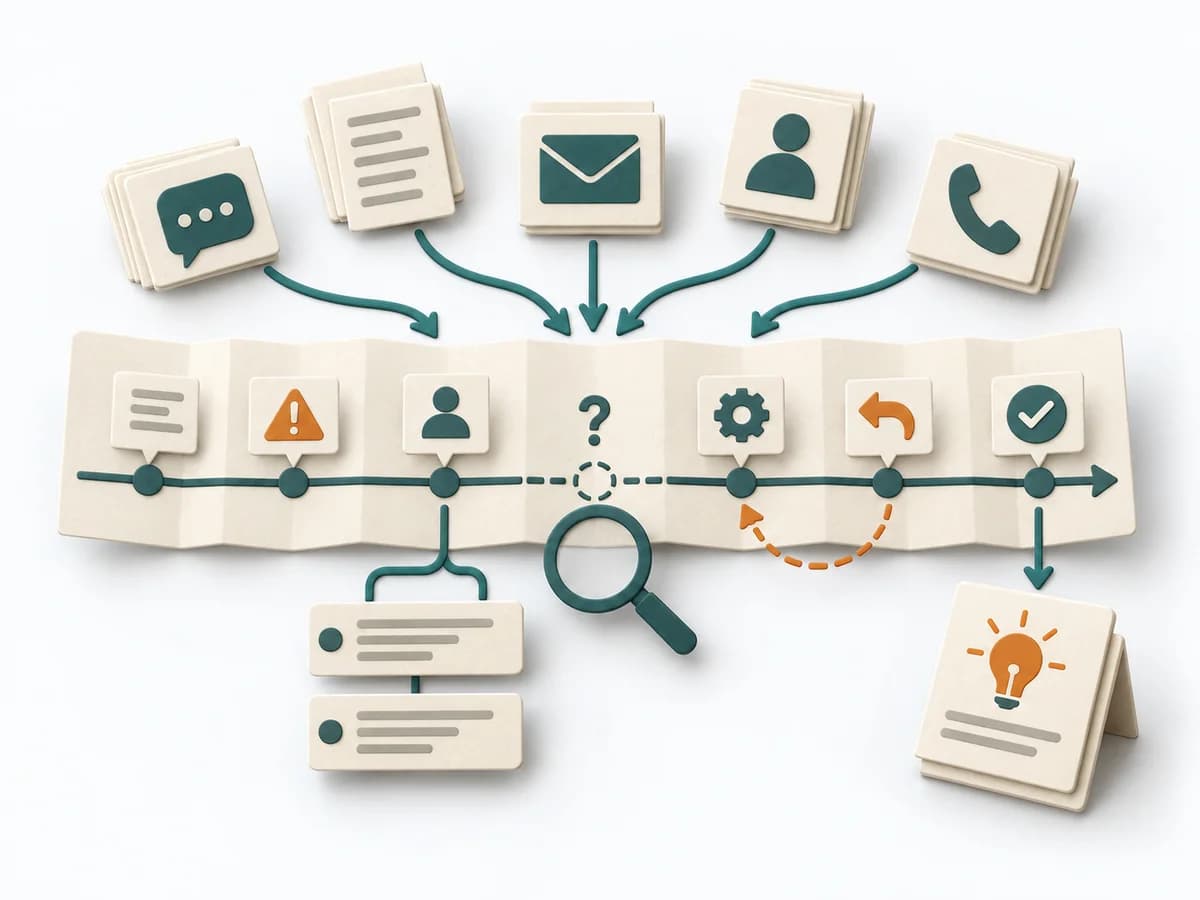 DevOps Incident Timeline Analysis |  Facilitation Mind Mapping |  DevOps Blameless Postmortem |
|---|---|---|---|---|
Purposedifferent | When loud voices or hierarchy distort the idea search, the method creates a quiet entry into joint development. It gives everyone thinking space and gathers contributions without social brakes, making diversity more visible and easier to build on. | For an incident with an unclear sequence, the method makes the timeline precisely visible. It separates perception, reaction, and delay so cause and effect become more clearly readable. | When a topic is still unclear and too many thoughts surface at once, Mind Mapping creates an open surface for ordering them. It makes connections, subtopics, and starting points visible without fixing them too early. | After an incident with damage or a near miss, the method creates a sober field for learning without assigning blame. It directs attention to the course of events, conditions, and effective countermeasures. |
Complexitydifferent | Low | Medium | Low | Medium |
Timedifferent | 15-30 min | 60-180 min | 15-45 min | 30-90 min |
Participantsdifferent | 3-12 | 3-10 | 1-10 | 3-12 |
Formatsame | Workshop + async | Workshop + async | Workshop + async | Workshop + async |
Outputdifferent | Idea sheets, Expanded concepts, Prioritized list | Incident Timeline, Evidence Log, Delay Analysis, Improvement Actions | Mind Map, Topic Clusters, Open Questions | Postmortem Doc, Action Items, Timeline |
Tagsno overlap | BrainstormingCollaborationInclusionIdeas | IncidentTimelineSite Reliability Engineering | BrainstormingIdeasMappingStructureFacilitation | Site Reliability EngineeringIncidentLearningReliability |