View methods side by side.
Choose up to four methods. Add them using the search and share the comparison by copying its link.
| Criterion |  Domain Modeling Bounded Context Canvas | 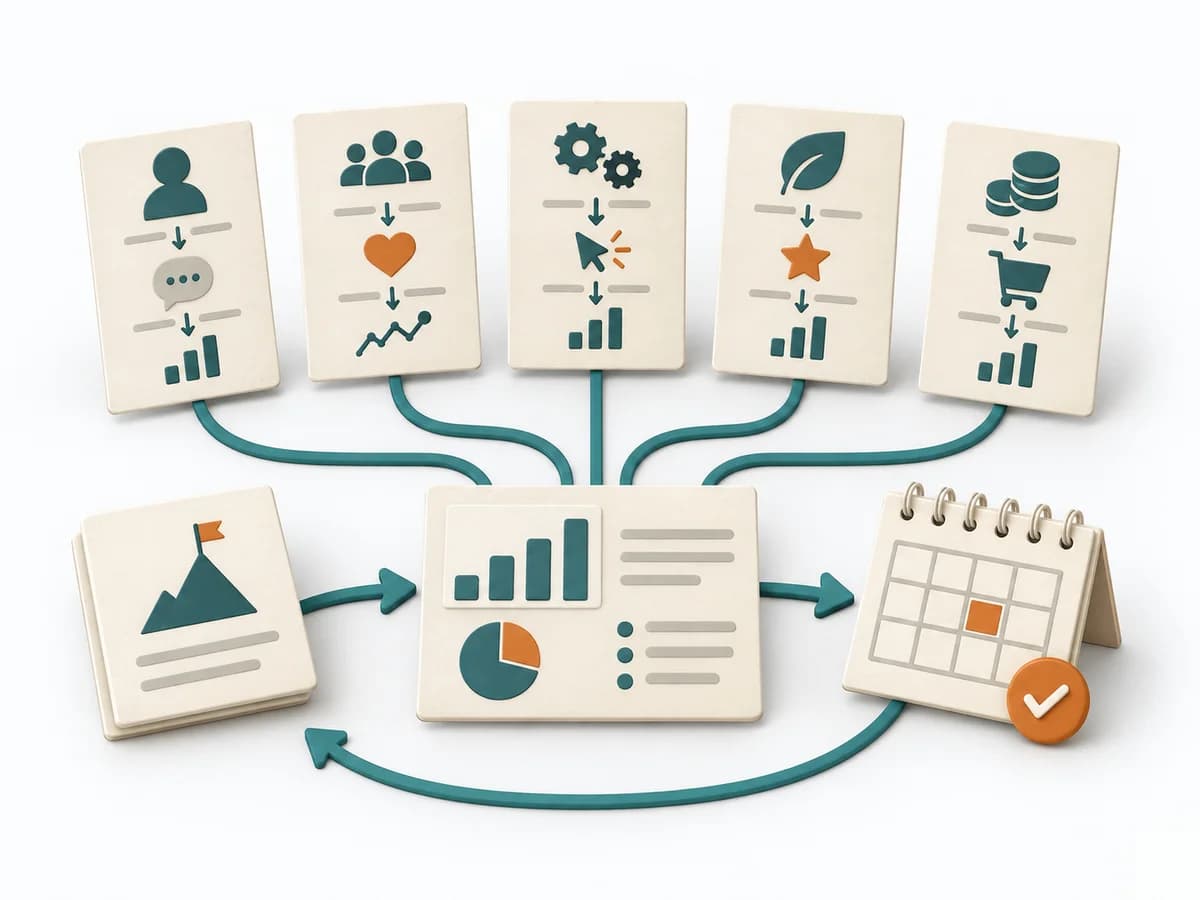 UX Research HEART Framework | 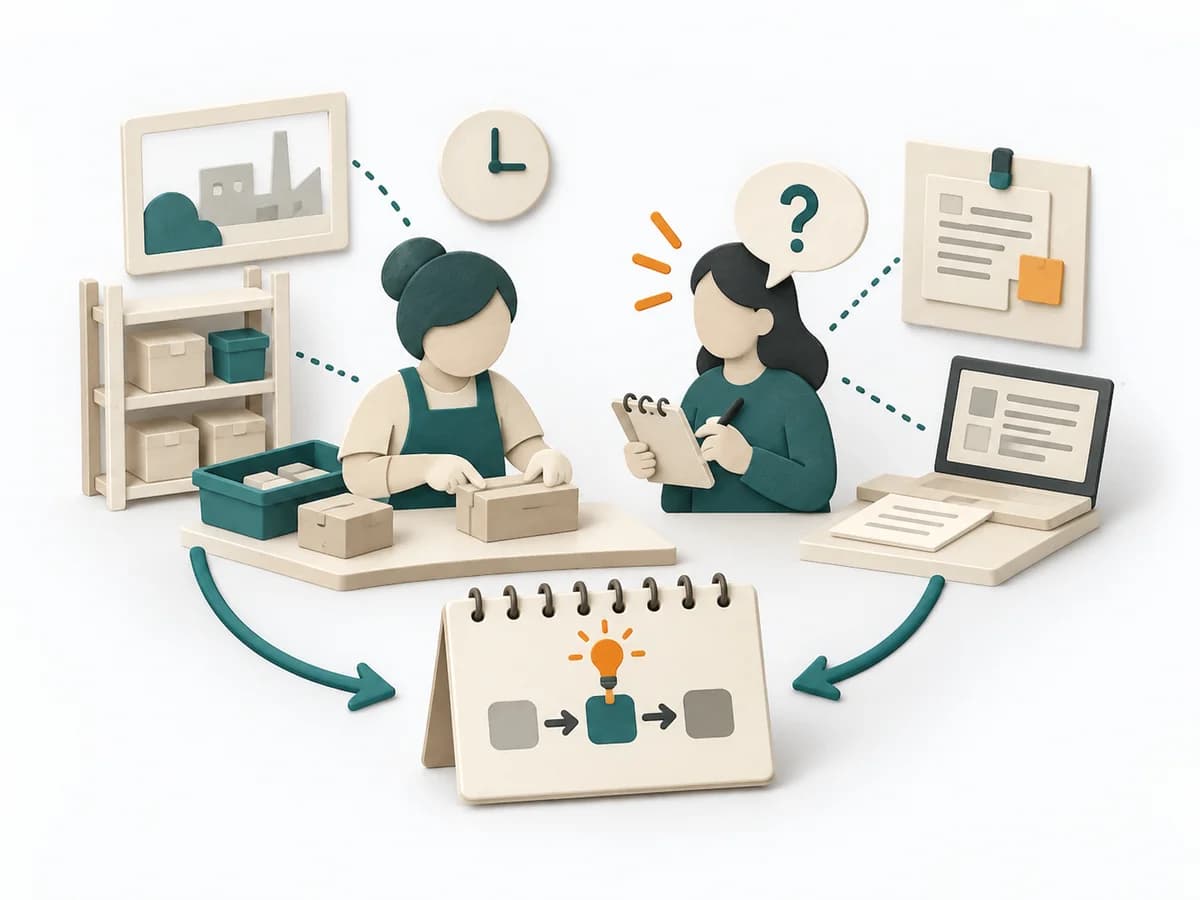 UX Research Contextual Inquiry | 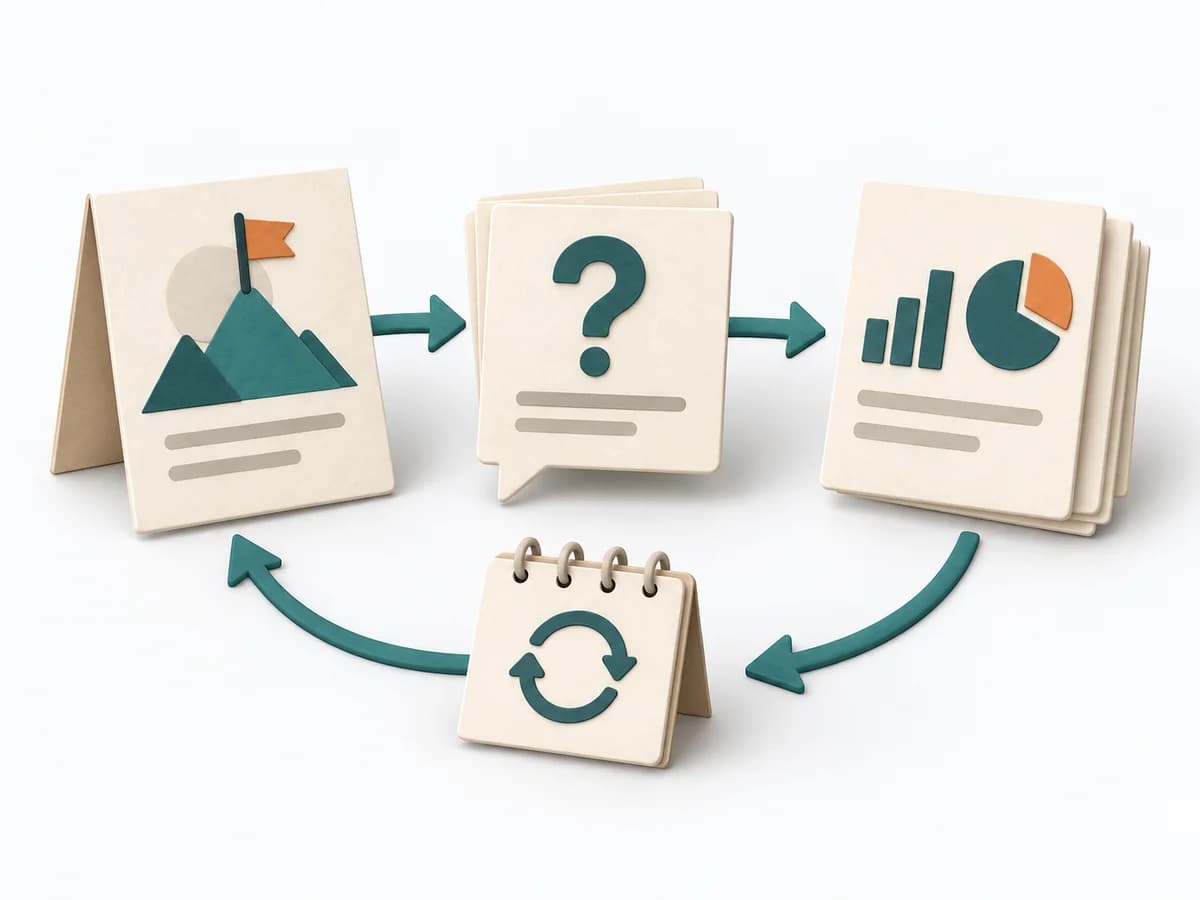 Engineering Goal Question Metric |
|---|---|---|---|---|
Purposedifferent | When a business context is still loosely outlined, it shapes language, responsibility, and integration space. It clarifies what belongs together and where a boundary needs to hold. | Helps clarify observations, needs, and patterns in concrete terms. It groups observations into patterns, questions, and decisions. The result is captured as a HEART-GSM table and dashboard. | When work processes are known only from accounts and the real context stays hidden, Contextual Inquiry makes behavior at the workplace visible. Observation and follow-up questions together show how people actually work, get interrupted, and improvise. | Helps clarify technical problems, hypotheses, and next steps in concrete terms. It breaks a technical problem into testable parts. The result is captured as a GQM table and metric briefs. |
Complexitysame | Medium | Medium | Medium | Medium |
Timedifferent | 1-3 h | 120 min initial, dann laufend | 1-3 Wochen | 90-180 min |
Participantsdifferent | 3-8 | 3-6 | 4-12 Beobachtungen | 3-6 |
Formatdifferent | Workshop + async | Workshop + async | Workshop + async | Workshop |
Outputdifferent | Context Canvas, Glossary, Integration Notes | HEART-GSM Table, Dashboard | Field Notes, Workflow Insights, Pain Points | GQM Table, Metric Profiles |
Tagsno overlap | Domain-Driven DesignBoundariesModeling | MetricsUX researchMeasurementSatisfaction | UX researchObservationContext | MetricsMeasurementEngineeringAlignment |