View methods side by side.
Choose up to four methods. Add them using the search and share the comparison by copying its link.
| Criterion |  Domain Modeling Bounded Context Canvas |  Knowledge Modeling Concept Mapping | 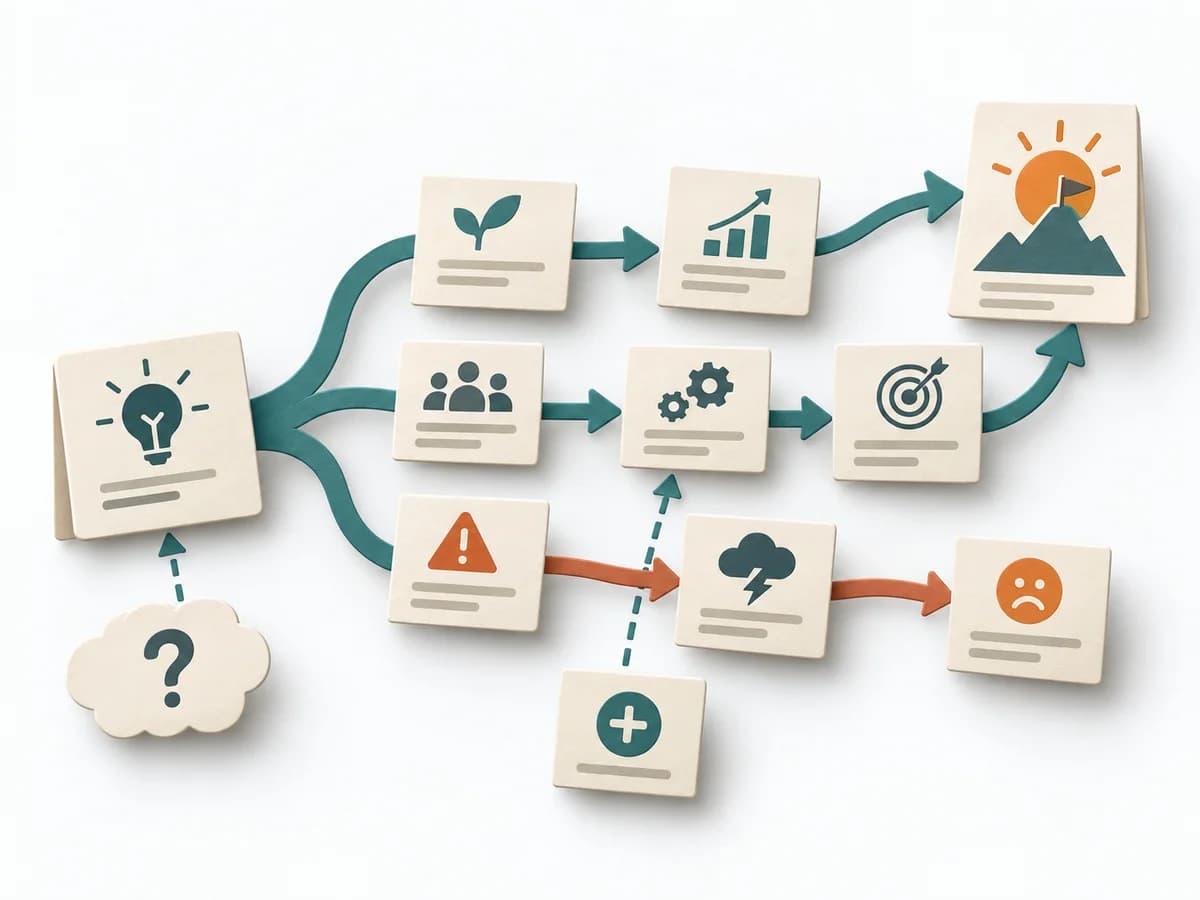 Systems Thinking Future Reality Tree | 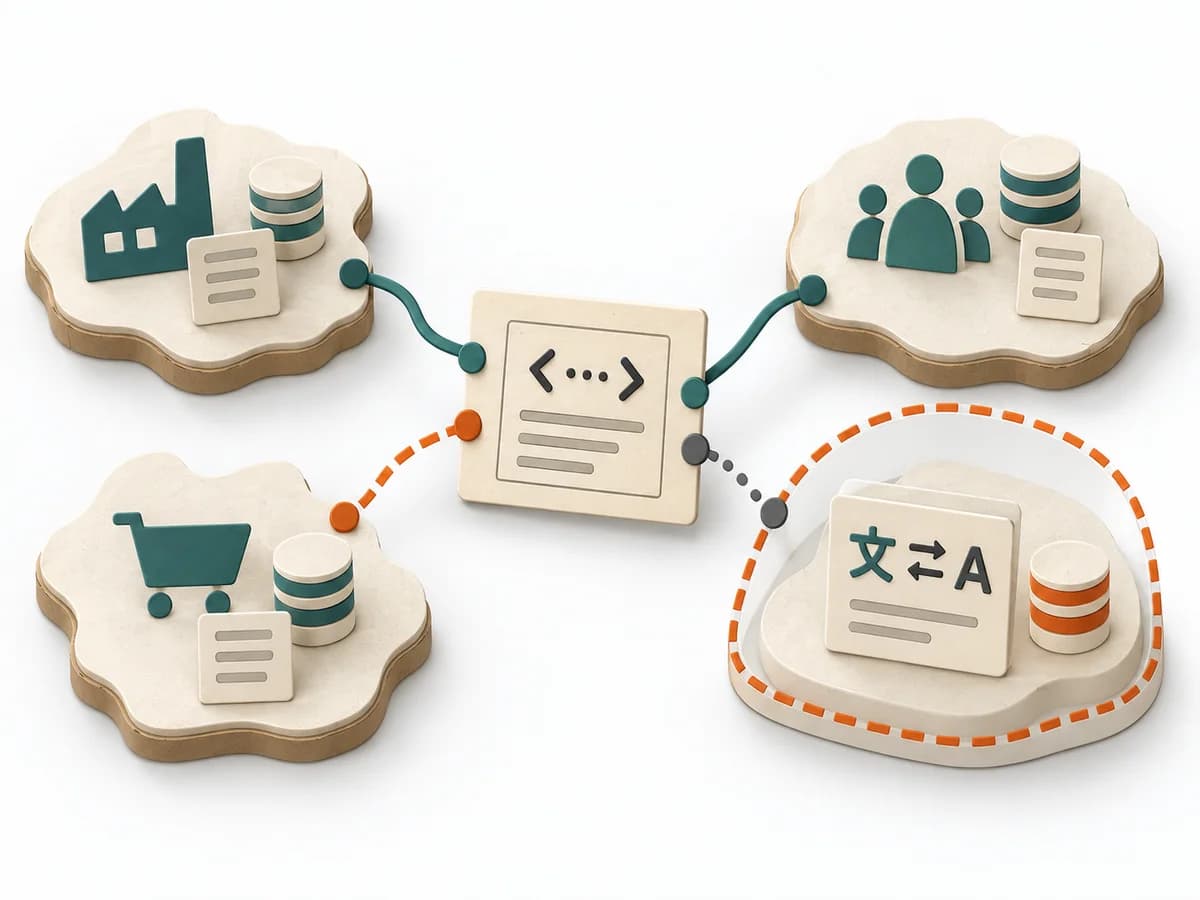 Domain Modeling Context Map |
|---|---|---|---|---|
Purposedifferent | When a business context is still loosely outlined, it shapes language, responsibility, and integration space. It clarifies what belongs together and where a boundary needs to hold. | Concept Mapping arranges terms and relationships in a network that makes subject-matter connections tangible. It fits when a topic needs to be understood structurally rather than linearly. | A Future Reality Tree shows how desired actions are meant to lead to a better system state. The method checks whether a path of change holds together logically before time flows into implementation. | When several contexts need to talk to each other, it makes their relationships and dependencies legible. It helps sort integration pressure and responsibilities across system boundaries. |
Complexitydifferent | Medium | Medium | High | Medium |
Timedifferent | 1-3 h | 1-2 h | 2-4 h | 1-3 h |
Participantsdifferent | 3-8 | 1-8 | 3-8 | 2-8 |
Formatdifferent | Workshop + async | Workshop + async | Workshop | Workshop + async |
Outputdifferent | Context Canvas, Glossary, Integration Notes | Concept Map, Relationship Labels, Knowledge Gaps | Future Reality Tree, Negative Branches, Assumption List, Improved Injections | Context Map, Integration Patterns, Boundary Notes |
Tagsno overlap | Domain-Driven DesignBoundariesModeling | KnowledgeConceptsMappingSensemaking | Theory of ConstraintsSystems thinkingChange | Domain-Driven DesignBoundariesStrategy |