View methods side by side.
Choose up to four methods. Add them using the search and share the comparison by copying its link.
| Criterion | 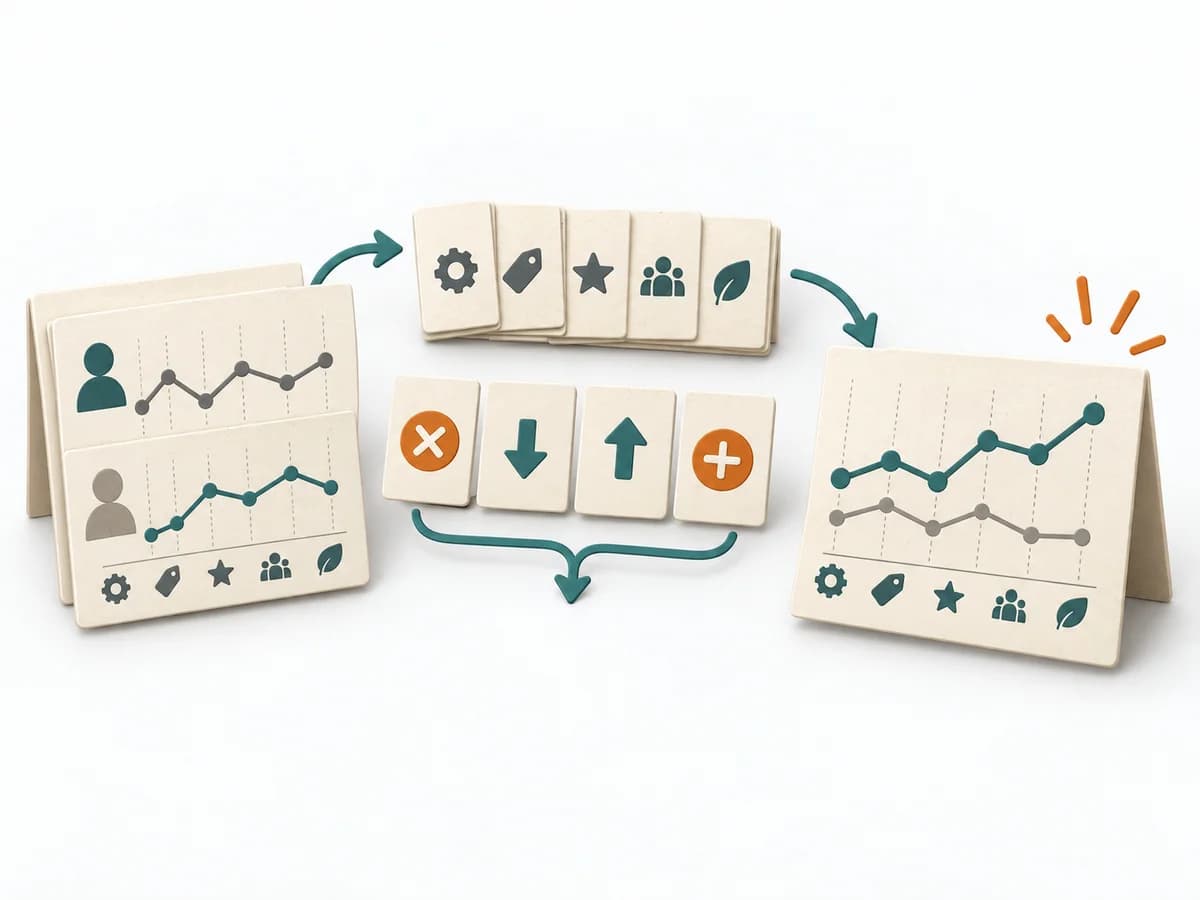 Business Strategy Blue Ocean Strategy Canvas | 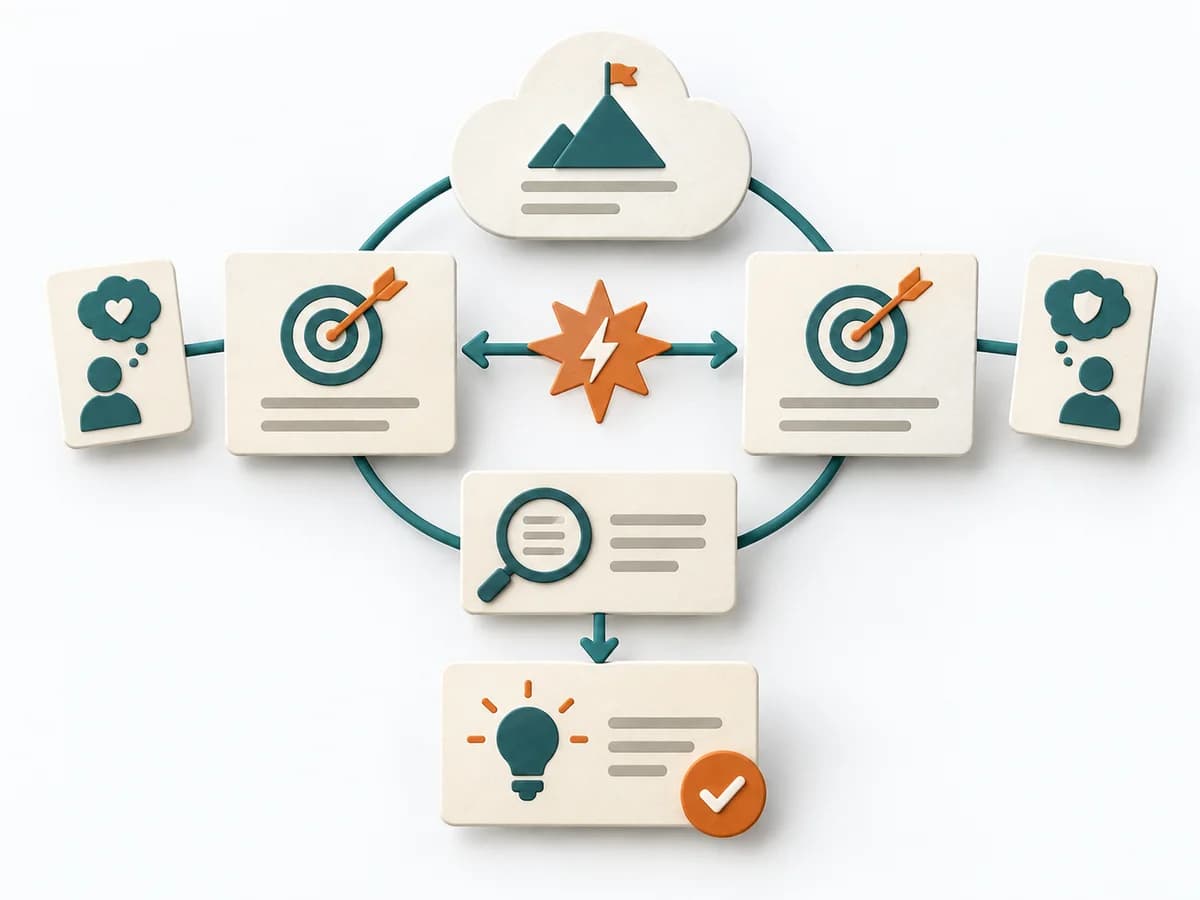 Systems Thinking Evaporating Cloud |  Decision Making Force Field Analysis |  Systems Thinking Leverage Points |
|---|---|---|---|---|
Purposedifferent | The Blue Ocean Strategy Canvas shows how an offering is positioned relative to the market. Differentiation thereby becomes tangible in value factors instead of merely being claimed. | The method makes visible why two seemingly incompatible demands arise and which assumption must be tested to resolve the conflict. | In change initiatives, supporting and restraining forces sit at the table at the same time. Force Field Analysis makes these tensions explicit and shows where change can be pushed forward by strengthening or relieving. | Leverage Points show exactly where interventions in a system produce a disproportionate effect. It draws relationships, patterns, and feedback loops. The result is captured as a leverage map and action strategy. |
Complexitydifferent | Medium | Medium | Low | High |
Timedifferent | 2-4 h | 60-120 min | 45-90 min | Half day |
Participantsdifferent | 3-10 | 2-8 | 3-12 | 3-12 |
Formatsame | Workshop | Workshop | Workshop | Workshop |
Outputdifferent | Strategy Canvas, Value Curve, ERRC Actions | Conflict Cloud, Assumption List, Breakthrough Ideas, Next Experiments | Force Field Map, Change Levers, Risk Notes | Leverage Map, Action Strategy |
Tagsno overlap | StrategyPositioningInnovationValue | Theory of ConstraintsAssumptionsSystems thinking | ChangeDecisionStrategy | Systems thinkingChangeStrategy |