View methods side by side.
Choose up to four methods. Add them using the search and share the comparison by copying its link.
| Criterion |  DevOps Blameless Postmortem |  Product Strategy Lean Canvas | 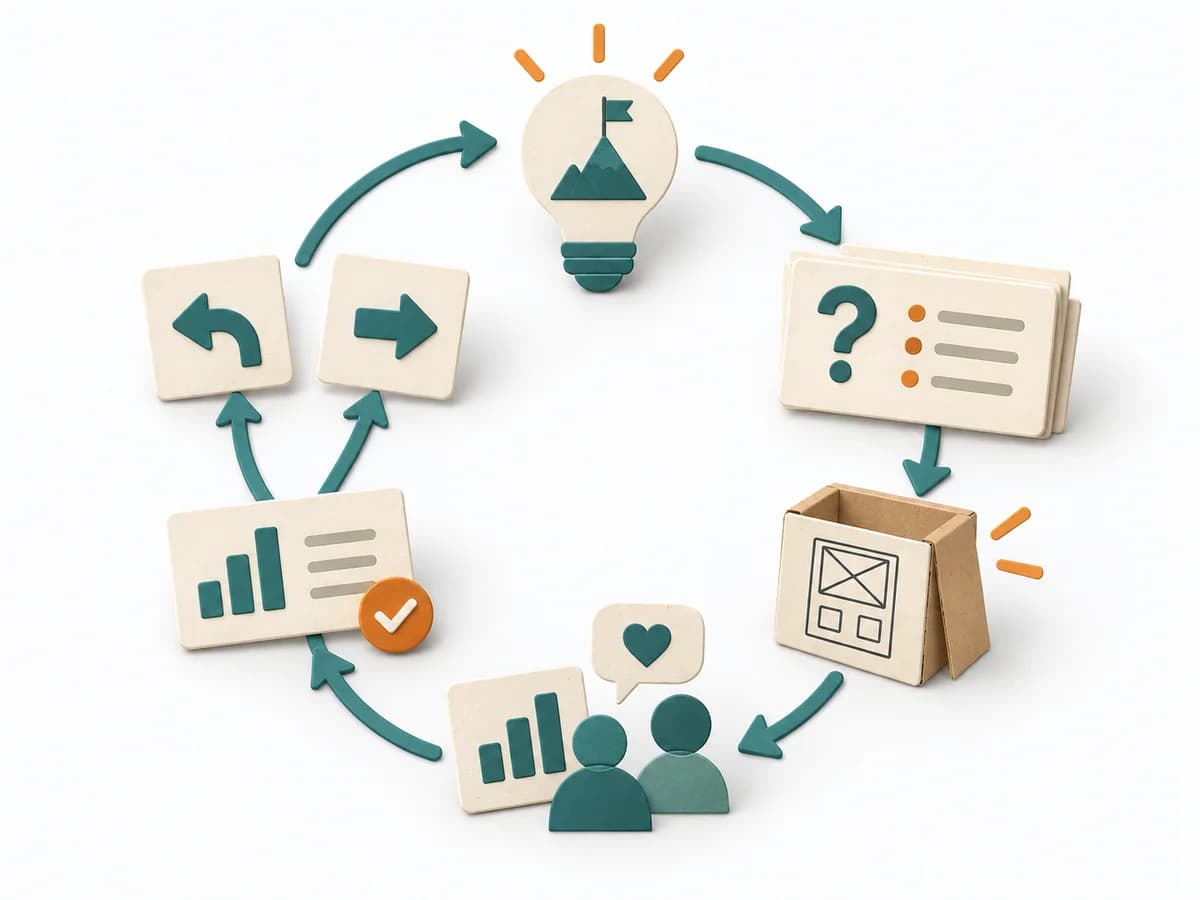 Innovation Lean Startup |  Operations 5 Whys |
|---|---|---|---|---|
Purposedifferent | After an incident with damage or a near miss, the method creates a sober field for learning without assigning blame. It directs attention to the course of events, conditions, and effective countermeasures. | When an early product bet still has too many open points, it brings target group, problem, and assumptions into a single view. It condenses the idea so core risks become nameable. | For uncertain business assumptions, the method forces the idea into contact with real market reactions early. It separates wishful picture, assumption, and observable behavior, so that learning becomes faster than planning. This translates uncertainty into measurable insight. | For a single, hard-to-explain deviation, the method exposes the causal chain behind the visible symptom. It keeps the cause open until a controllable condition emerges instead of a mere description. |
Complexitydifferent | Medium | Medium | Medium | Low |
Timedifferent | 30-90 min | 45-90 min | Wochen bis Monate je Lernzyklus | 15-30 min |
Participantsdifferent | 3-12 | 1-6 | 2-8 | 2-6 |
Formatdifferent | Workshop + async | Workshop + async | Workshop + async | Workshop |
Outputdifferent | Postmortem Doc, Action Items, Timeline | Lean Canvas, Core Assumptions, Experiment Backlog | Hypothesis list, MVPs, Learning reports, Pivot or persevere decision | Root cause notes, Countermeasures |
Tagsno overlap | Site Reliability EngineeringIncidentLearningReliability | StartupLeanAssumptionsBusiness model | LeanStartupValidationMVP | Root causeIncidentLeanProblem solving |