View methods side by side.
Choose up to four methods. Add them using the search and share the comparison by copying its link.
| Criterion |  Operations Barrier Analysis |  Operations Fault Tree Analysis |  Facilitation Stakeholder Salience Model | 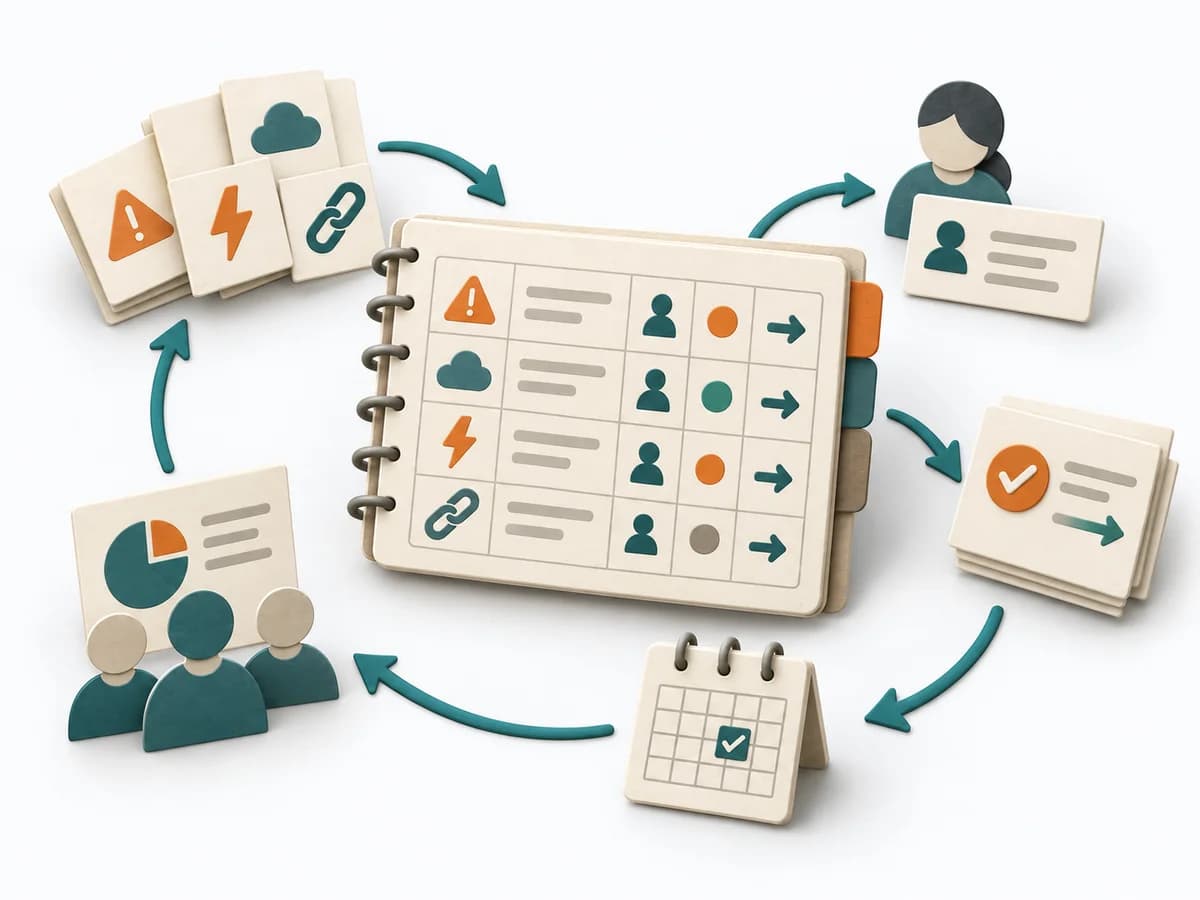 Delivery RAID Log |
|---|---|---|---|---|
Purposedifferent | For a risk that can only be managed through multiple layers of protection, the method examines the effectiveness of each barrier. It shows where safeguards are missing, too weak, or fail under real conditions. | For a critical top event with several possible triggers, the method logically models failure paths. It makes visible which combinations of conditions can lead to damage. | When stakeholders appear to matter very differently, the Stakeholder Salience Model rates their actual priority through power, legitimacy, and urgency. It turns individual contributions into a visible selection. The result is captured as a Salience diagram and a class-based strategy. | Helps clarify scope, sequence, and delivery flow in concrete terms. It makes work, boundaries, and order steerable. The result is captured as a RAID Log and a source for status reporting. |
Complexitydifferent | Medium | High | Medium | Low |
Timedifferent | 2-4 h | 2-6 h | 60-90 min | 30 min Setup, dann laufend |
Participantsdifferent | 2-6 | 3-8 | 3-6 | 1-3 maintaining, briefing for everyone |
Formatdifferent | Workshop + async | Workshop + async | Workshop | Async |
Outputdifferent | Barrier Inventory, Failure Analysis per Barrier, Action Backlog | Fault Tree, Critical Paths, Cause Hypotheses, Control Actions | Salience Diagram, Strategy per Class | RAID Log, Status Report Source |
Tagsno overlap | Root causeSafetyIncident | RiskRoot causeSafety | StakeholdersFacilitationAlignmentGovernance | RiskTrackingStakeholdersGovernance |