View methods side by side.
Choose up to four methods. Add them using the search and share the comparison by copying its link.
| Criterion | 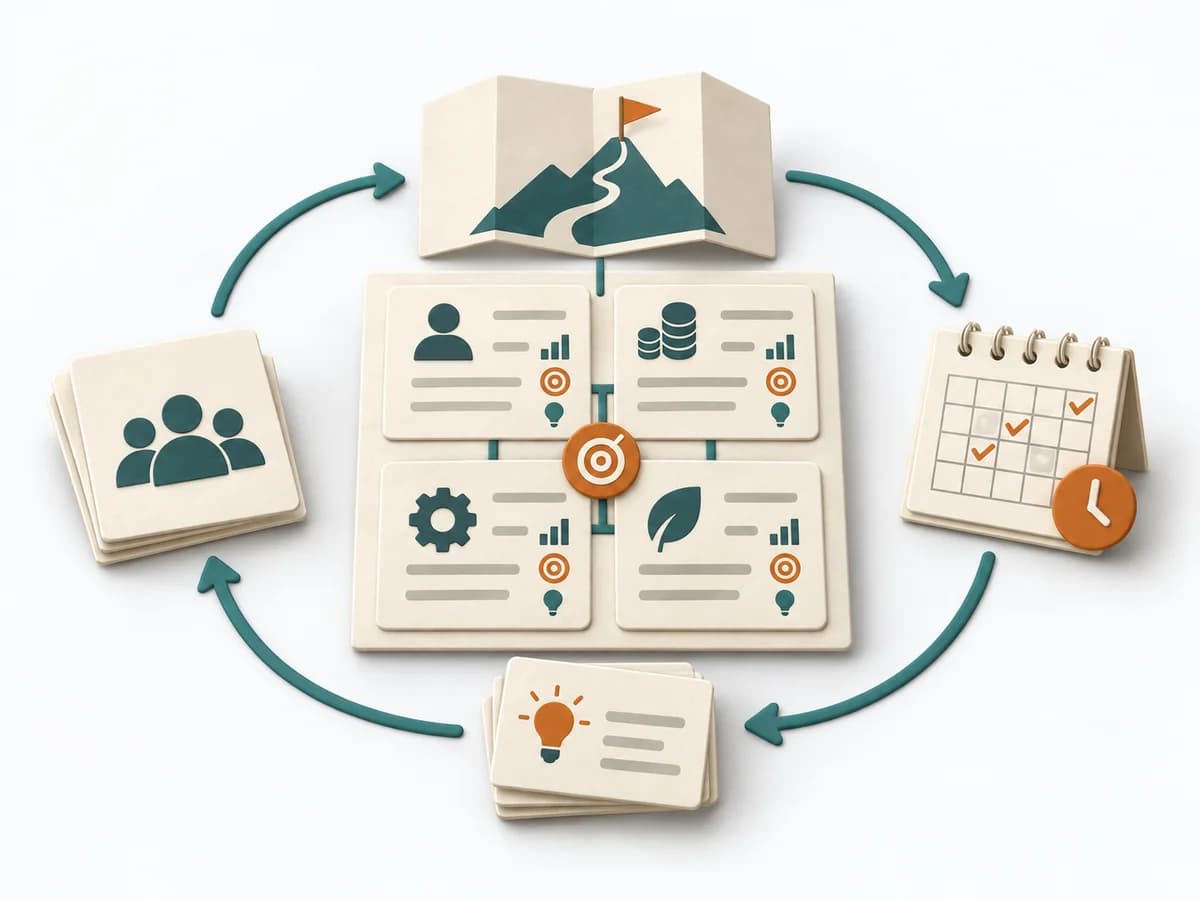 Business Strategy Balanced Scorecard | 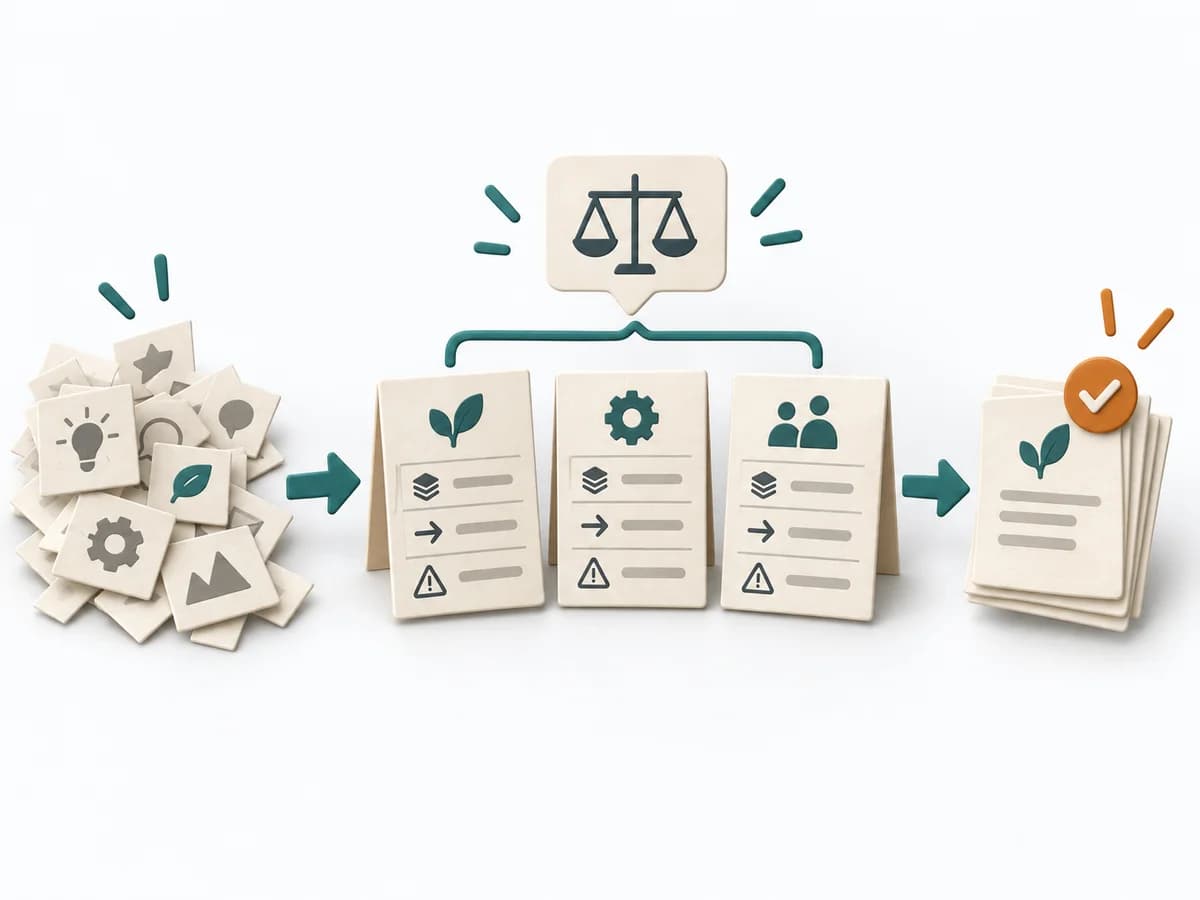 Decision Making Option Framing | 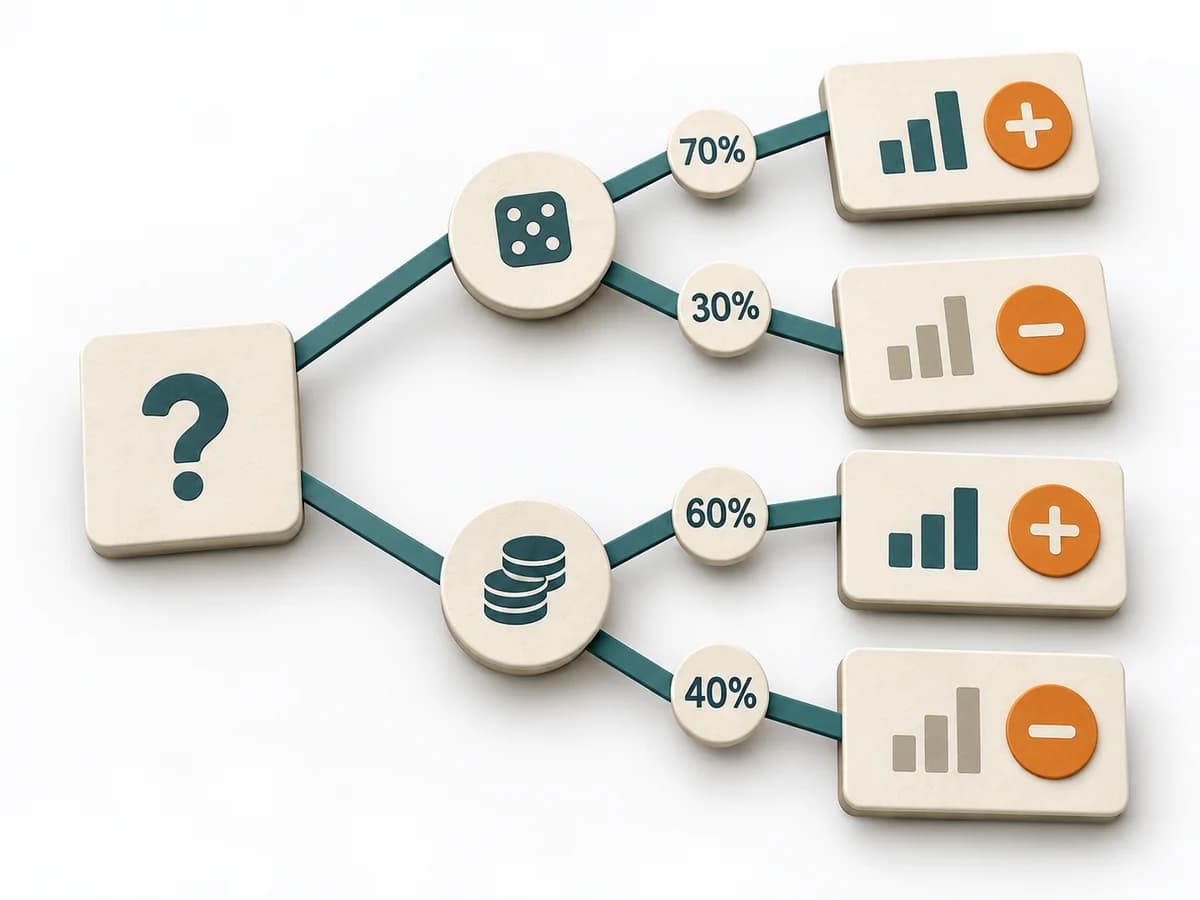 Decision Making Decision Tree | 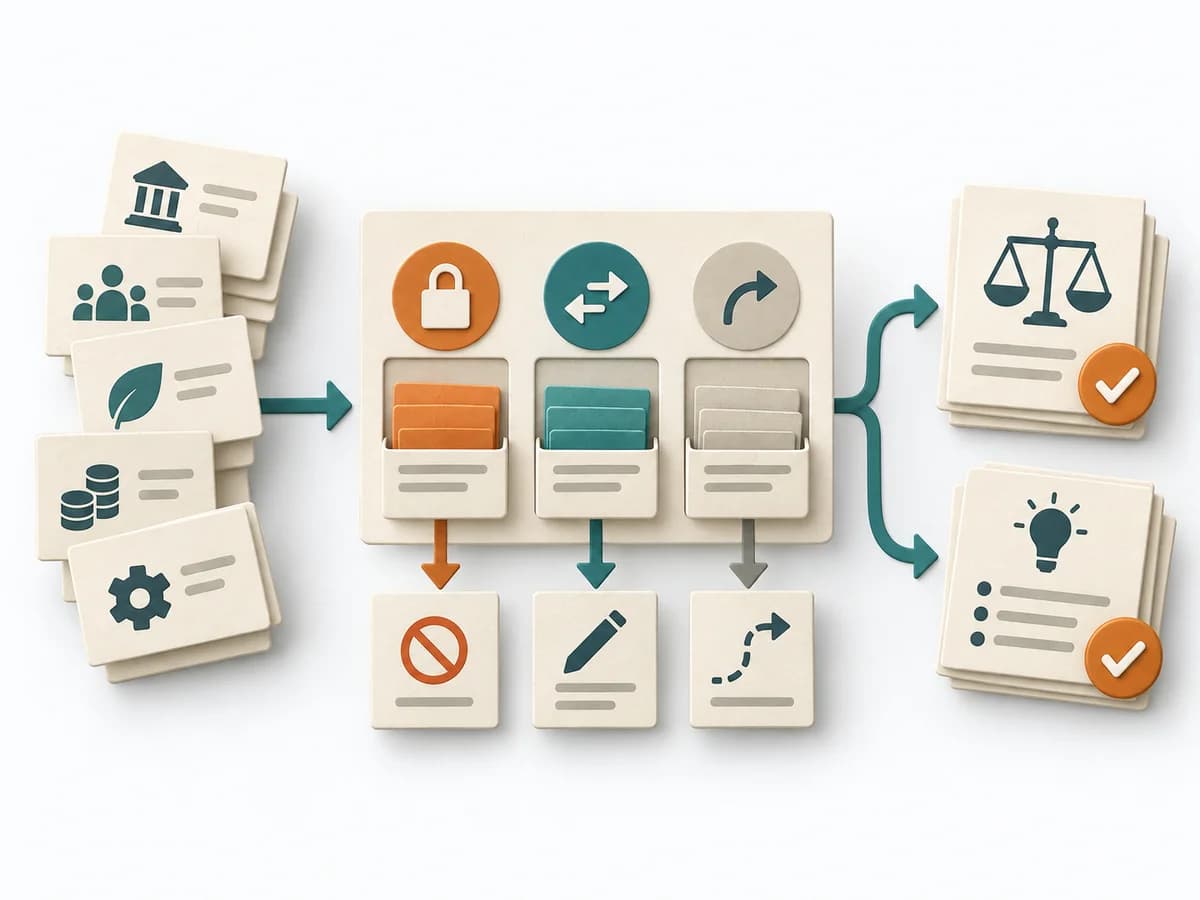 Decision Making Constraint Analysis |
|---|---|---|---|---|
Purposedifferent | Balanced Scorecard translates strategy into a few interconnected perspectives and metrics. It holds impact, steering, and learning together in daily work instead of narrowing strategy down to financial figures. | In early decisions, alternatives are often still vague, incomplete, or blended together. Option Framing brings every possibility into a comparable form and makes visible which variant actually fits the question. | For decisions with follow-on paths and dependencies, a linear comparison is often not enough. A Decision Tree shows how options branch under conditions and which consequences hang on each branch. | When an initiative stalls, the limit often lies not in the idea but in hard or soft boundary conditions. Constraint Analysis separates these limits and shows which of them can actually be shaped. |
Complexitydifferent | High | Medium | Medium | Low |
Timedifferent | Halber Tag bis mehrere Wochen | 45-120 min | 30-90 min | 30-90 min |
Participantsdifferent | 4-12 | 3-8 | 1-6 | 2-8 |
Formatsame | Workshop + async | Workshop + async | Workshop + async | Workshop + async |
Outputdifferent | Balanced Scorecard, Strategic Measures, Initiative Map | Option Frames, Assumption Notes, Comparable Shortlist, Decision Inputs | Decision Tree, Option Map, Assumption List | Constraint List, Hard/Soft Classification, Option Impact Notes, Decision Boundaries |
Tagsno overlap | StrategyMetricsExecution | OptionsDecision framingStrategyComparison | DecisionTreeOptions | ConstraintsDecisionPlanningOptions |