View methods side by side.
Choose up to four methods. Add them using the search and share the comparison by copying its link.
| Criterion |  Business Strategy Balanced Scorecard | 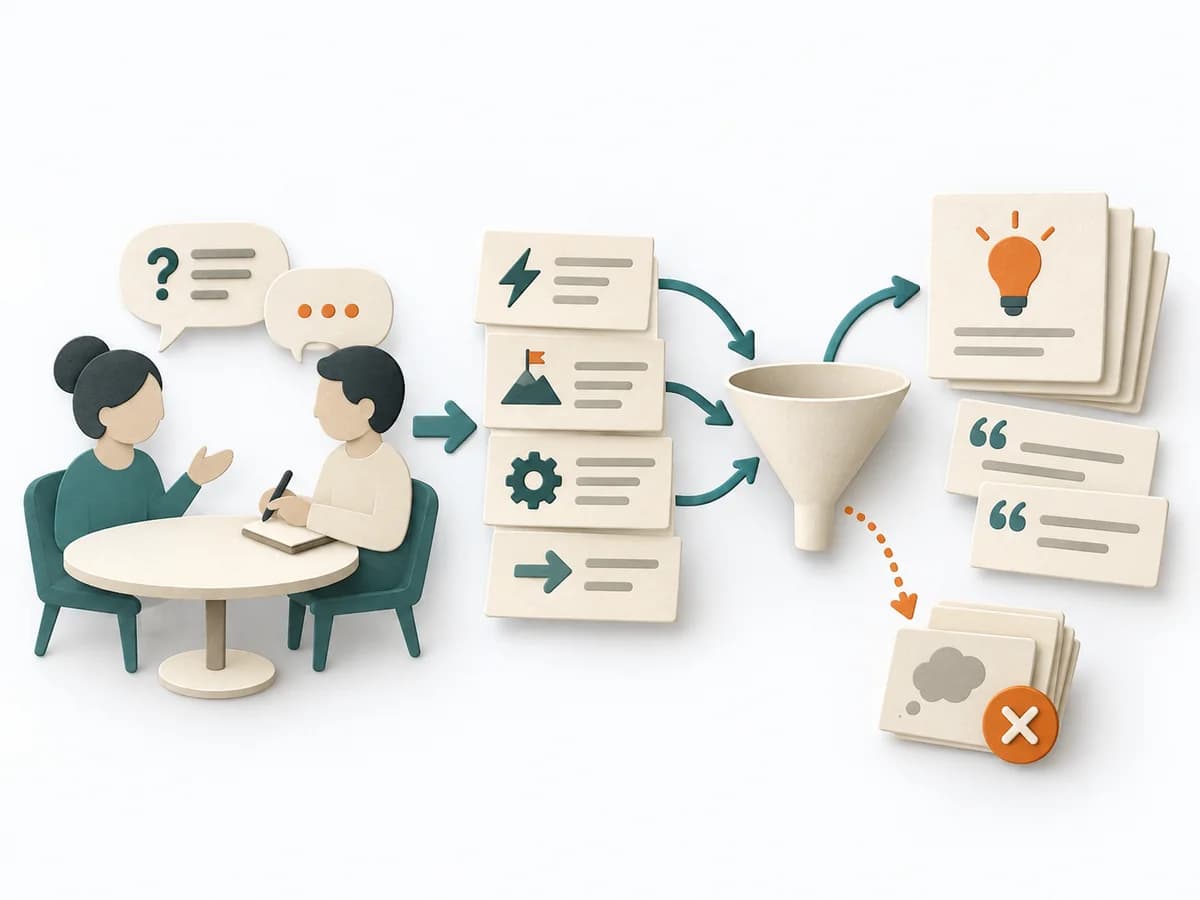 Product Discovery Opportunity Interview |  UX Research HEART Framework |  Product Discovery Kano Model |
|---|---|---|---|---|
Purposedifferent | Balanced Scorecard translates strategy into a few interconnected perspectives and metrics. It holds impact, steering, and learning together in daily work instead of narrowing strategy down to financial figures. | When opportunities are still hidden behind signals of need, it structures conversations around needs and obstacles. It looks for patterns that lead to new product opportunities. | Helps clarify observations, needs, and patterns in concrete terms. It groups observations into patterns, questions, and decisions. The result is captured as a HEART-GSM table and dashboard. | When features need to be distinguished by their effect on satisfaction, it makes expectations and surprises comparable. It separates basic needs, performance contribution, and delight. |
Complexitydifferent | High | Medium | Medium | Medium |
Timedifferent | Halber Tag bis mehrere Wochen | 30-60 min je Interview | 120 min initial, dann laufend | 1-2 Tage |
Participantsdifferent | 4-12 | 5-12 Interviews | 3-6 | 10-50 |
Formatsame | Workshop + async | Workshop + async | Workshop + async | Workshop + async |
Outputdifferent | Balanced Scorecard, Strategic Measures, Initiative Map | Interview Notes, Opportunity Themes, Customer Quotes | HEART-GSM Table, Dashboard | Kano Matrix, Feature Classes, Priority Themes |
Tagsno overlap | StrategyMetricsExecution | DiscoveryInterviewsOpportunityCustomer | MetricsUX researchMeasurementSatisfaction | SatisfactionPrioritizationCustomer |