View methods side by side.
Choose up to four methods. Add them using the search and share the comparison by copying its link.
| Criterion |  Decision Making Assumption Surfacing |  Operations 5 Whys | 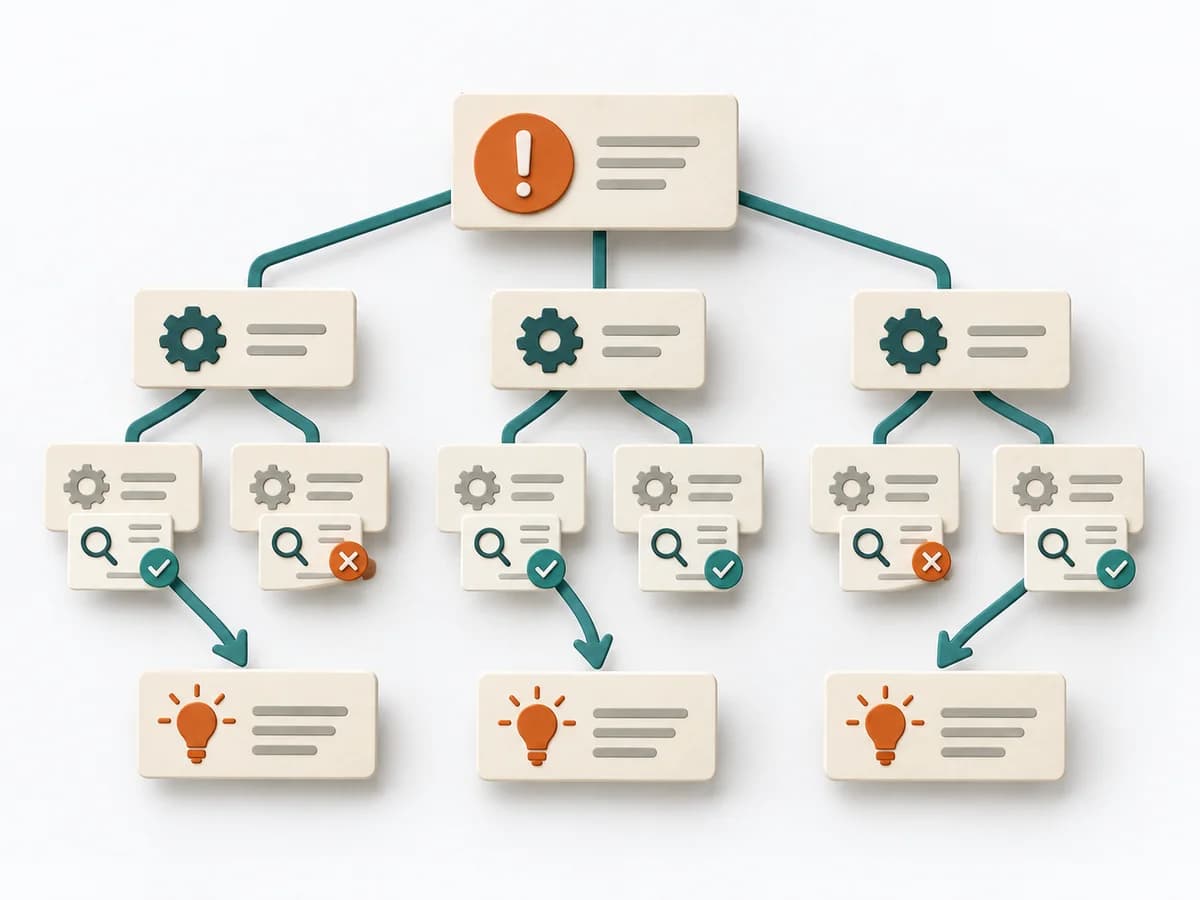 Operations Root Cause Tree Analysis | 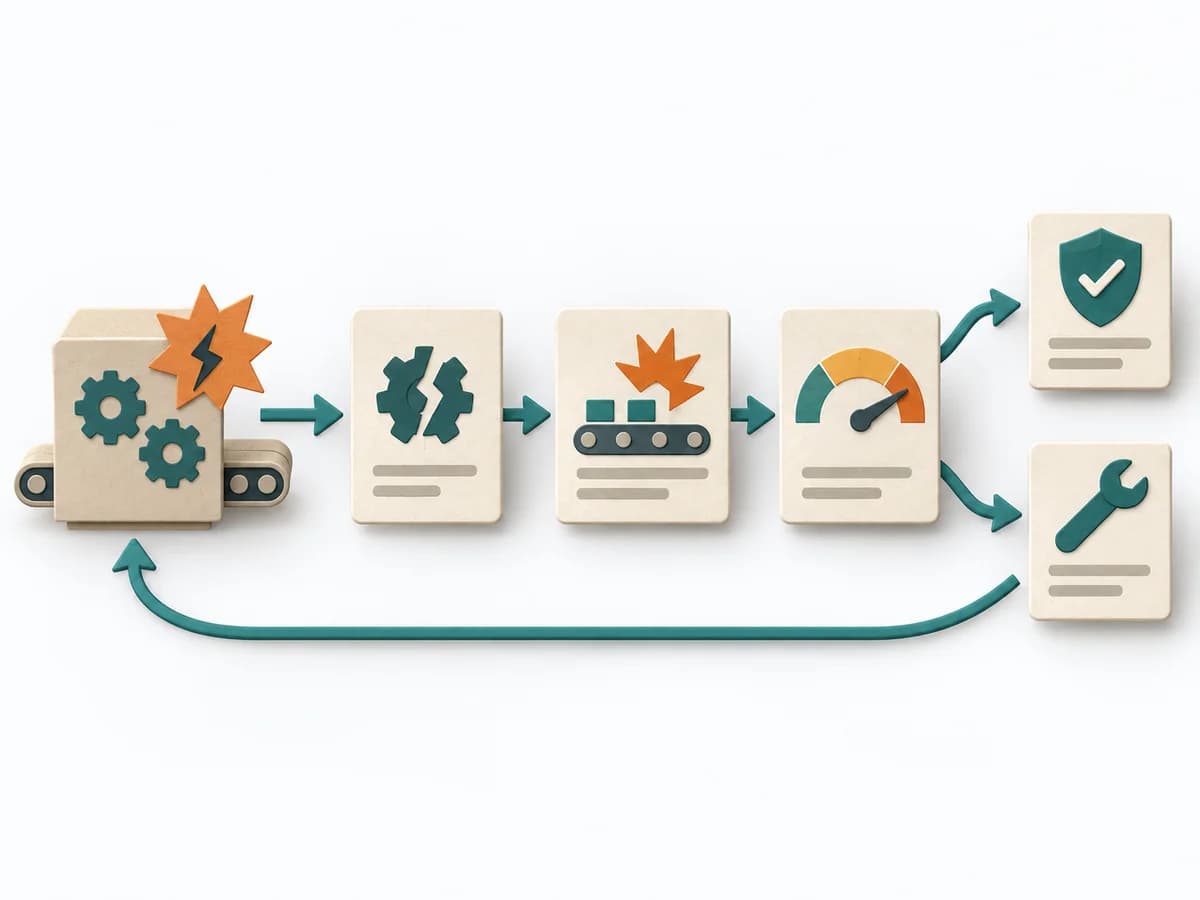 Operations Failure Mode and Effects Analysis |
|---|---|---|---|---|
Purposedifferent | Plans often contain assumptions that were never openly stated and remain dangerous precisely because of that. Assumption Surfacing makes these silent premises visible and prioritizes which of them carry the initiative or could sink it. | For a single, hard-to-explain deviation, the method exposes the causal chain behind the visible symptom. It keeps the cause open until a controllable condition emerges instead of a mere description. | For a problem with several suspected causes, the method builds a causal structure instead of a mere list. It makes visible how causes connect and where the strongest points of leverage lie. | For a process, product, or service with noticeable failure risks, the method assesses possible failure modes in advance. It directs attention to combinations of occurrence, effect, and detectability. |
Complexitydifferent | Low | Low | Medium | High |
Timedifferent | 45-90 min | 15-30 min | 1-3 h | 2-6 h |
Participantsdifferent | 2-8 | 2-6 | 2-8 | 3-10 |
Formatdifferent | Workshop + async | Workshop | Workshop | Workshop |
Outputdifferent | Assumption List, Critical Assumptions, Learning Plan | Root cause notes, Countermeasures | Cause Tree, Evidence Notes, Countermeasures | FMEA Table, Risk Priority, Mitigation Actions |
Tagsno overlap | AssumptionsRiskDecisionDiscovery | Root causeIncidentLeanProblem solving | Root causeTreeIncidentQuality | RiskQualityOperationsRoot cause |