View methods side by side.
Choose up to four methods. Add them using the search and share the comparison by copying its link.
| Criterion |  Product Discovery Assumption Mapping | 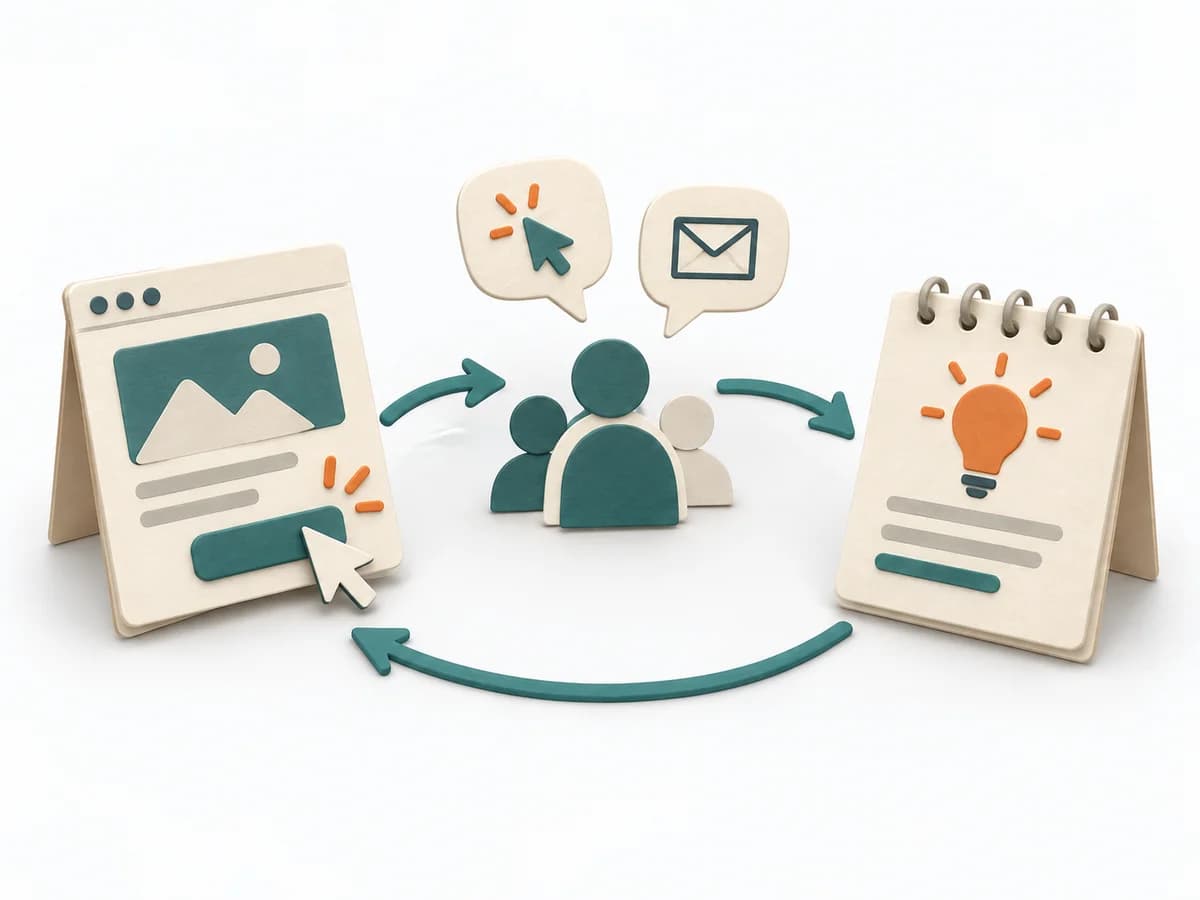 Product Discovery Smoke Test | 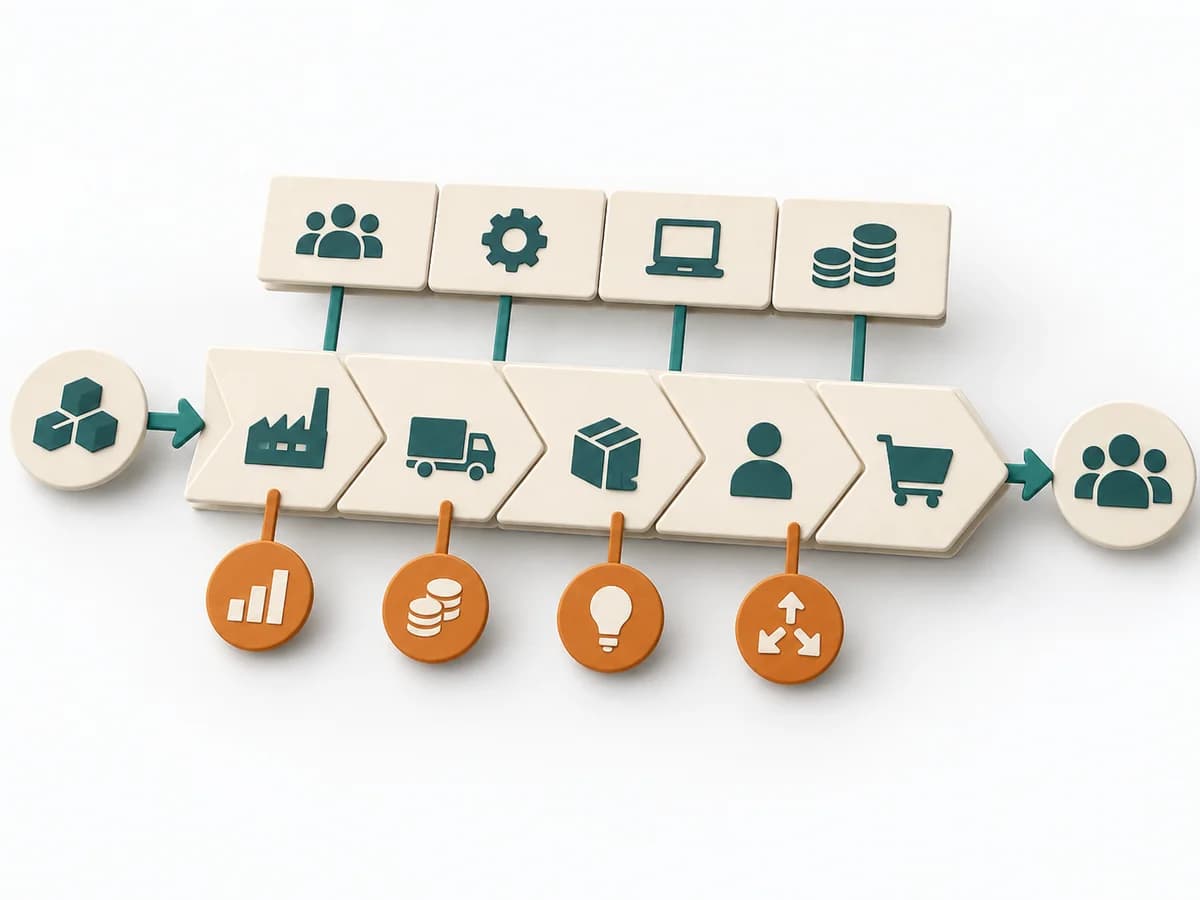 Business Strategy Value Chain Analysis |  Product Discovery Fake Door Test |
|---|---|---|---|---|
Purposedifferent | When assumptions still sit unordered in the room, it weighs uncertainty against leverage. It makes visible which hypotheses should be checked first. | When demand only needs to be roughly verified, it tests interest with minimal effort. It measures whether people would take a next step at all. | Value Chain Analysis shows where value is created, costs accrue, and differentiation becomes possible along the process. It compares strengths, risks, market logic, and courses of action. The result is captured as a value-chain map and lever list. | When demand is still unclear, it measures interest in a feature before it is built. It separates real behavior from polite agreement and deliberately keeps build effort small. |
Complexitydifferent | Medium | Low | High | Medium |
Timedifferent | 45-60 min | 1-5 Tage | Half day | 1-5 Tage |
Participantsdifferent | 2-8 | Nutzertraffic | 3-8 | Nutzertraffic |
Formatdifferent | Workshop + async | Async | Workshop | Async |
Outputdifferent | Assumption map, Test backlog, Risk ranking | Interest Metrics, Conversion Signal, Learning Note | Value Chain Map, Lever List | Click Data, Interest Signal, Learning Decision |
Tagsno overlap | AssumptionsRiskExperimentsValidation | ValidationExperimentsDemandGrowth | StrategyBusiness modelDiagnosisAnalysis | ValidationExperimentsDemandDiscovery |