View methods side by side.
Choose up to four methods. Add them using the search and share the comparison by copying its link.
| Criterion |  Product Discovery Assumption Mapping | 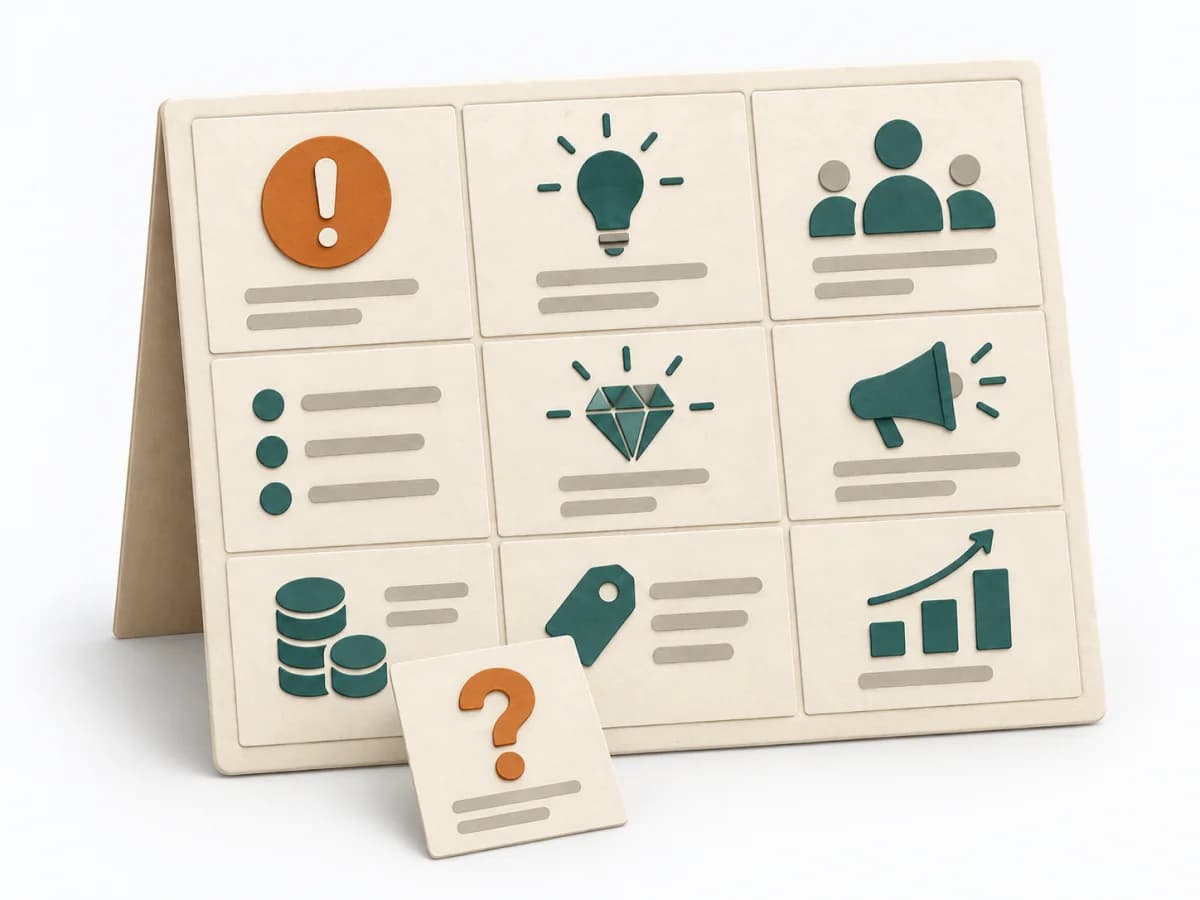 Product Strategy Lean Canvas | 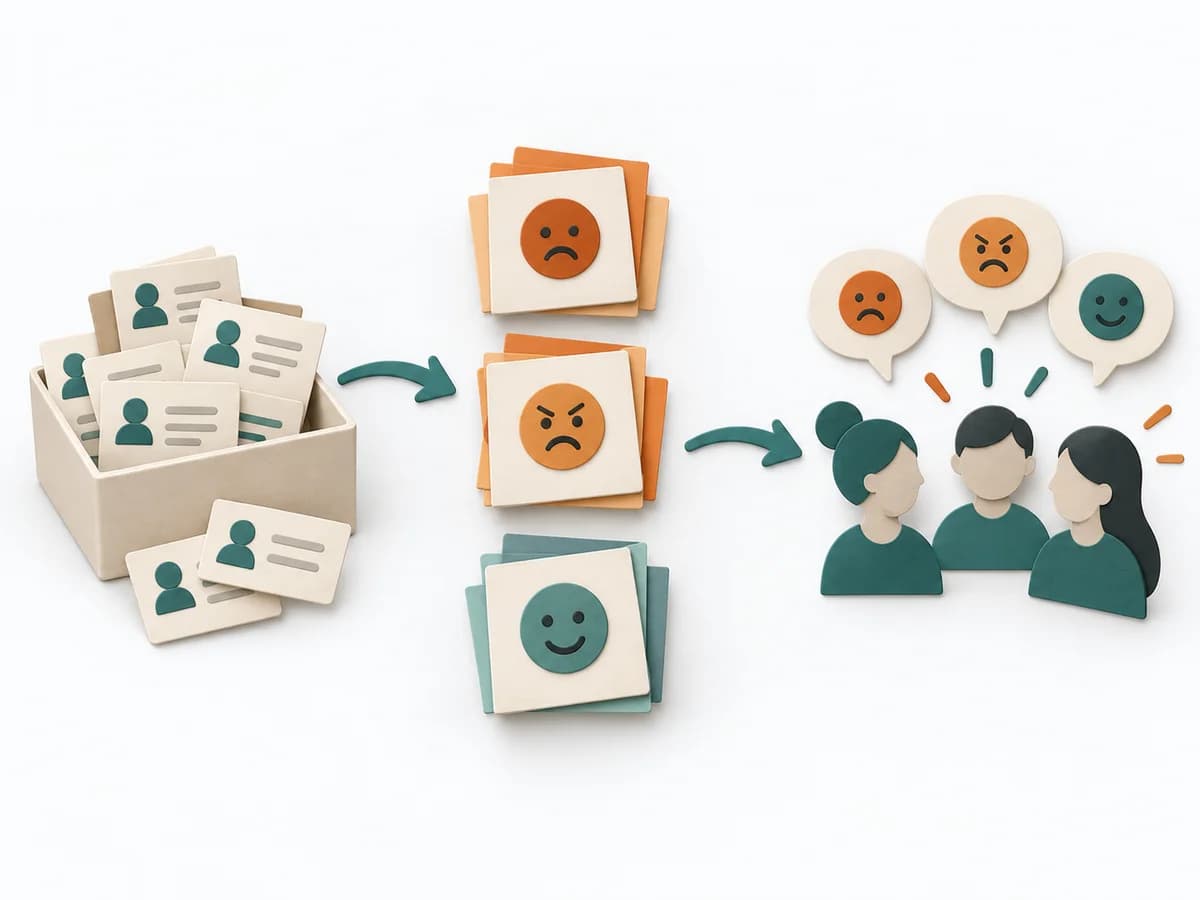 Agile Mad Sad Glad | 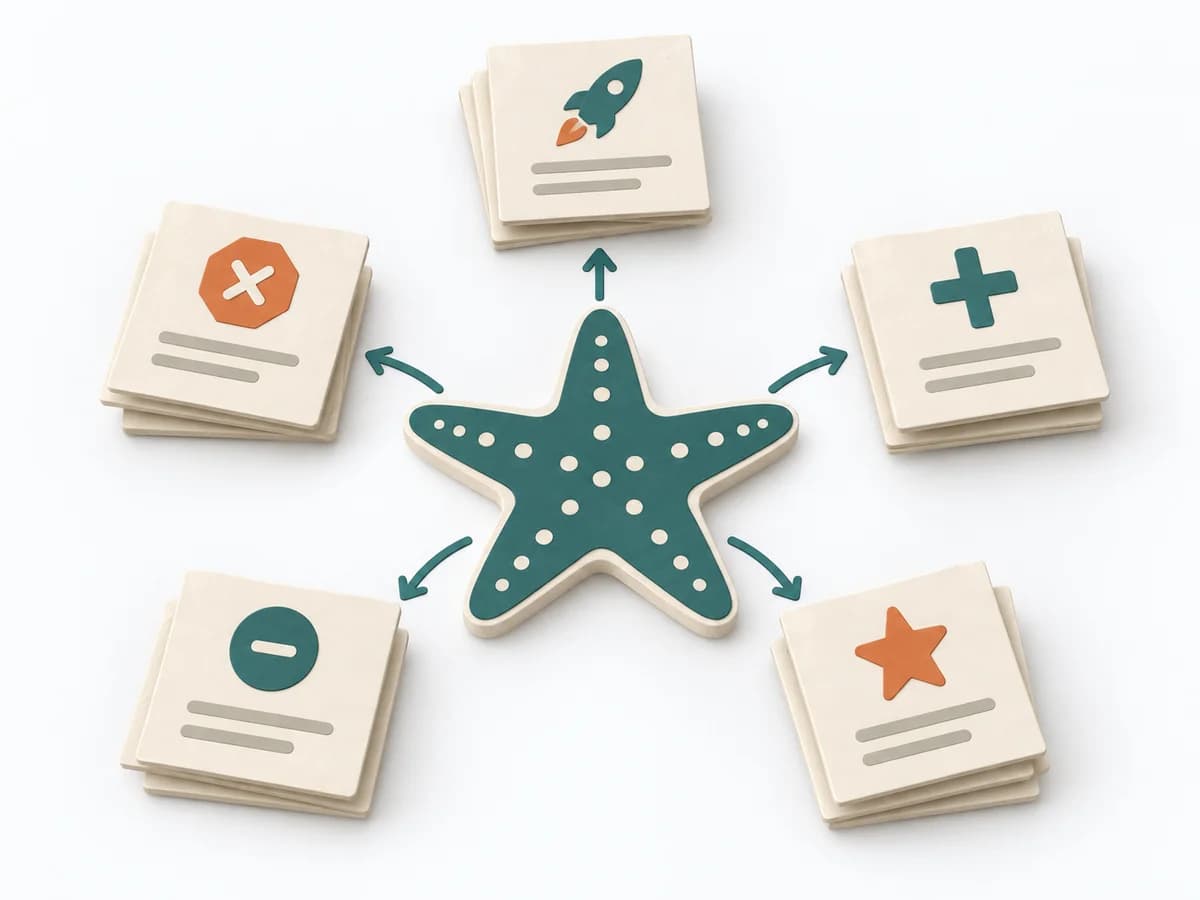 Agile Starfish Retrospective |
|---|---|---|---|---|
Purposedifferent | When assumptions still sit unordered in the room, it weighs uncertainty against leverage. It makes visible which hypotheses should be checked first. | When an early product bet still has too many open points, it brings target group, problem, and assumptions into a single view. It condenses the idea so core risks become nameable. | When a team's or workshop's mood needs to become readable, it structures emotional signals with little setup. It makes strain, relief, and sources of energy tangible. | When improvement options need to be sorted more finely than just start and stop, it brings observations into clear kinds of action. This makes visible what should be done more, less, newly, or continued. |
Complexitydifferent | Medium | Medium | Low | Low |
Timedifferent | 45-60 min | 45-90 min | 30-60 min | 45-90 min |
Participantsdifferent | 2-8 | 1-6 | 3-10 | 4-12 |
Formatdifferent | Workshop + async | Workshop + async | Workshop | Workshop |
Outputdifferent | Assumption map, Test backlog, Risk ranking | Lean Canvas, Core Assumptions, Experiment Backlog | Emotion Board, Themes, Action Items | Starfish Board, Practice Changes, Experiments |
Tagsno overlap | AssumptionsRiskExperimentsValidation | StartupLeanAssumptionsBusiness model | RetrospectiveTeamReflection | RetrospectiveImprovementExperimentsTeam |