View methods side by side.
Choose up to four methods. Add them using the search and share the comparison by copying its link.
| Criterion |  Product Discovery Assumption Mapping |  Decision Making Force Field Analysis | 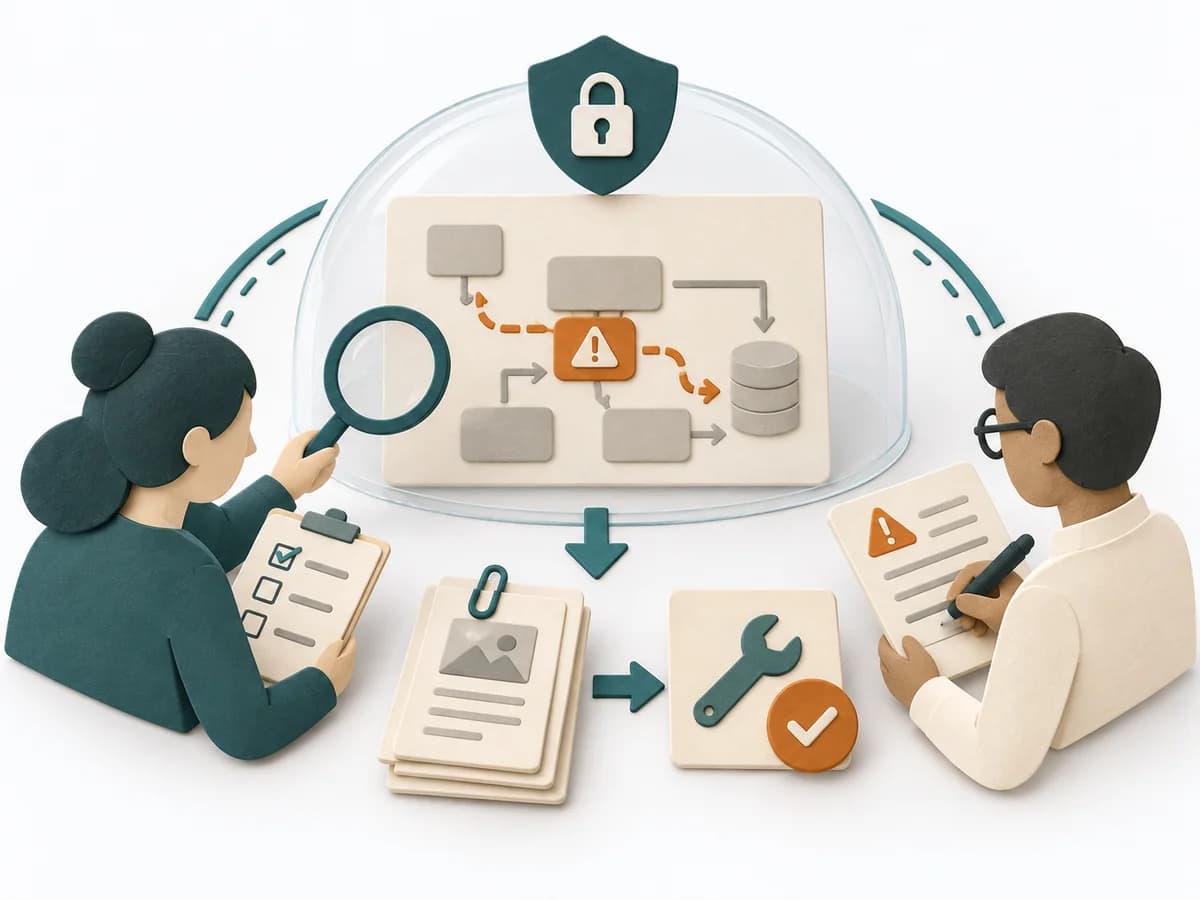 Decision Making Red Teaming |  Product Strategy DIBB |
|---|---|---|---|---|
Purposedifferent | When assumptions still sit unordered in the room, it weighs uncertainty against leverage. It makes visible which hypotheses should be checked first. | In change initiatives, supporting and restraining forces sit at the table at the same time. Force Field Analysis makes these tensions explicit and shows where change can be pushed forward by strengthening or relieving. | For strategic decisions with high reach, agreement and gut feeling are often not enough. Red teaming brings deliberate opposition into the situation and tests where a plan breaks under real counterarguments. | DIBB helps clarify target groups, value, goals, and priorities by making the logic behind a decision explicit. It captures results as a DIBB document, belief list, bet list, and learning report. |
Complexitydifferent | Medium | Low | High | Low |
Timedifferent | 45-60 min | 45-90 min | 1-4 h | 1-2 h |
Participantsdifferent | 2-8 | 3-12 | 3-8 | 2-8 |
Formatdifferent | Workshop + async | Workshop | Workshop | Workshop + async |
Outputdifferent | Assumption map, Test backlog, Risk ranking | Force Field Map, Change Levers, Risk Notes | Challenge Findings, Risk Register, Mitigation Plan | DIBB document, Belief list, Bet list, Learning report |
Tagsno overlap | AssumptionsRiskExperimentsValidation | ChangeDecisionStrategy | RiskDecisionSensemaking | StrategyDecisionAssumptionsHypothesis |