View methods side by side.
Choose up to four methods. Add them using the search and share the comparison by copying its link.
Selected:ARID (Active Reviews for Intermediate Designs)SAAM (Software Architecture Analysis Method)VRIO FrameworkATAM (Architecture Tradeoff Analysis Method)
| Criterion |  Architecture ARID (Active Reviews for Intermediate Designs) |  Architecture SAAM (Software Architecture Analysis Method) | 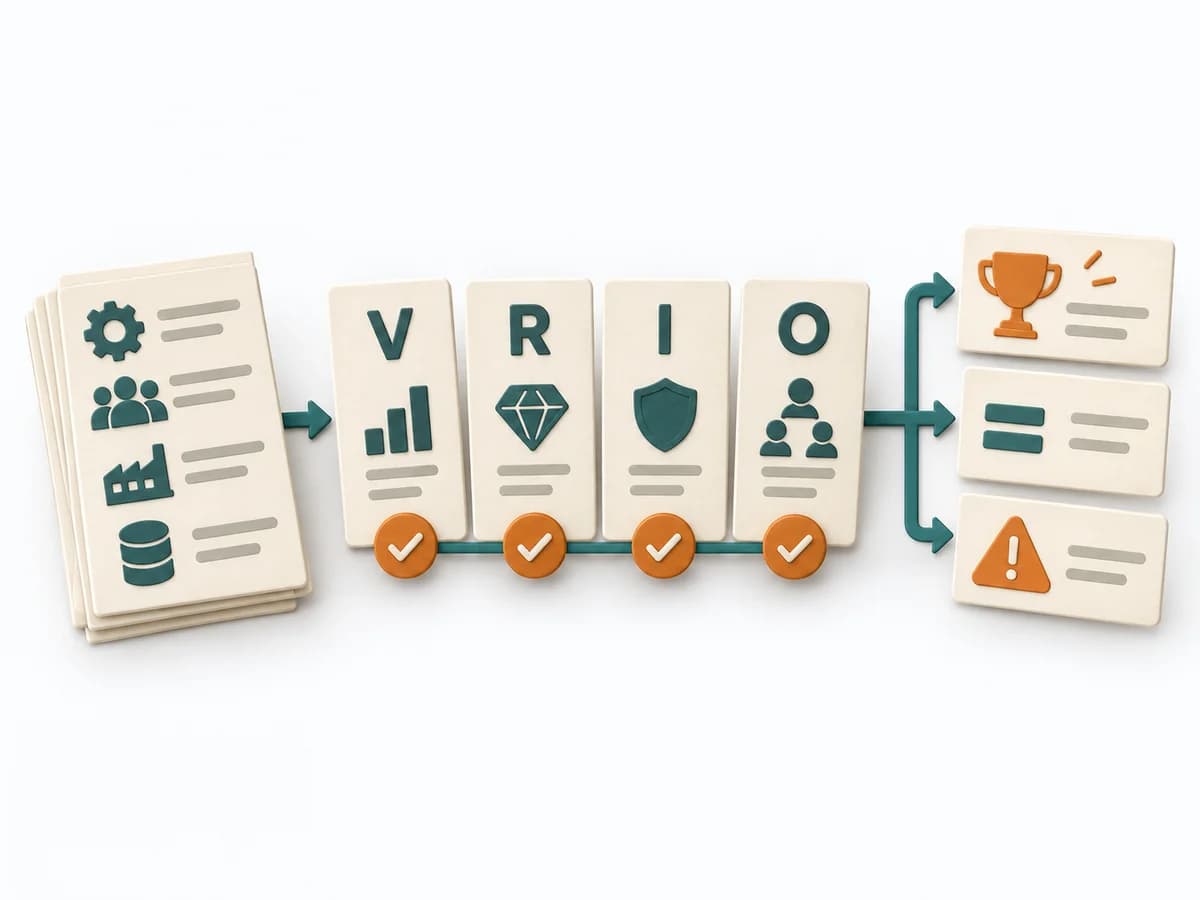 Business Strategy VRIO Framework |  Architecture ATAM (Architecture Tradeoff Analysis Method) |
|---|---|---|---|---|
Purposedifferent | ARID examines how well developers can work with a technical design. It focuses on a part of the system that can still be revised, between the architecture overview and the detailed specification. | SAAM helps teams judge an architecture’s suitability for selected tasks and changes. It is particularly useful for examining modifiability and comparing architecture alternatives with clear reasoning. | The VRIO Framework rates resources and capabilities on whether they are Valuable, Rare, Inimitable, and Organized. It compares strengths, risks, market logic, and courses of action. The result is captured as a VRIO table and strategic actions. | ATAM helps teams weigh architecture decisions when quality goals compete. The team considers business goals, stakeholder expectations, and technical decisions together. The evaluation shows which risks need further investigation. |
Complexitydifferent | Medium | High | Medium | High |
Timedifferent | 2–4 h review as a planning range; preparation and evaluation additional | Preparation, scenario analysis, and findings review; effort depends on scope | 90-180 min | Several meetings plus preparation and analysis; total effort depends on scope |
Participantsdifferent | Designers, developers as users, and facilitation | Architecture experts and stakeholders for scenarios and weighting | 3-6 | Evaluation team, architects, and relevant stakeholders |
Formatdifferent | Workshop + async | Workshop + async | Workshop | Workshop + async |
Outputdifferent | Prioritized development tasks, Jointly produced code or pseudocode, Observed difficulties and open design questions, Proposed design revisions | Domain functions mapped to components and connections, Quality attributes and evaluation criteria, Typical tasks and their effects on the architecture, Reasoned evaluation or comparison of alternatives | VRIO Table, Strategic Actions | Prioritized quality scenarios in a utility tree, Architecture risks with reasoning and assumptions, Sensitivity and trade-off points, Findings report with open investigations |
Tagsno overlap | ArchitectureEngineeringFeedbackValidationTasks | ArchitectureChangeAnalysisComparisonQuality | StrategyDiagnosisBusiness modelCapability | ArchitectureQualityRiskTradeoffsStakeholders |