View methods side by side.
Choose up to four methods. Add them using the search and share the comparison by copying its link.
| Criterion |  Architecture ARID (Active Reviews for Intermediate Designs) |  Operations Barrier Analysis | 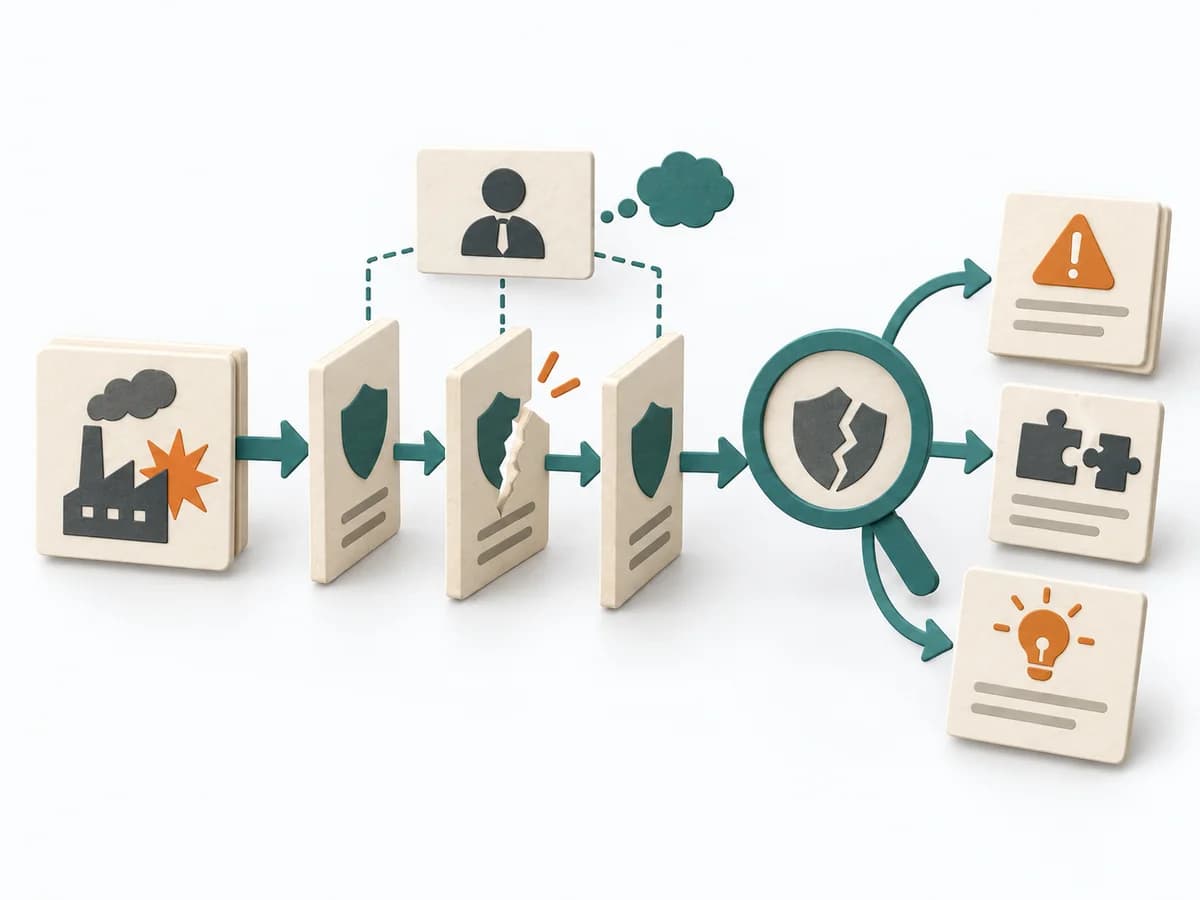 Operations MORT Analysis |  DevOps ChatOps |
|---|---|---|---|---|
Purposedifferent | ARID examines how well developers can work with a technical design. It focuses on a part of the system that can still be revised, between the architecture overview and the detailed specification. | For a risk that can only be managed through multiple layers of protection, the method examines the effectiveness of each barrier. It shows where safeguards are missing, too weak, or fail under real conditions. | For a safety-relevant event or a system with high protection requirements, the method examines where controls failed. It exposes both technical and organizational gaps. | For operational work in a distributed team, the method links communication with direct system control. It records decisions right where the signal, the context, and the execution come together. |
Complexitydifferent | Medium | Medium | High | Medium |
Timedifferent | 2–4 h review as a planning range; preparation and evaluation additional | 2-4 h | Mehrere Tage bis Wochen | Ongoing |
Participantsdifferent | Designers, developers as users, and facilitation | 2-6 | 2-6 | 2-20 |
Formatsame | Workshop + async | Workshop + async | Workshop + async | Workshop + async |
Outputdifferent | Prioritized development tasks, Jointly produced code or pseudocode, Observed difficulties and open design questions, Proposed design revisions | Barrier Inventory, Failure Analysis per Barrier, Action Backlog | MORT Worksheets, Findings per Branch, Corrective Actions, Systemic Recommendations | Chat Transcript, Action Log, Automations |
Tagsno overlap | ArchitectureEngineeringFeedbackValidationTasks | Root causeSafetyIncident | Root causeSafetySystemicIncident | CollaborationEngineeringIncident |