View methods side by side.
Choose up to four methods. Add them using the search and share the comparison by copying its link.
| Criterion |  Decision Making Argument Mapping | 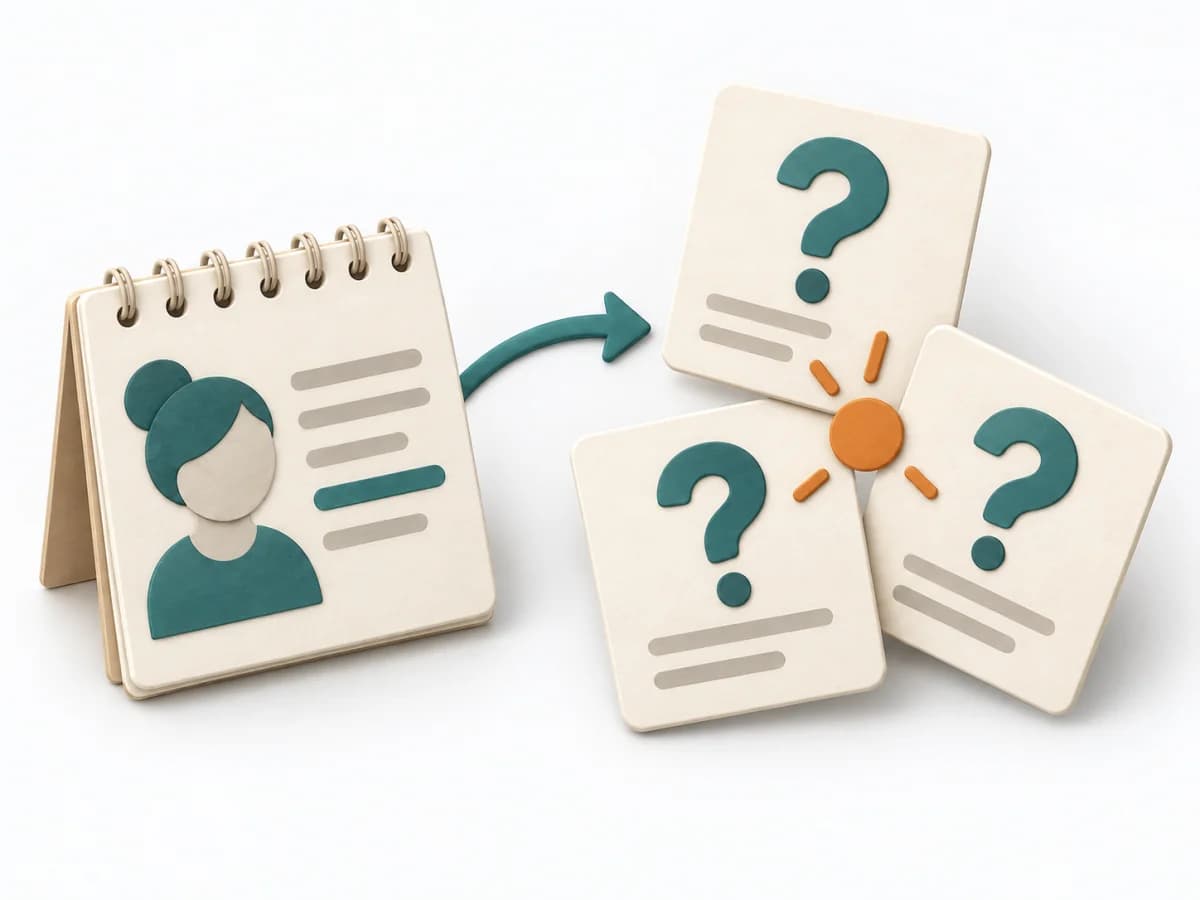 Innovation How Might We | 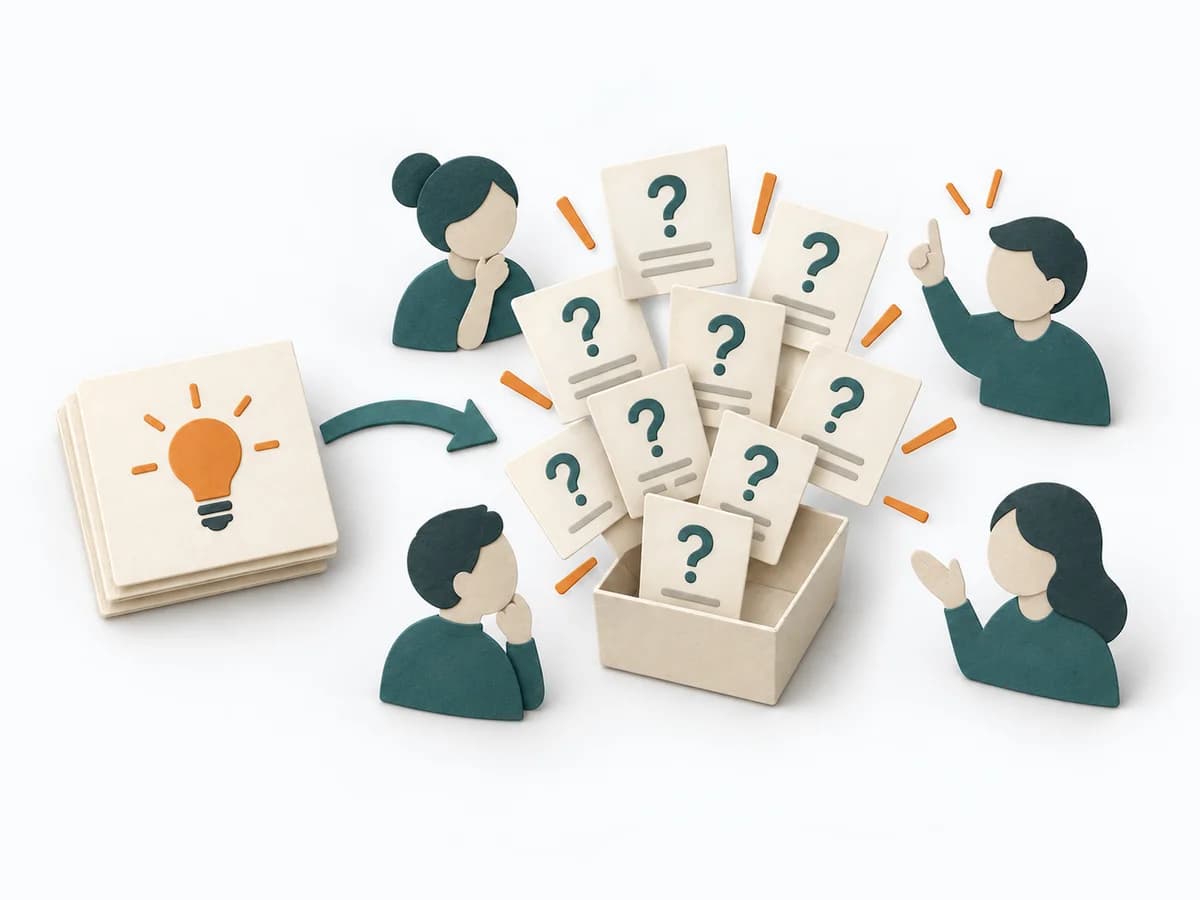 Facilitation Question Burst |  Knowledge Modeling IBIS |
|---|---|---|---|---|
Purposedifferent | When statements, evidence, and counterarguments get mixed up, a debate quickly loses its structure. Argument Mapping breaks a thesis down into its reasoning and makes visible what it really rests on. | With a stuck problem carrying many implicit assumptions, the method translates observations into open, workable questions. It sharpens the problem frame without pre-thinking the solution, turning frustration or fuzziness into a search space with clear direction. | When a problem gets covered up too quickly with answers, Question Burst puts the better question at the center. The format opens the thinking space before the group commits to an interpretation. | IBIS structures thinking about complex questions as a sequence of issues, ideas, and arguments. The method keeps discussions open without forcing them into premature consensus. |
Complexitydifferent | Medium | Low | Low | Medium |
Timedifferent | 1-3 h | 30–45 min | 15-30 min | 1-3 h |
Participantsdifferent | 1-8 | 1-10 | 2-8 | 2-8 |
Formatdifferent | Workshop + async | Workshop + async | Workshop | Workshop + async |
Outputdifferent | Argument Map, Evidence Gaps, Decision Rationale | HMW Questions, Challenge Framing, Idea Prompts | Question List, Reframed Challenge, Learning Prompts | Issue Map, Positions, Argument Notes |
Tagsno overlap | SensemakingDecisionRationale | FramingOpportunityIdeationQuestions | QuestionsReframingFacilitationSensemaking | RationaleKnowledgeDecision |