View methods side by side.
Choose up to four methods. Add them using the search and share the comparison by copying its link.
| Criterion |  Architecture arc42 |  Operations Failure Mode and Effects Analysis |  Architecture Architecture Decision Record | 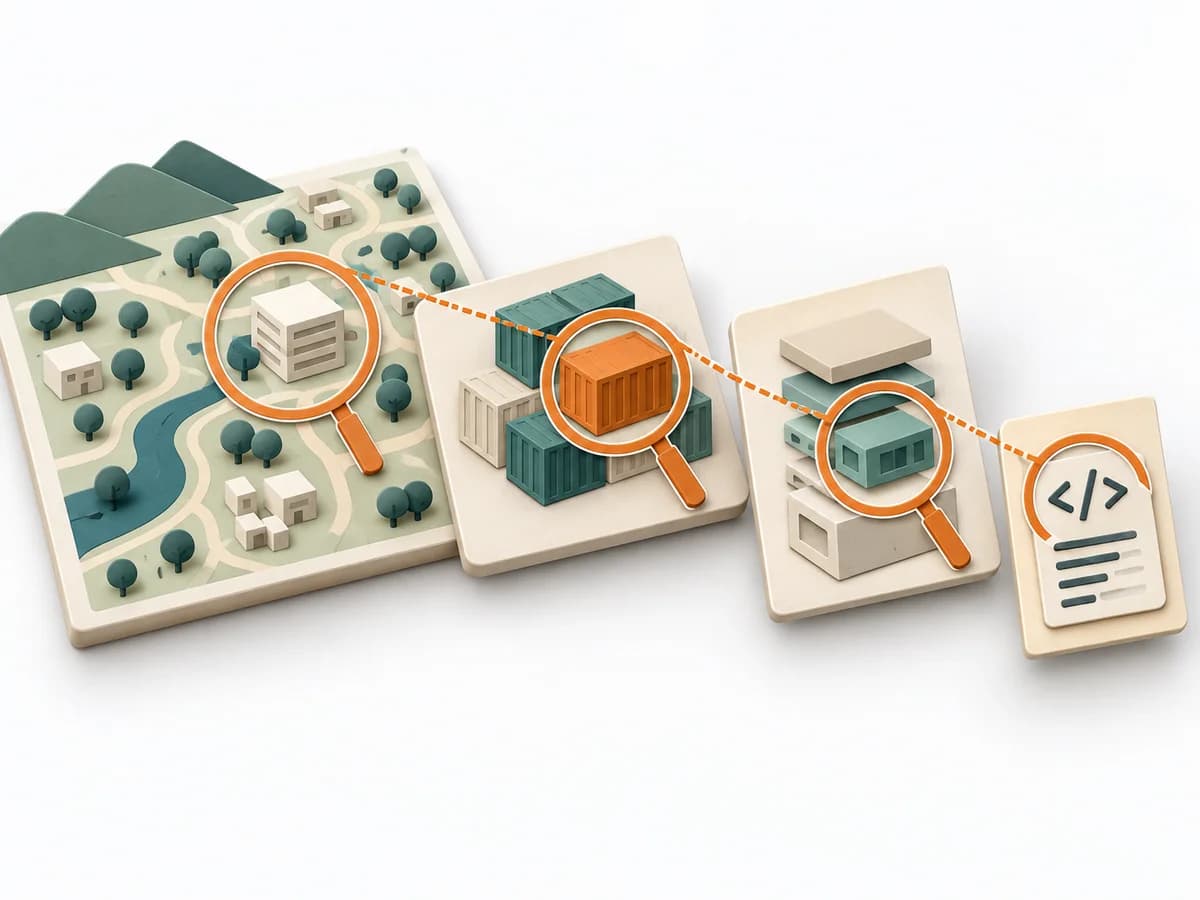 Architecture C4 Model |
|---|---|---|---|---|
Purposedifferent | arc42 structures architecture knowledge so teams can document system, decisions, and risks consistently. The template builds a living understanding of the architecture instead of scattered notes. | For a process, product, or service with noticeable failure risks, the method assesses possible failure modes in advance. It directs attention to combinations of occurrence, effect, and detectability. | An ADR permanently records an architecture decision with context, trade-offs, and consequence. It creates continuity for later changes because the decision path stays traceable. | The C4 Model makes a system legible across several resolution levels, from context down to code. It suits situations where different audiences need to understand the same architecture from different altitudes. |
Complexitydifferent | Low | High | Low | Low |
Timedifferent | 1-2 Tage | 2-6 h | 15-45 min | 1-4 h |
Participantsdifferent | 1-4 | 3-10 | 1-3 | 1-5 |
Formatdifferent | Workshop + async | Workshop | Async | Workshop + async |
Outputdifferent | Architecture Document, Context View, Runtime View, Deployment View | FMEA Table, Risk Priority, Mitigation Actions | ADR File, Decision Log, Rationale | Context Diagram, Container Diagram, Component Diagram |
Tagsno overlap | ArchitectureDocumentationCommunication | RiskQualityOperationsRoot cause | ArchitectureRationaleDocumentationGovernance | ArchitectureCommunicationVisualization |