View methods side by side.
Choose up to four methods. Add them using the search and share the comparison by copying its link.
| Criterion |  Facilitation Alignment Mapping |  Facilitation Responsibility Poker | 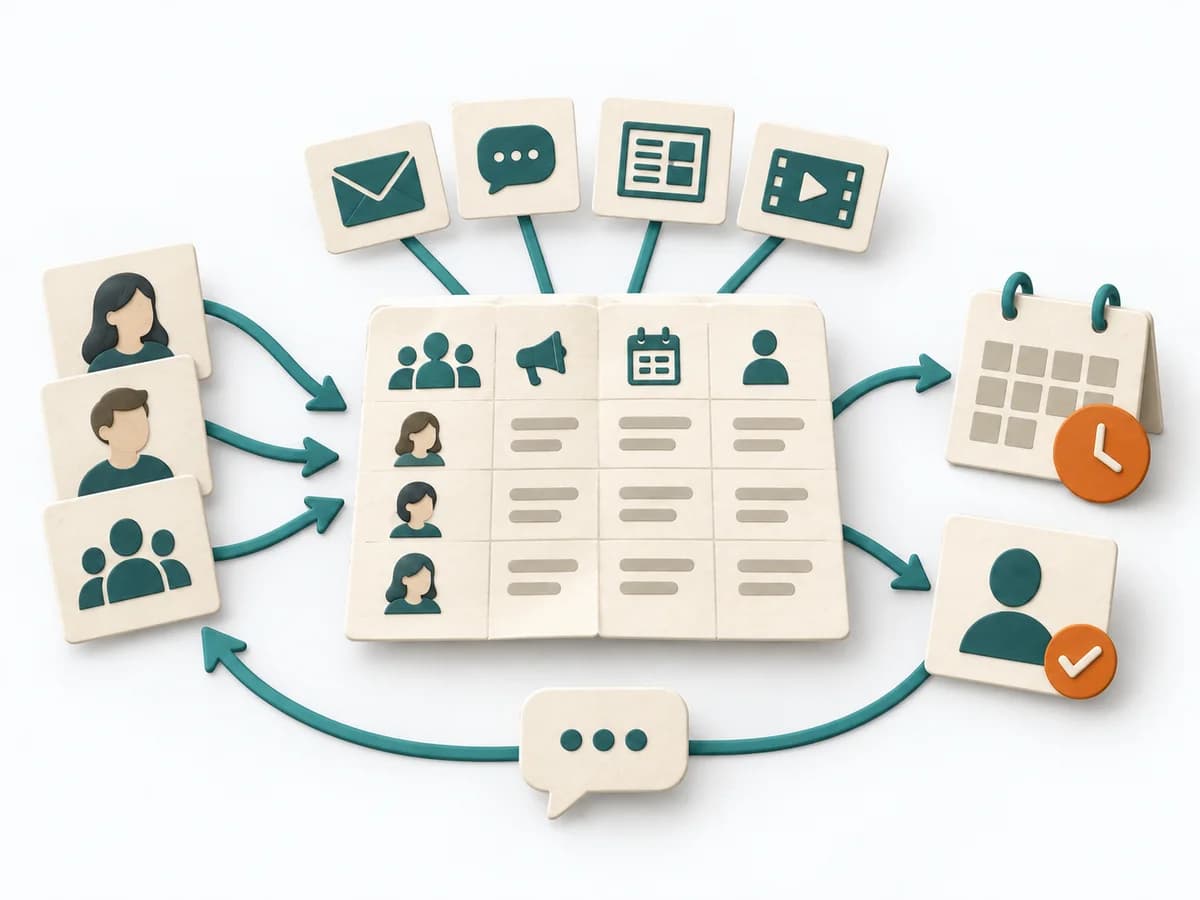 Delivery Communication Plan |  Facilitation Stakeholder Mapping |
|---|---|---|---|---|
Purposedifferent | When several people work toward one goal but hold different mental maps, Alignment Mapping makes the discrepancies visible. It arranges goals, assumptions, and priorities so shared direction becomes verifiable. | When it stays unclear who carries responsibility and who only contributes, Responsibility Poker makes the distribution of responsibility explicit. It sharpens the boundaries between weighing in, deciding, and bearing consequences. | When many people need to be informed in parallel and messages would otherwise arrive unevenly or too late, a Communication Plan orders communication reliably. Channels, audiences, and cadences interlock so important information doesn't get lost. | When an initiative depends on many people, interests, and power dynamics, Stakeholder Mapping systematically orders the environment. It shows who influences, who is affected, and where relationship management or safeguarding matters first. |
Complexitydifferent | Medium | Low | Low | Low |
Timedifferent | 1-2 h | 45-90 min | 45-90 min | 60–90 min |
Participantsdifferent | 4-12 | 3-10 | 2-6 | 2-8 |
Formatdifferent | Workshop | Workshop | Workshop + async | Workshop + async |
Outputdifferent | Alignment Map, Open Issues, Decision Questions | Responsibility Map, Role Agreements, Open Questions | Communication Plan, Channel Matrix, Message Cadence | Stakeholder Map, Engagement Plan, Risk Notes |
Tagsno overlap | AlignmentStakeholdersStrategyFacilitation | RolesResponsibilityTeamFacilitation | CommunicationStakeholdersDeliveryPlanning | StakeholdersAlignmentFacilitationChange |