View methods side by side.
Choose up to four methods. Add them using the search and share the comparison by copying its link.
| Criterion |  Facilitation Alignment Mapping | 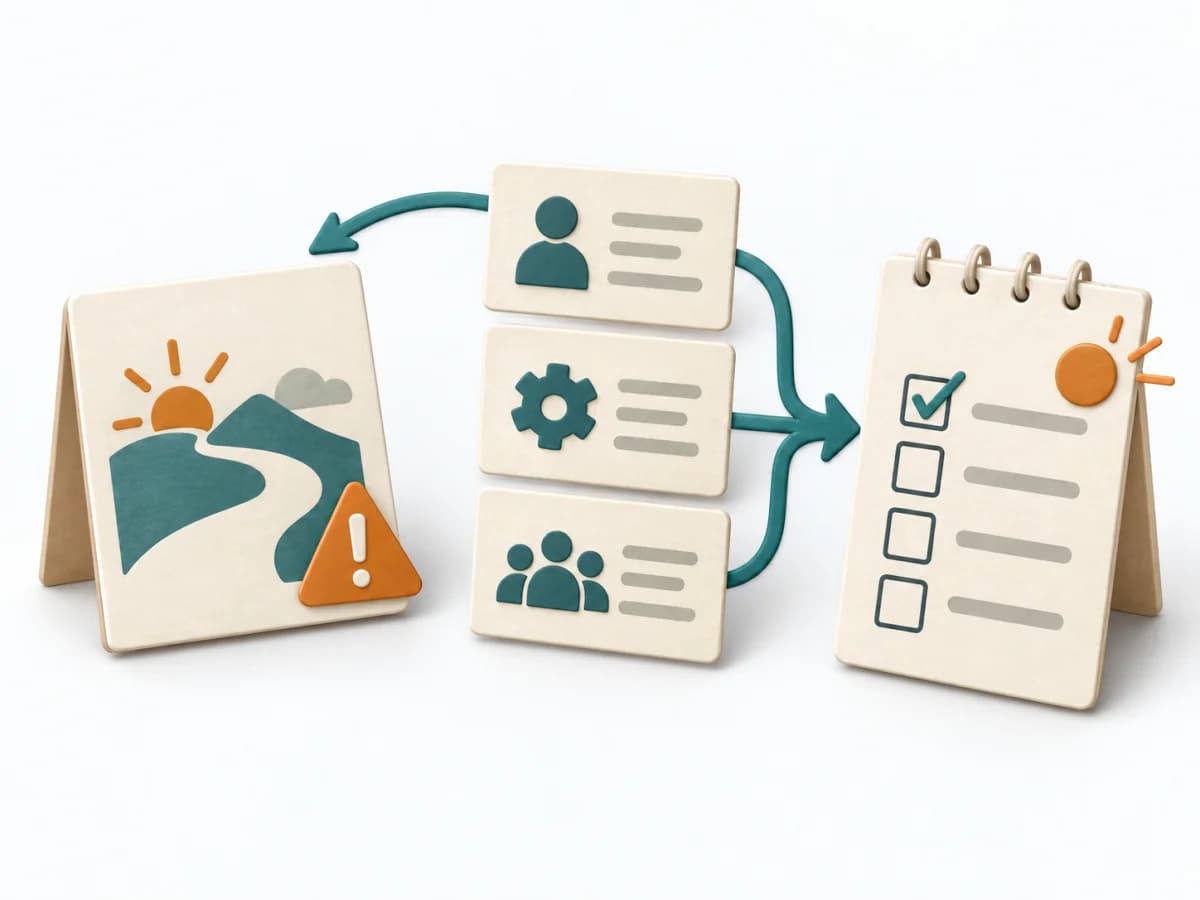 Decision Making Pre-Mortem | 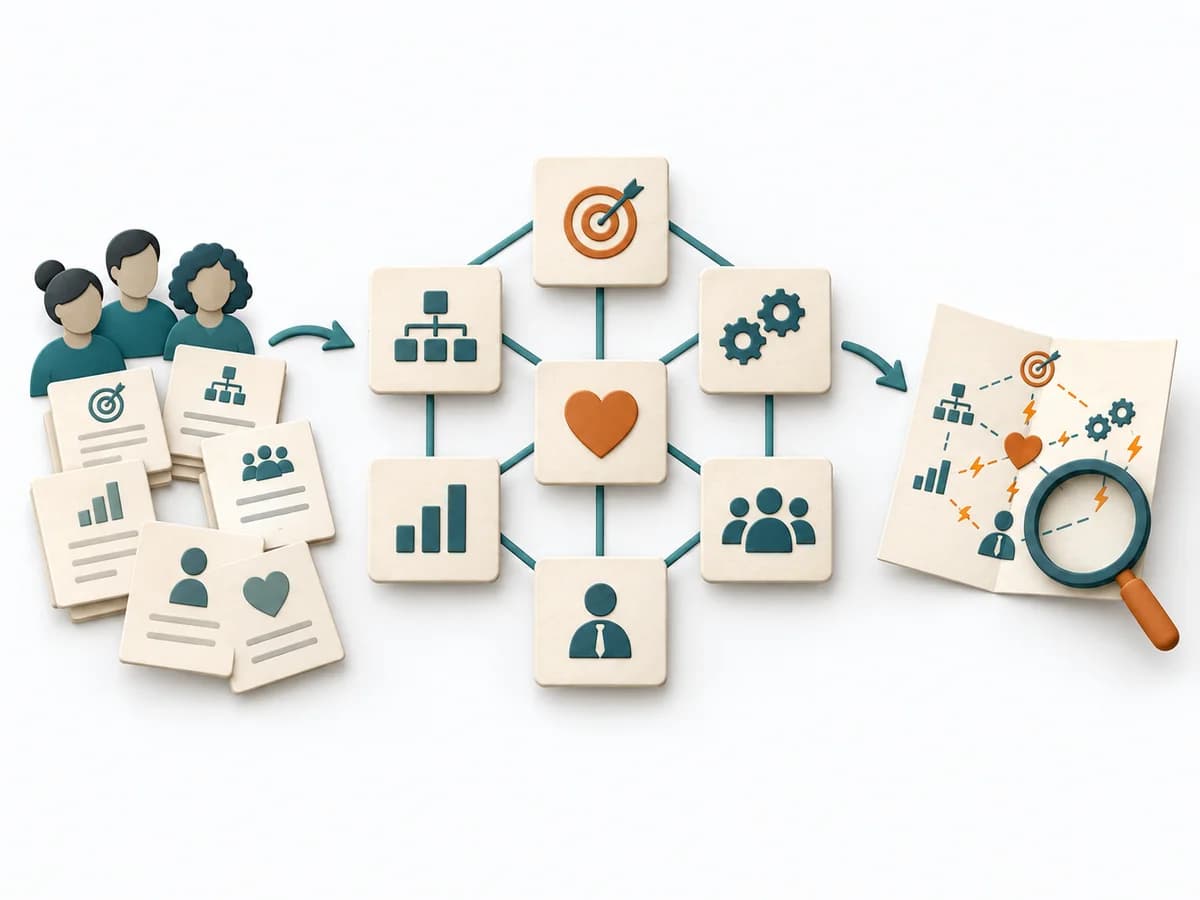 Business Strategy McKinsey 7S |  Facilitation Stakeholder Mapping |
|---|---|---|---|---|
Purposedifferent | When several people work toward one goal but hold different mental maps, Alignment Mapping makes the discrepancies visible. It arranges goals, assumptions, and priorities so shared direction becomes verifiable. | In early initiatives with many uncertainties, planning quickly turns too optimistic. A pre-mortem makes the expected failure visible in advance and sharpens the view of causes, gaps, and countermeasures. | McKinsey 7S checks whether Strategy, Structure, Systems, Shared Values, Skills, Style, and Staff fit together. Organizational misalignments become visible across multiple levers as a result. | When an initiative depends on many people, interests, and power dynamics, Stakeholder Mapping systematically orders the environment. It shows who influences, who is affected, and where relationship management or safeguarding matters first. |
Complexitydifferent | Medium | Low | Medium | Low |
Timedifferent | 1-2 h | 20–45 min | 2-4 h | 60–90 min |
Participantsdifferent | 4-12 | Small cross-functional group | 3-12 | 2-8 |
Formatdifferent | Workshop | Workshop | Workshop | Workshop + async |
Outputdifferent | Alignment Map, Open Issues, Decision Questions | Risk list, Mitigation plan, Assumption log | 7S Assessment, Alignment Gaps, Change Actions | Stakeholder Map, Engagement Plan, Risk Notes |
Tagsno overlap | AlignmentStakeholdersStrategyFacilitation | RiskDecisionFailurePlanning | OrganizationStrategyAlignmentChange | StakeholdersAlignmentFacilitationChange |