View methods side by side.
Choose up to four methods. Add them using the search and share the comparison by copying its link.
| Criterion |  Facilitation Alignment Mapping | 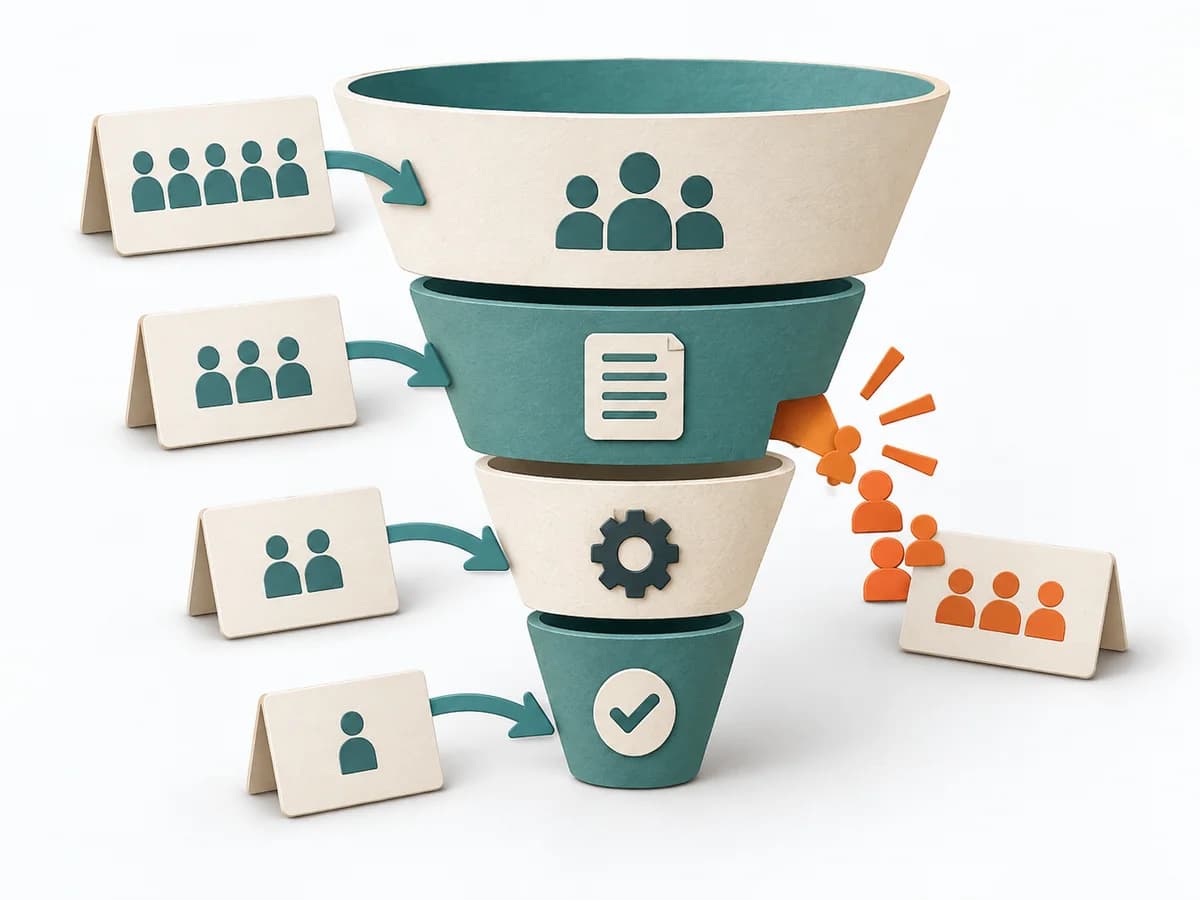 Growth Funnel Analysis | 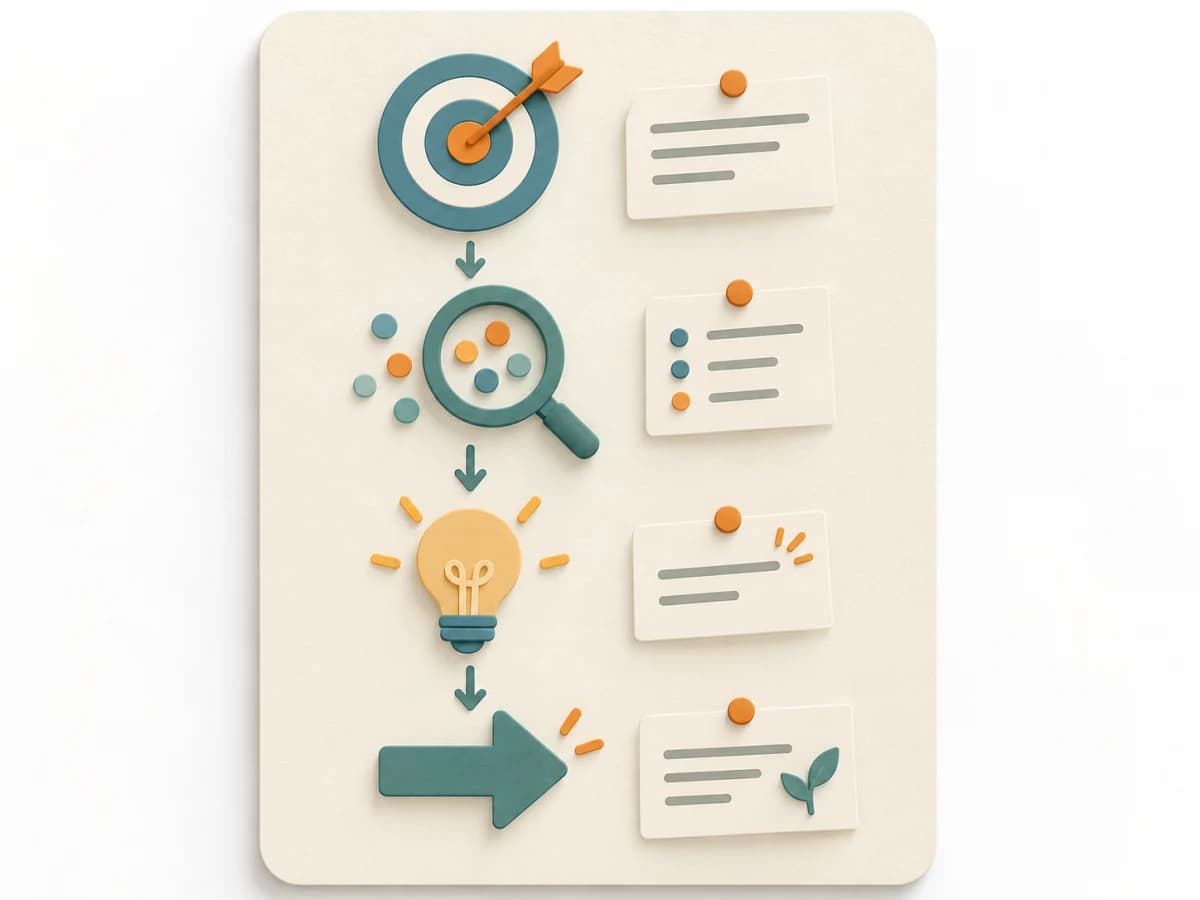 Product Discovery Learning Card | 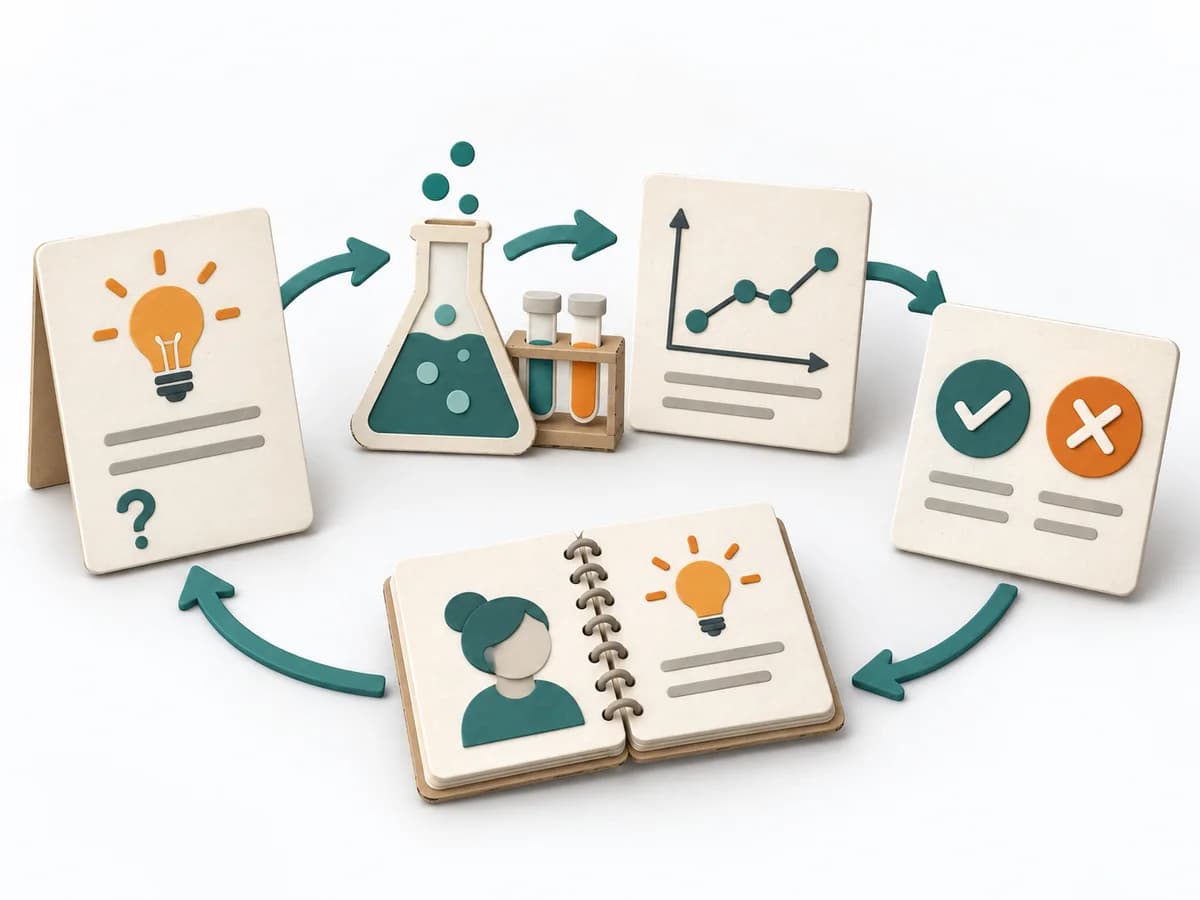 Growth Growth Experiment |
|---|---|---|---|---|
Purposedifferent | When several people work toward one goal but hold different mental maps, Alignment Mapping makes the discrepancies visible. It arranges goals, assumptions, and priorities so shared direction becomes verifiable. | When many visitors or users drop off along the way, the reason behind the number often stays hidden. Funnel Analysis exposes these transitions and makes visible exactly where the path collapses. | The Learning Card connects traceable test results to a reasoned next action while keeping the limits of the insight visible. | When growth ideas surface quickly, the temptation to build immediately instead of learning is high. A Growth Experiment frames an assumption so target group, lever, and measurement are clear before the first deployment. |
Complexitydifferent | Medium | Medium | Low | Medium |
Timedifferent | 1-2 h | 1-3 h | 25-40 min | 1-2 Wochen |
Participantsdifferent | 4-12 | 1-5 | 1-5 | 1-6 |
Formatdifferent | Workshop | Async | Workshop + async | Workshop + async |
Outputdifferent | Alignment Map, Open Issues, Decision Questions | Funnel report, Drop-off analysis, Optimization hypotheses | Learning Card with evidence and next action | Experiment card, Result summary, Next bet |
Tagsno overlap | AlignmentStakeholdersStrategyFacilitation | AnalyticsConversionGrowth | ExperimentsValidationDiscoveryLearning | MarketingGrowthExperimentsLearning |