View methods side by side.
Choose up to four methods. Add them using the search and share the comparison by copying its link.
| Criterion |  Operations After-Action Review |  Systems Thinking CATWOE Analysis |  DevOps Incident Command | 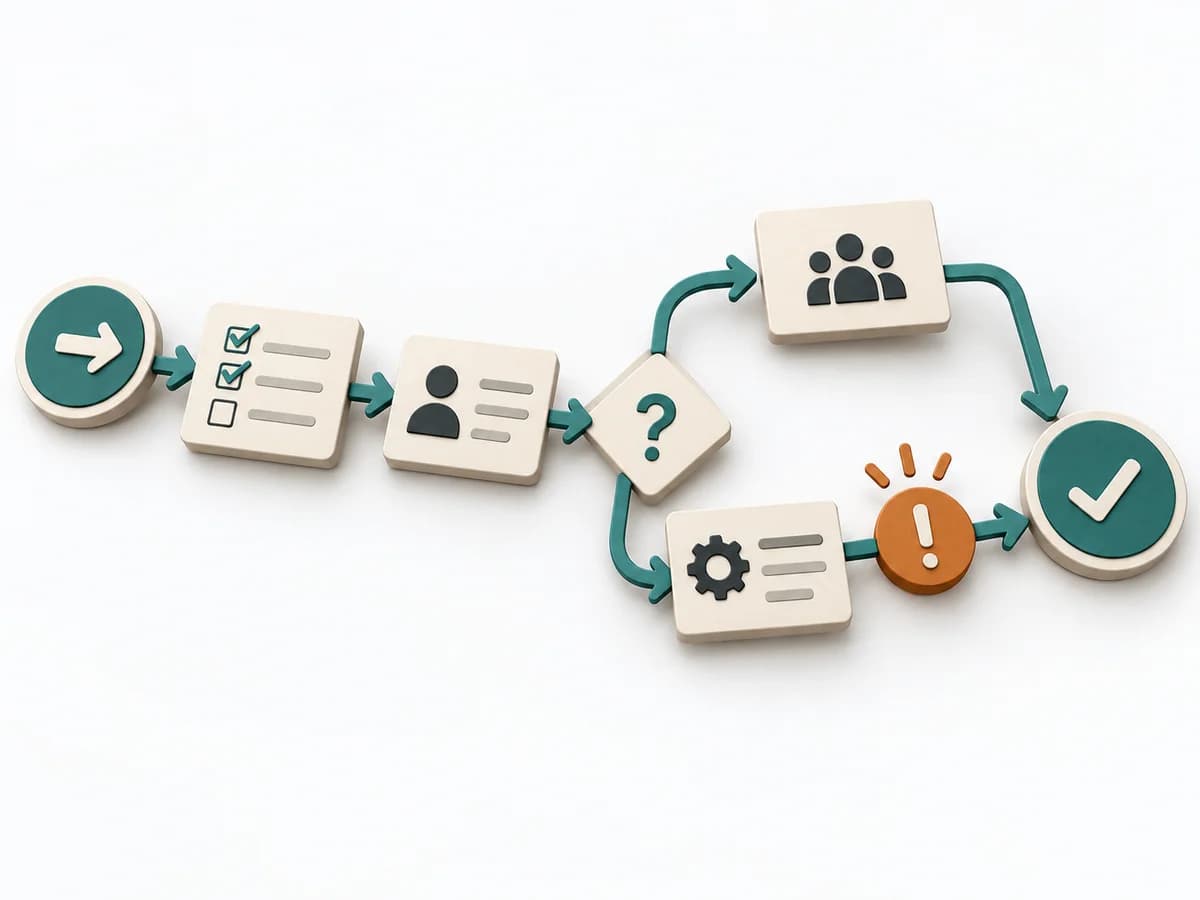 Operations Process Mapping |
|---|---|---|---|---|
Purposedifferent | After missions or project phases with unclear outcomes, the method makes visible what actually happened and what can be learned from it. It separates course, effect, and causes so experience turns into solid improvement. | CATWOE structures a problem from six viewpoints and prevents too narrow a view of the situation. Different experiences of the system become comparably discussable this way. | During an acute incident with several people involved, the method creates a clear leadership and communication structure. It reduces chaos when fast coordination and clean situational awareness are both needed at once. | With a confusing workflow that has many handoffs, the method makes the actual process visible. It shows where work is passed on, delayed, or duplicated, so improvement targets the right spots. |
Complexitydifferent | Low | Medium | Medium | Medium |
Timedifferent | 20-45 min | 45-90 min | As needed | 1-3 h |
Participantsdifferent | 3-12 | 3-8 | 4-15 | 3-10 |
Formatdifferent | Workshop + async | Workshop + async | Workshop + async | Workshop |
Outputdifferent | Lessons learned, Action items, Event summary | CATWOE Canvas, Root Definition, Stakeholder Perspectives, Constraints | Incident Log, Action Tracker, Stakeholder Updates | Process Map, Handoff List, Improvement Backlog |
Tagsno overlap | LearningOperationsImprovement | Systems thinkingFramingStakeholders | IncidentOperationsReliability | ProcessOperationsImprovement |