View methods side by side.
Choose up to four methods. Add them using the search and share the comparison by copying its link.
| Criterion | 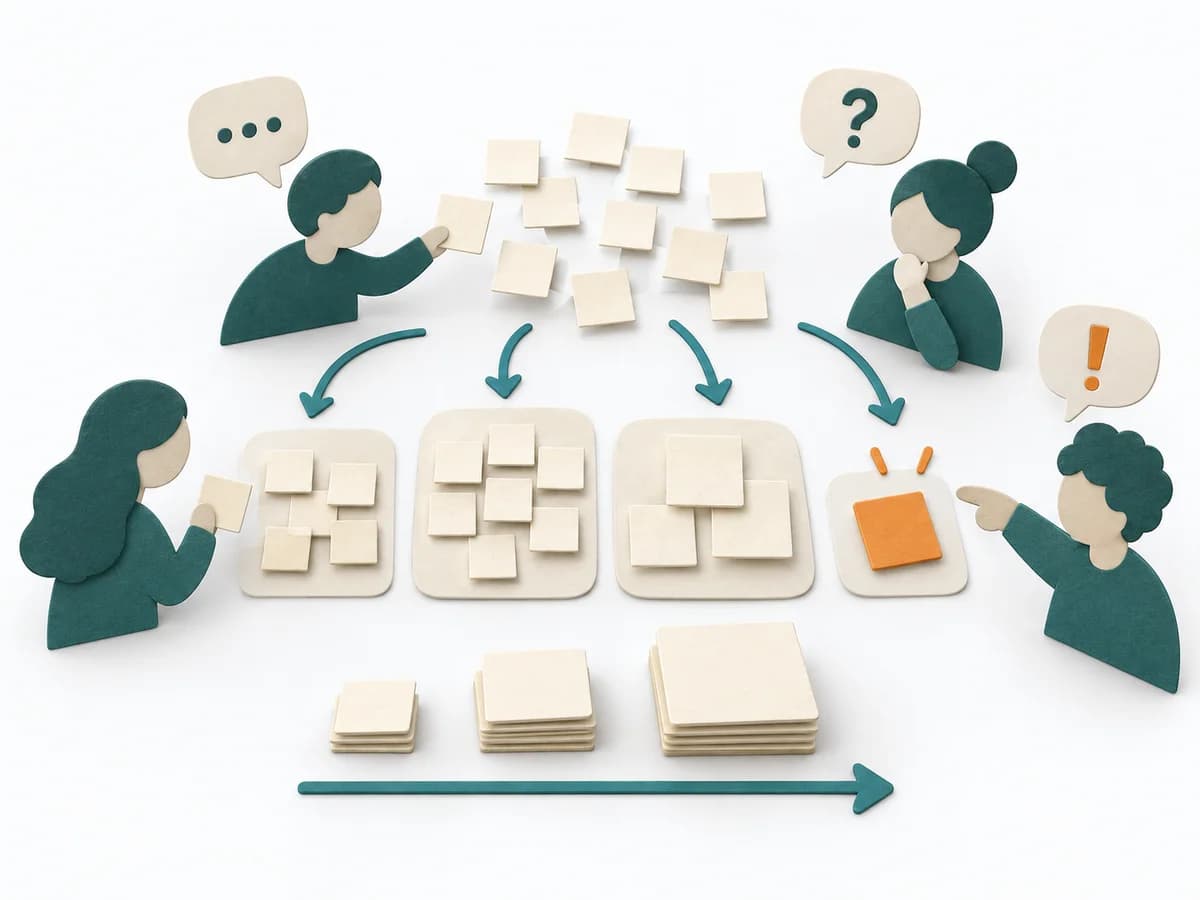 Agile Affinity Estimation |  Agile Sprint Retrospective | 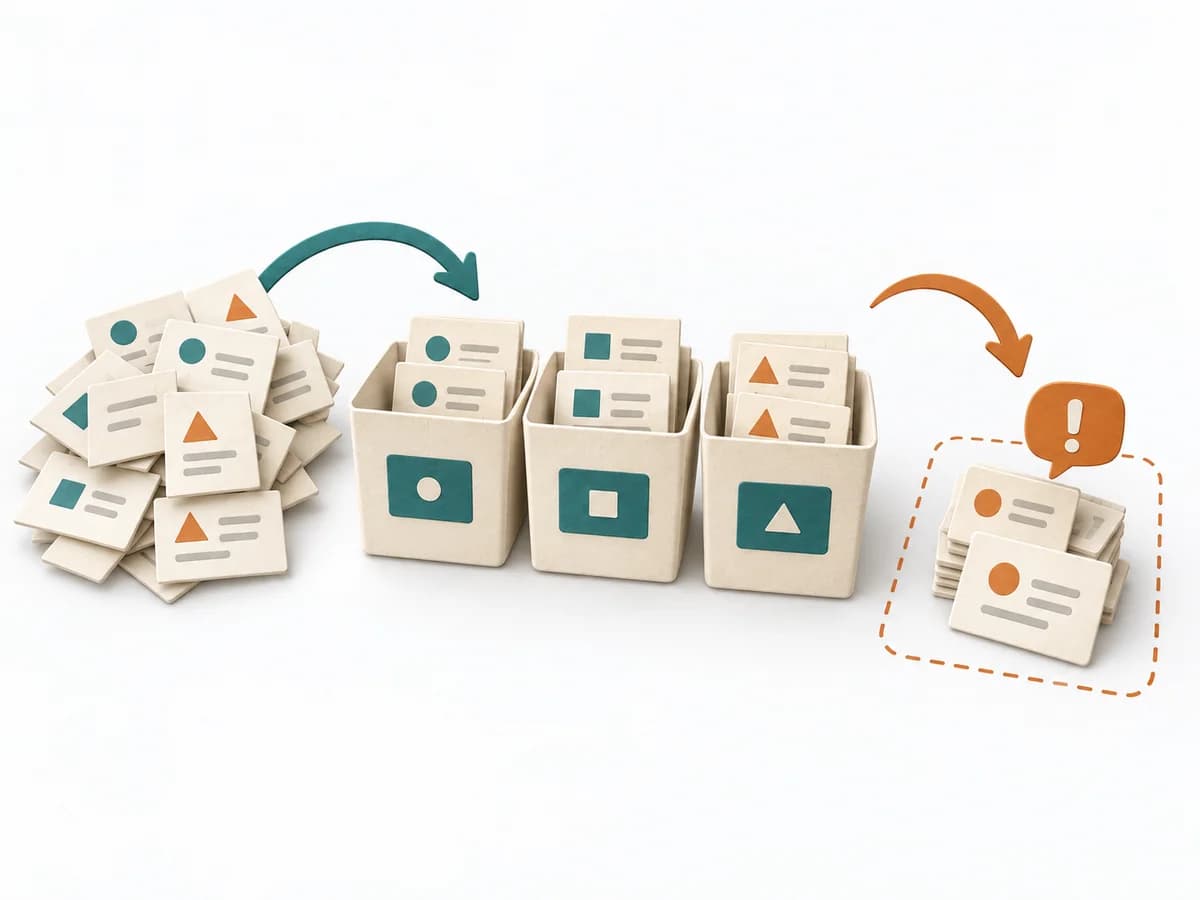 Agile Bucket System |  Agile 4Ls Retrospective |
|---|---|---|---|---|
Purposedifferent | When many tasks need to be classified quickly, it sorts them by perceived effort and similarity. It reduces the effort of fine-grained estimation for large volumes. | When a sprint is over and friction shouldn't simply be carried forward, it opens the view onto collaboration and patterns. It creates space to see causes and changes together. | When a large batch of work needs a fast, rough estimate, it sorts items into predefined size buckets. It sorts work by value, risk, and delivery ability. The result is captured as a Bucketed Backlog, Relative Estimates, and Split Candidates. | When a sprint should not only be assessed but also learned from, it captures experience in clear learning categories. It records what worked, what's missing, and what should run differently next time. |
Complexitydifferent | Medium | Low | Medium | Low |
Timedifferent | 30-90 min | Up to 3 hours for a one-month Sprint; shorter Sprints are usually shorter | 30-90 min | 45–75 min |
Participantsdifferent | 3-12 | Scrum Team | 3-12 | Team members involved |
Formatsame | Workshop | Workshop | Workshop | Workshop |
Outputdifferent | Affinity Size Map, Grouped Estimates, Unclear Items | Improvement actions, Team agreements | Bucketed Backlog, Relative Estimates, Split Candidates | 4Ls Board, Learning Themes, Improvement Actions |
Tagsno overlap | EstimationBacklogRelative sizing | RetrospectiveImprovementLearning | EstimationBacklogRelative sizing | RetrospectiveLearningReflectionTeam |