View methods side by side.
Choose up to four methods. Add them using the search and share the comparison by copying its link.
| Criterion | 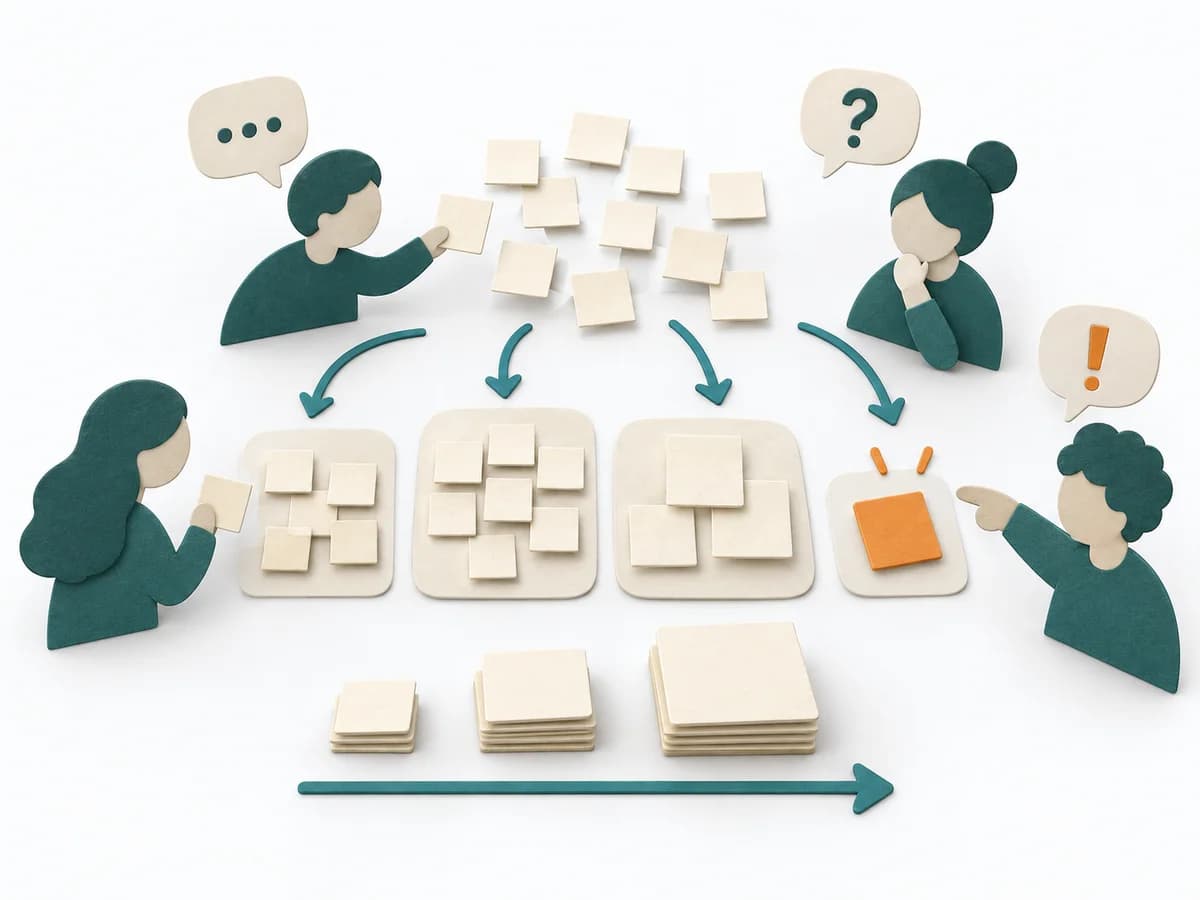 Agile Affinity Estimation |  Product Strategy DIBB | 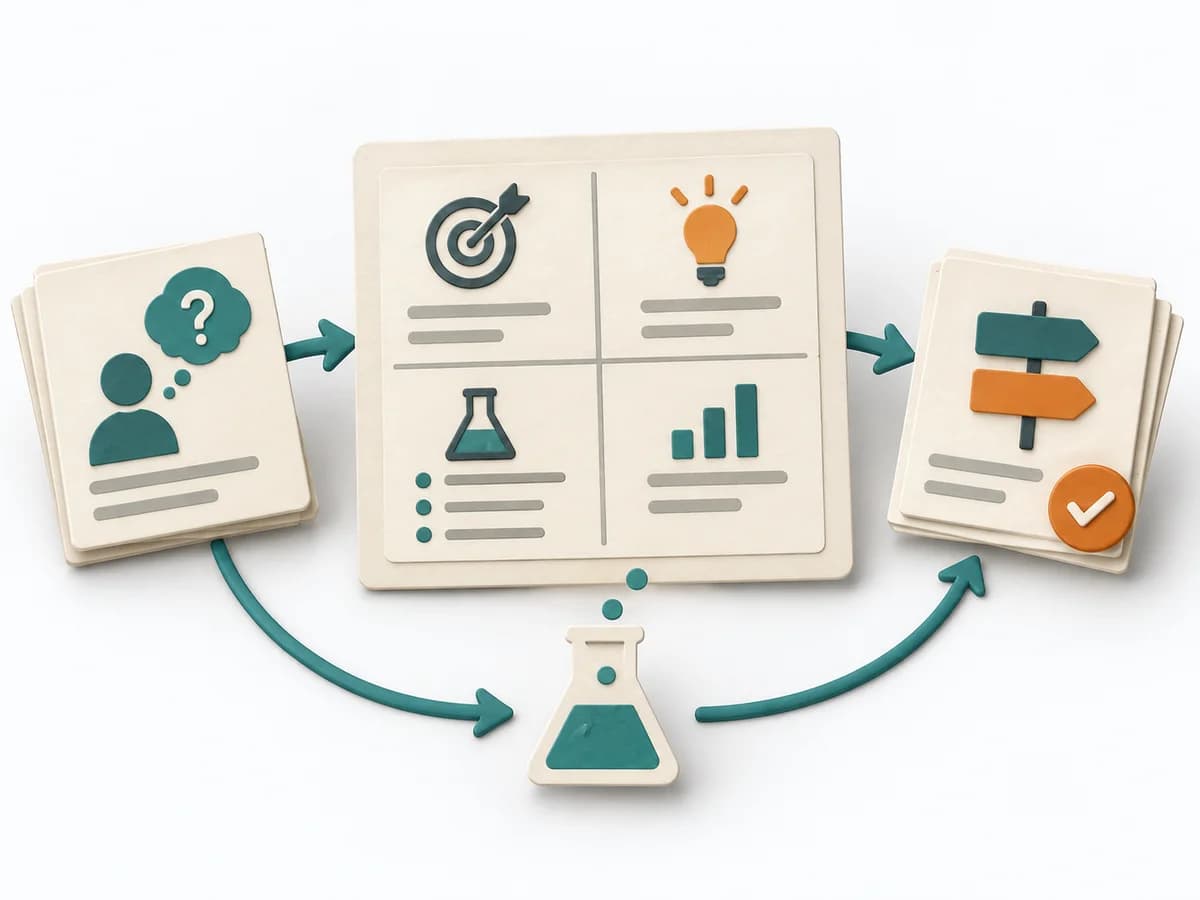 Product Discovery Experiment Canvas | 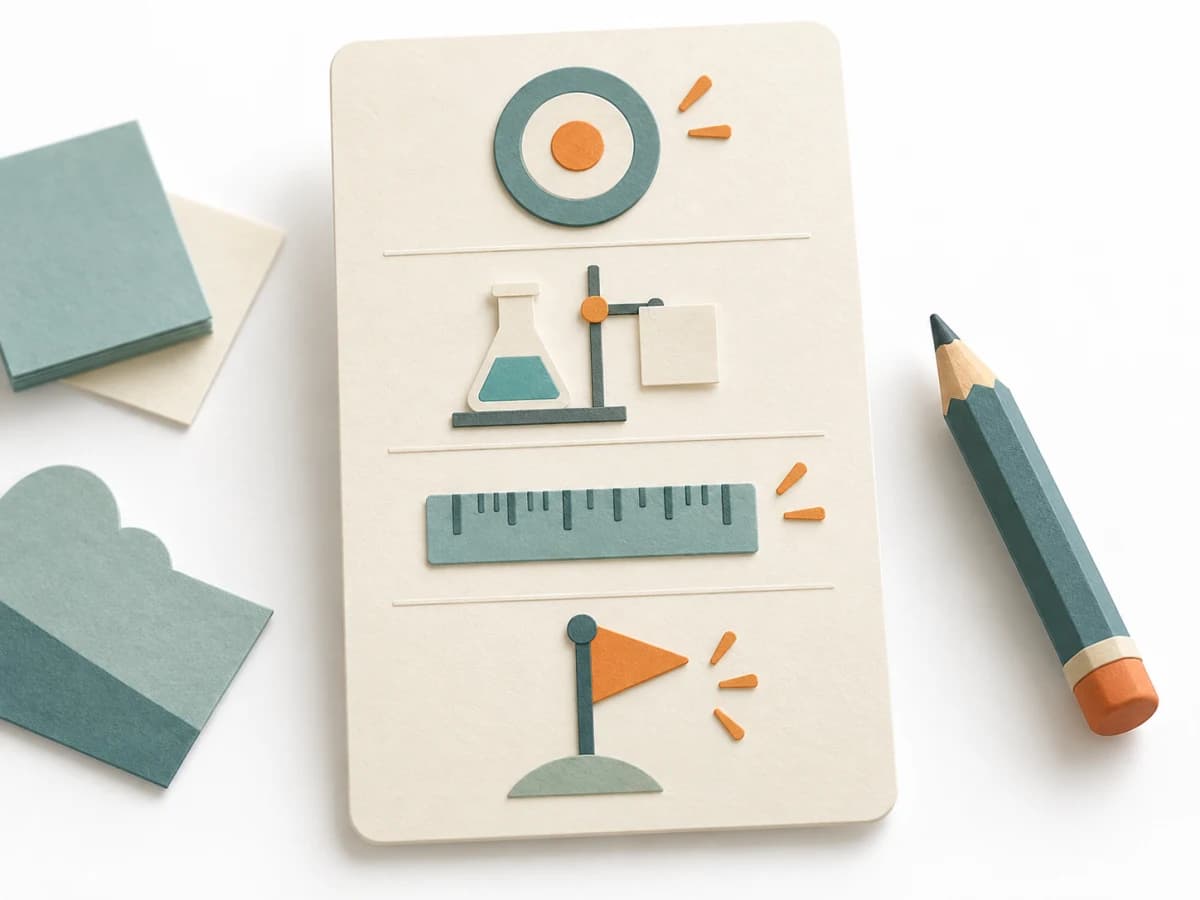 Product Discovery Test Card |
|---|---|---|---|---|
Purposedifferent | When many tasks need to be classified quickly, it sorts them by perceived effort and similarity. It reduces the effort of fine-grained estimation for large volumes. | DIBB helps clarify target groups, value, goals, and priorities by making the logic behind a decision explicit. It captures results as a DIBB document, belief list, bet list, and learning report. | When experiments become unreadable after the fact, it arranges hypothesis, signal, and learning goal on a single canvas. It separates problem, assumption, solution, and evidence. The result is captured as a Completed Experiment Canvas and a Success Metric. | The Test Card turns a critical assumption into a testable claim and specifies in advance which result counts as success. |
Complexitydifferent | Medium | Low | Low | Low |
Timedifferent | 30-90 min | 1-2 h | 30-60 min | 20-35 min |
Participantsdifferent | 3-12 | 2-8 | 1-5 | 1-5 |
Formatdifferent | Workshop | Workshop + async | Workshop + async | Workshop + async |
Outputdifferent | Affinity Size Map, Grouped Estimates, Unclear Items | DIBB document, Belief list, Bet list, Learning report | Completed Experiment Canvas, Success Metric | Test Card with a pre-set threshold |
Tagsno overlap | EstimationBacklogRelative sizing | StrategyDecisionAssumptionsHypothesis | ExperimentsValidationDiscoveryHypothesis | ExperimentsValidationDiscoveryHypothesis |