View methods side by side.
Choose up to four methods. Add them using the search and share the comparison by copying its link.
| Criterion | 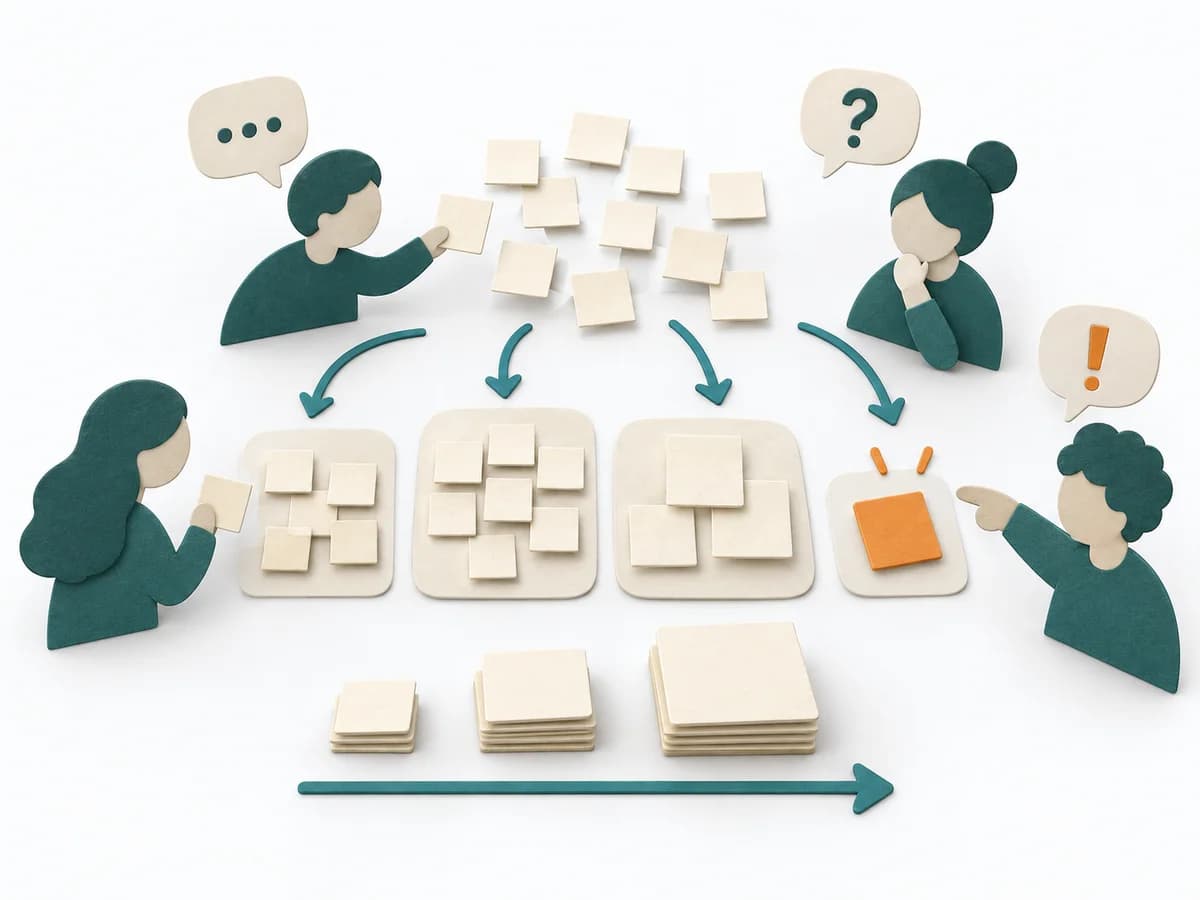 Agile Affinity Estimation | 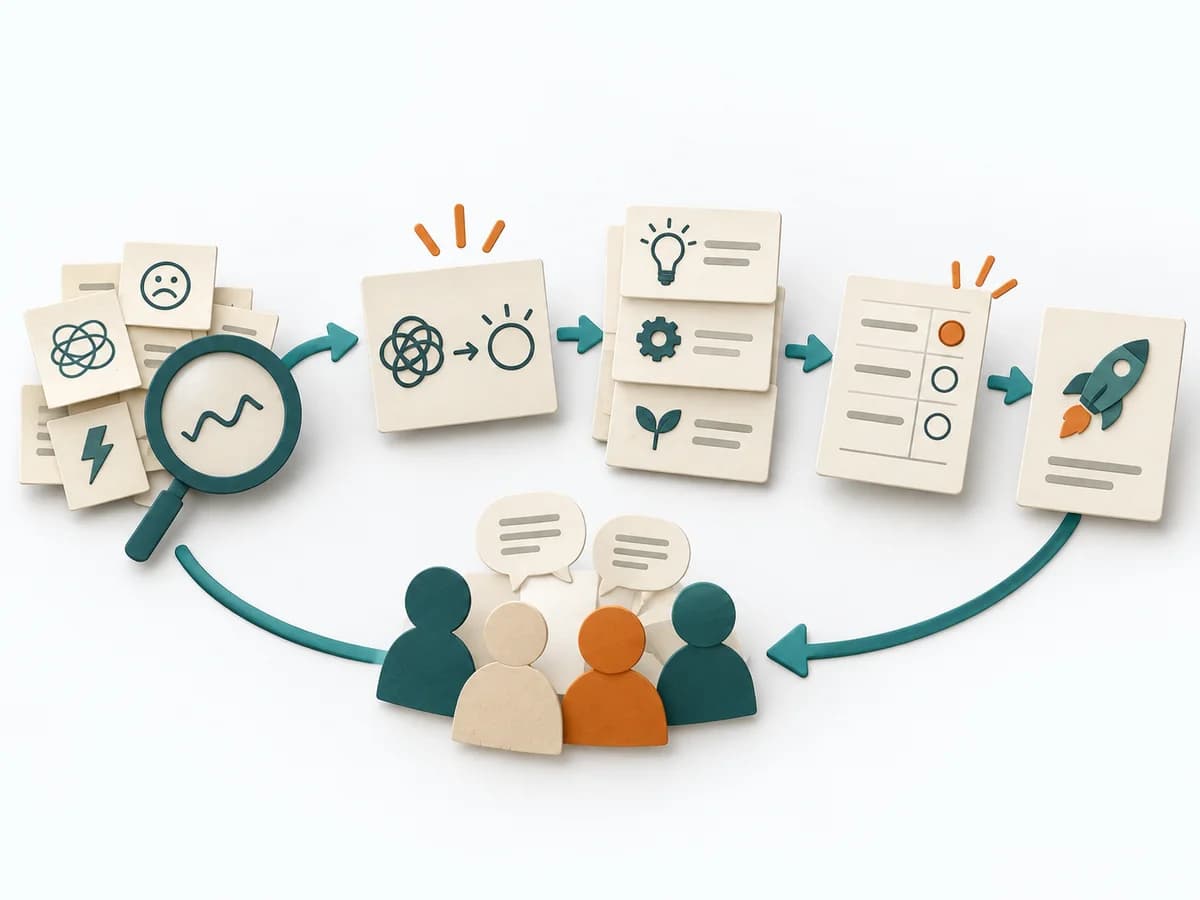 Facilitation Decision Jam |  Decision Making Decision Rights Mapping | 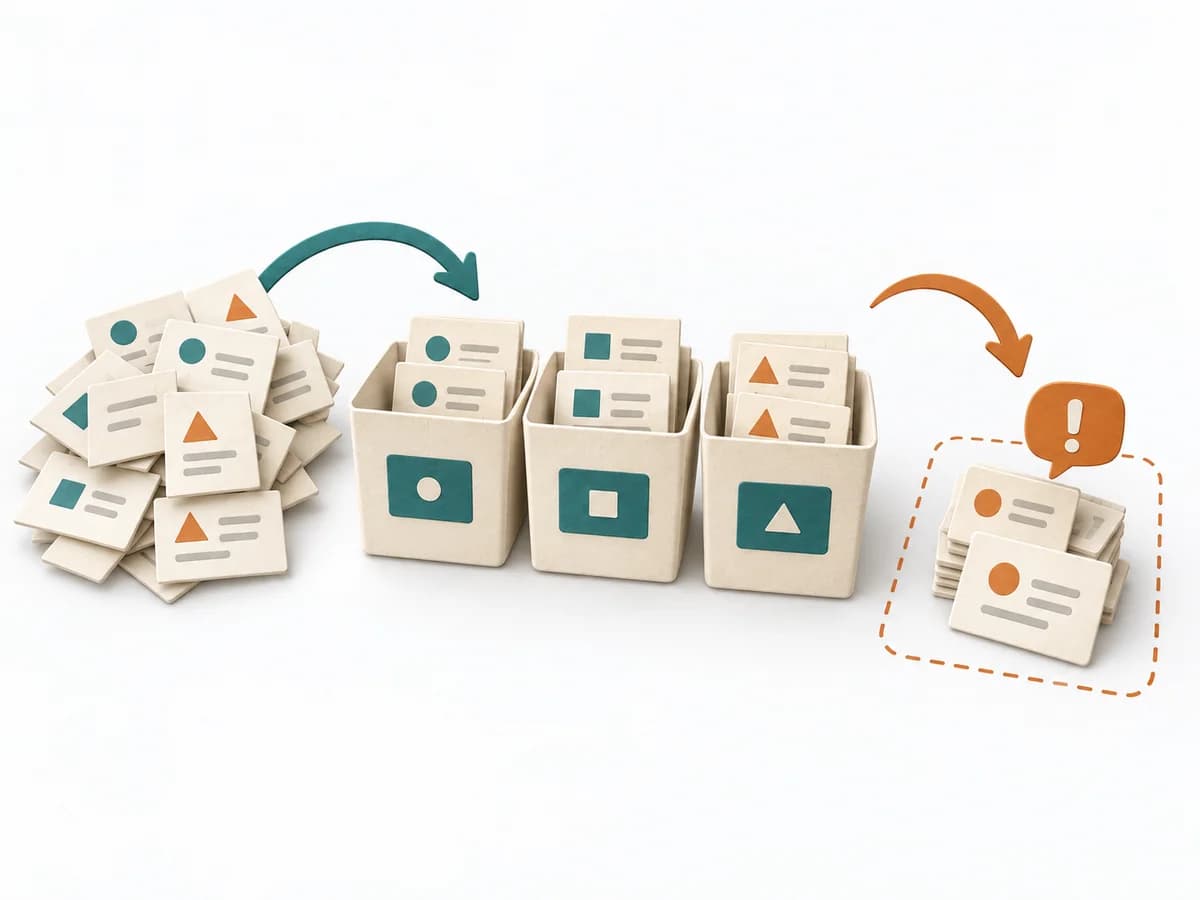 Agile Bucket System |
|---|---|---|---|---|
Purposedifferent | When many tasks need to be classified quickly, it sorts them by perceived effort and similarity. It reduces the effort of fine-grained estimation for large volumes. | When a decision is stuck, Decision Jam loosens the knot through structured separation of problem, idea, and selection. The format creates movement without jumping prematurely at the first seemingly elegant answer. | In organizations with many stakeholders, it often blurs who actually decides and who is merely consulted. It separates options, evaluation criteria, and open risks. The result is captured as a Decision Rights matrix and an agreement. | When a large batch of work needs a fast, rough estimate, it sorts items into predefined size buckets. It sorts work by value, risk, and delivery ability. The result is captured as a Bucketed Backlog, Relative Estimates, and Split Candidates. |
Complexitydifferent | Medium | Low | Medium | Medium |
Timedifferent | 30-90 min | 60-90 min | 90-180 min | 30-90 min |
Participantsdifferent | 3-12 | 4-10 | 4-12 | 3-12 |
Formatsame | Workshop | Workshop | Workshop | Workshop |
Outputdifferent | Affinity Size Map, Grouped Estimates, Unclear Items | Problem Cluster, Prioritized Challenge, Experiment | Decision Rights Matrix, Agreement | Bucketed Backlog, Relative Estimates, Split Candidates |
Tagsno overlap | EstimationBacklogRelative sizing | FacilitationDecisionProblem solvingWorkshop | DecisionGovernanceAlignmentResponsibility | EstimationBacklogRelative sizing |