View methods side by side.
Choose up to four methods. Add them using the search and share the comparison by copying its link.
| Criterion |  Architecture Architecture Decision Record | 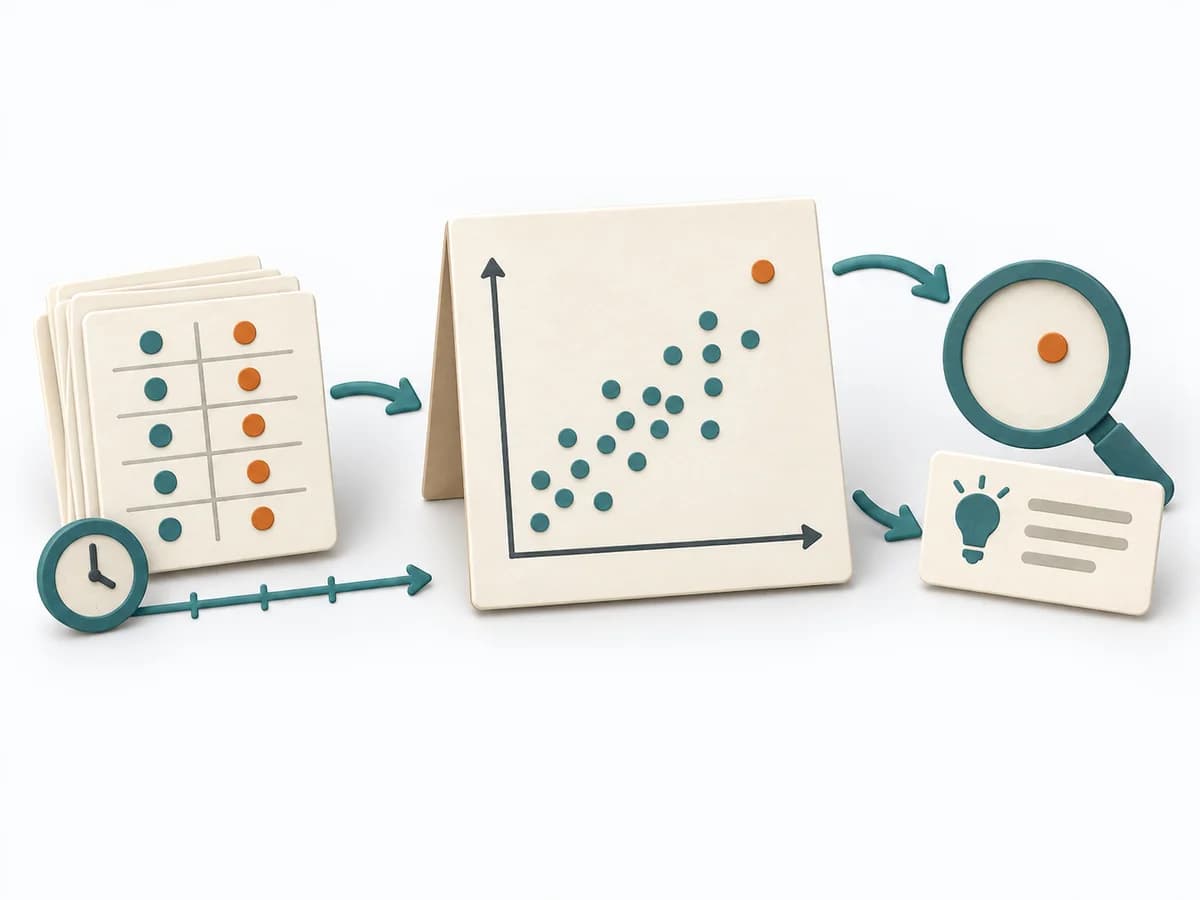 Operations Scatter Diagram |  Delivery RAID Log |  Operations Failure Mode and Effects Analysis |
|---|---|---|---|---|
Purposedifferent | An ADR permanently records an architecture decision with context, trade-offs, and consequence. It creates continuity for later changes because the decision path stays traceable. | When the question is whether two measures are related, the method makes patterns in the data picture visible. It separates felt correlations from relationships that actually show up in the data. | Helps clarify scope, sequence, and delivery flow in concrete terms. It makes work, boundaries, and order steerable. The result is captured as a RAID Log and a source for status reporting. | For a process, product, or service with noticeable failure risks, the method assesses possible failure modes in advance. It directs attention to combinations of occurrence, effect, and detectability. |
Complexitydifferent | Low | Low | Low | High |
Timedifferent | 15-45 min | 30-90 min | 30 min Setup, dann laufend | 2-6 h |
Participantsdifferent | 1-3 | 1-4 | 1-3 maintaining, briefing for everyone | 3-10 |
Formatdifferent | Async | Workshop + async | Async | Workshop |
Outputdifferent | ADR File, Decision Log, Rationale | Scatter Plot, Korrelationsnotiz, Hypothesenliste | RAID Log, Status Report Source | FMEA Table, Risk Priority, Mitigation Actions |
Tagsno overlap | ArchitectureRationaleDocumentationGovernance | Root causeQualityVisualization | RiskTrackingStakeholdersGovernance | RiskQualityOperationsRoot cause |