View methods side by side.
Choose up to four methods. Add them using the search and share the comparison by copying its link.
Selected:Architecture Decision RecordForce Field AnalysisStrategic, Tactical and Operational PlanningStrategy Execution Loop
| Criterion |  Architecture Architecture Decision Record |  Decision Making Force Field Analysis | 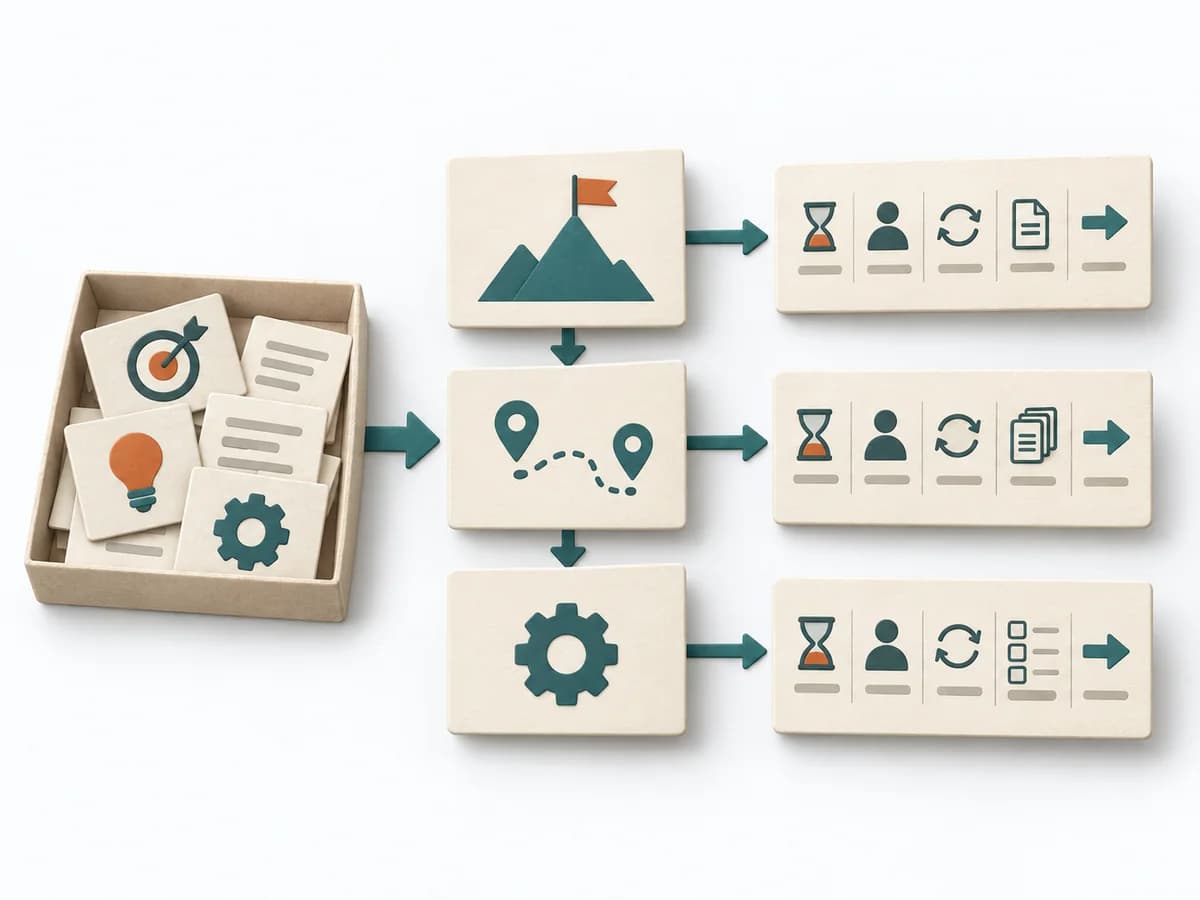 Business Strategy Strategic, Tactical and Operational Planning |  Business Strategy Strategy Execution Loop |
|---|---|---|---|---|
Purposedifferent | An ADR permanently records an architecture decision with context, trade-offs, and consequence. It creates continuity for later changes because the decision path stays traceable. | In change initiatives, supporting and restraining forces sit at the table at the same time. Force Field Analysis makes these tensions explicit and shows where change can be pushed forward by strengthening or relieving. | It places decisions and artifacts at the right level. Strategic planning clarifies direction, tactical planning translates it into programs, and operational planning steers concrete processes. | The Strategy Execution Loop helps avoid treating strategy as a one-off document. It makes visible how strategic decisions are turned into objectives, initiatives, operational work, measurement, and learning. |
Complexitydifferent | Low | Low | Medium | High |
Timedifferent | 15-45 min | 45-90 min | 90-180 min | Initial 3-6 h, then monthly or quarterly reviews |
Participantsdifferent | 1-3 | 3-12 | 4-12 | 5-12 |
Formatdifferent | Async | Workshop | Workshop | Workshop + async |
Outputdifferent | ADR File, Decision Log, Rationale | Force Field Map, Change Levers, Risk Notes | Planning Levels Map, Cadence Model, Planning Artifact Inventory | Execution Loop, Review Cadence, Strategic Learning Log |
Tagsno overlap | ArchitectureRationaleDocumentationGovernance | ChangeDecisionStrategy | CadenceGovernanceExecution | ExecutionCadenceLearningGovernance |