View methods side by side.
Choose up to four methods. Add them using the search and share the comparison by copying its link.
| Criterion | 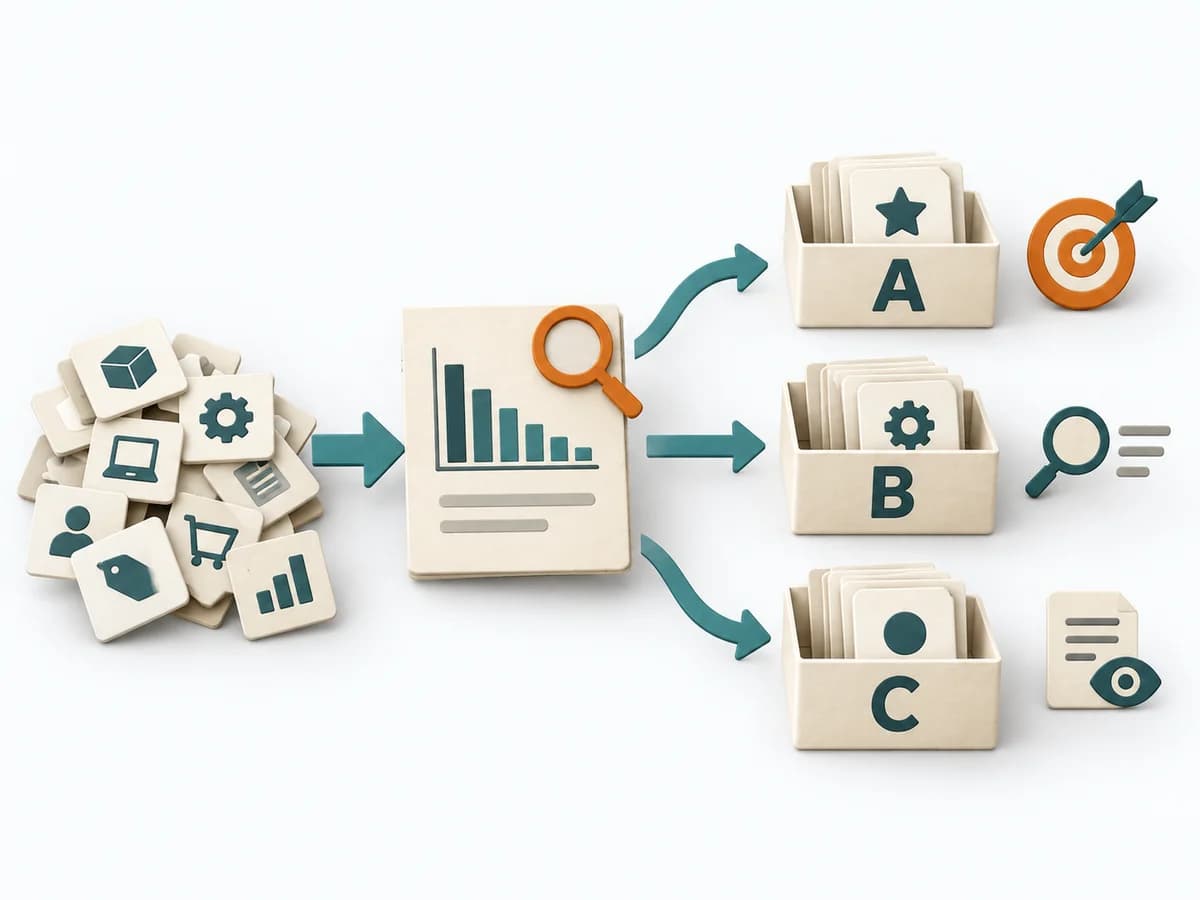 Operations ABC Analysis |  Architecture ATAM (Architecture Tradeoff Analysis Method) |  Operations A3 Problem Solving |  Operations 5 Whys |
|---|---|---|---|---|
Purposedifferent | With many similar objects of differing economic significance, the method prioritizes effort by effect. It separates what needs regular steering from what rarely needs attention. | ATAM helps teams weigh architecture decisions when quality goals compete. The team considers business goals, stakeholder expectations, and technical decisions together. The evaluation shows which risks need further investigation. | For a complex deviation with several people involved, the method bundles problem, analysis, and decision onto one page. It creates a shared working space where causes, countermeasures, and follow-up fit together. | For a single, hard-to-explain deviation, the method exposes the causal chain behind the visible symptom. It keeps the cause open until a controllable condition emerges instead of a mere description. |
Complexitydifferent | Low | High | Medium | Low |
Timedifferent | 30-60 min | Several meetings plus preparation and analysis; total effort depends on scope | 45-90 min | 15-30 min |
Participantsdifferent | 1-5 | Evaluation team, architects, and relevant stakeholders | 2-5 | 2-6 |
Formatdifferent | Async | Workshop + async | Workshop + async | Workshop |
Outputdifferent | ABC Classification, Focus Rules, Control List | Prioritized quality scenarios in a utility tree, Architecture risks with reasoning and assumptions, Sensitivity and trade-off points, Findings report with open investigations | A3 Report, Action Plan, Root Cause Analysis | Root cause notes, Countermeasures |
Tagsno overlap | PrioritizationOperationsPortfolio | ArchitectureQualityRiskTradeoffsStakeholders | LeanProblem solvingCoachingOperations | Root causeIncidentLeanProblem solving |