View methods side by side.
Choose up to four methods. Add them using the search and share the comparison by copying its link.
| Criterion |  Growth A/B Testing | 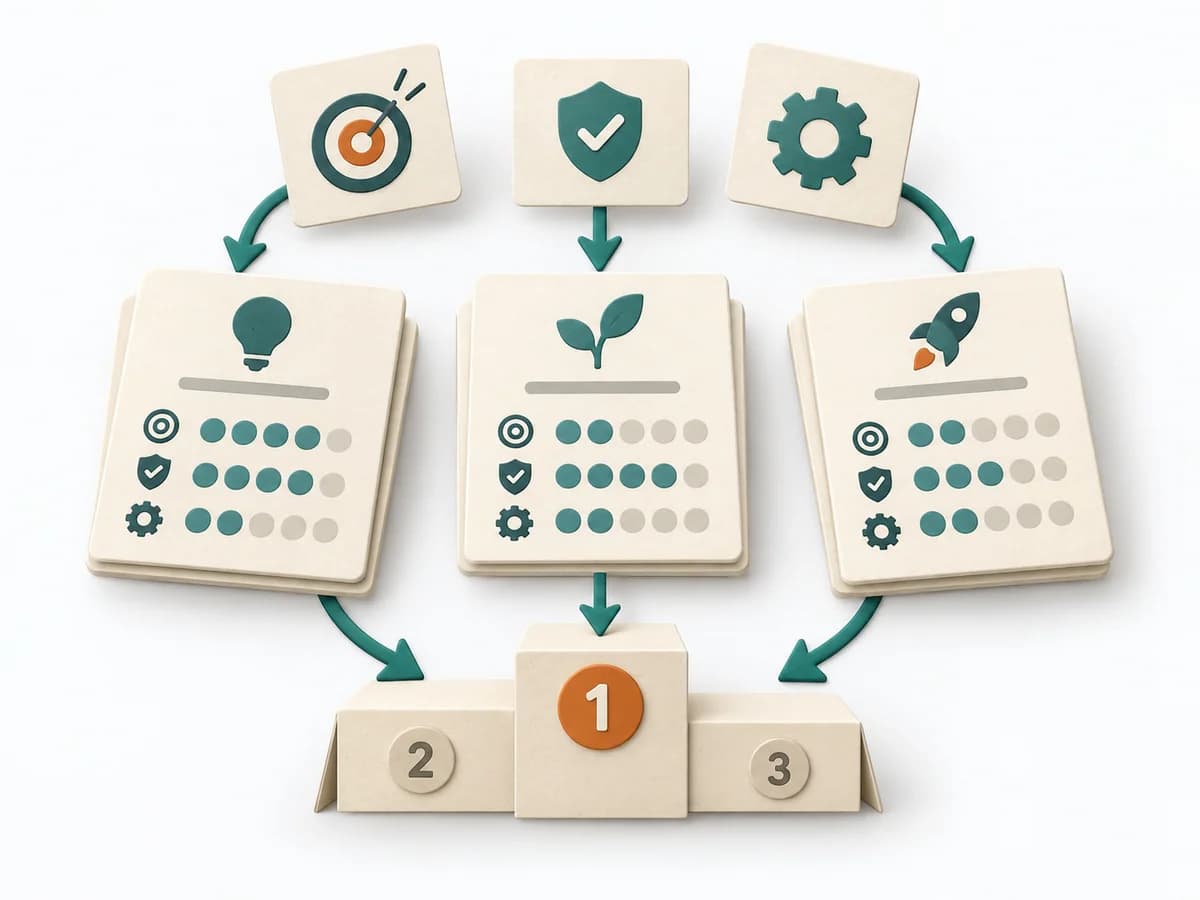 Product Strategy ICE Scoring |  Facilitation Stakeholder Mapping |  Facilitation Stakeholder Salience Model |
|---|---|---|---|---|
Purposedifferent | When two variants compete, discussions quickly decide by taste rather than effect. A/B Testing checks behavior under controlled conditions and separates real improvement from chance or expectation effects. | When ideas need sorting quickly, it condenses impact, confidence, and effort into one compact score. It connects customer value, product logic, and decision priorities. The result is captured as an ICE table and top-ideas list. | When an initiative depends on many people, interests, and power dynamics, Stakeholder Mapping systematically orders the environment. It shows who influences, who is affected, and where relationship management or safeguarding matters first. | When stakeholders appear to matter very differently, the Stakeholder Salience Model rates their actual priority through power, legitimacy, and urgency. It turns individual contributions into a visible selection. The result is captured as a Salience diagram and a class-based strategy. |
Complexitydifferent | High | Low | Low | Medium |
Timedifferent | 1-4 Wochen | 30-60 min | 60–90 min | 60-90 min |
Participantsdifferent | 1-6 | 2-8 | 2-8 | 3-6 |
Formatdifferent | Async | Workshop + async | Workshop + async | Workshop |
Outputdifferent | Experiment results, Decision log, Learning summary | ICE Table, Top Idea List | Stakeholder Map, Engagement Plan, Risk Notes | Salience Diagram, Strategy per Class |
Tagsno overlap | ExperimentsGrowthAnalyticsValidation | PrioritizationScoringGrowthDecision | StakeholdersAlignmentFacilitationChange | StakeholdersFacilitationAlignmentGovernance |