View methods side by side.
Choose up to four methods. Add them using the search and share the comparison by copying its link.
| Criterion | 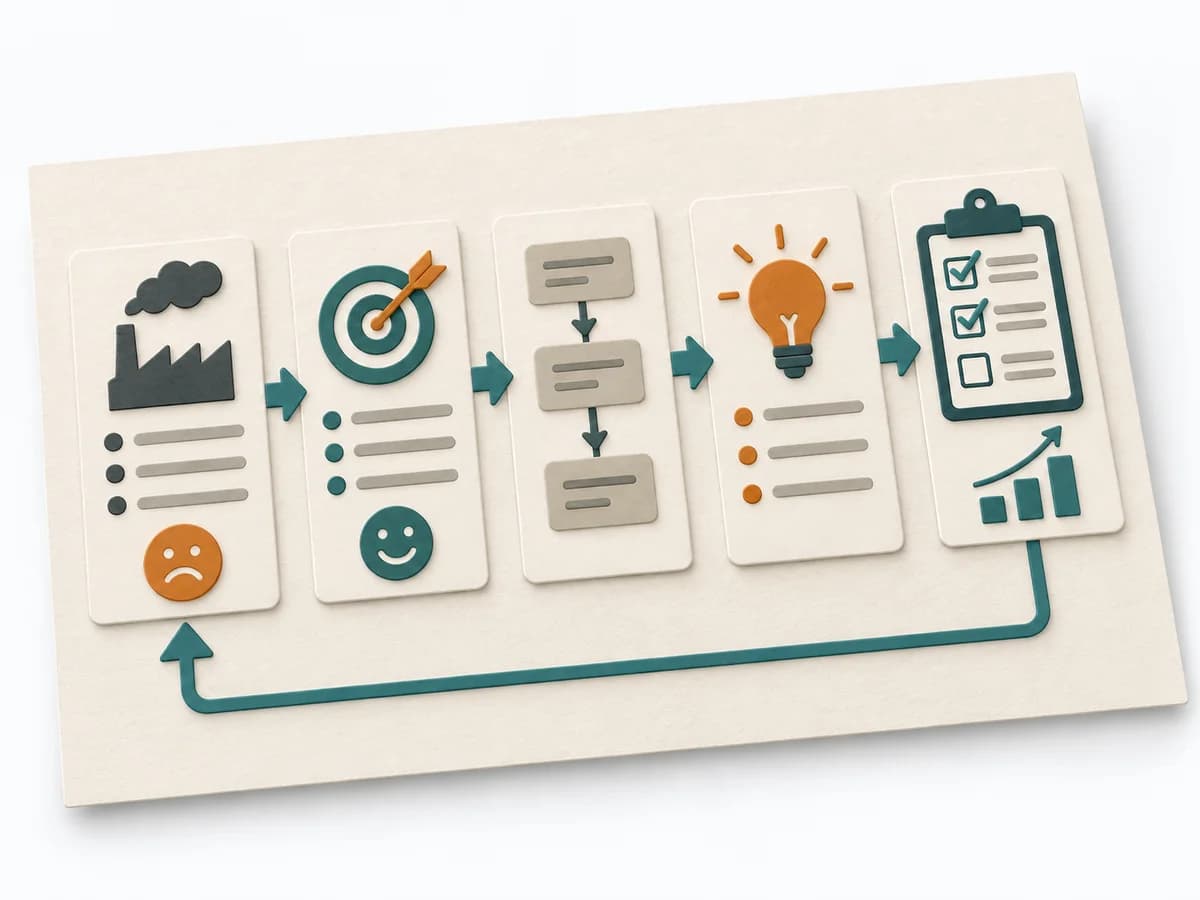 Operations A3 Problem Solving |  Decision Making Assumption Surfacing | 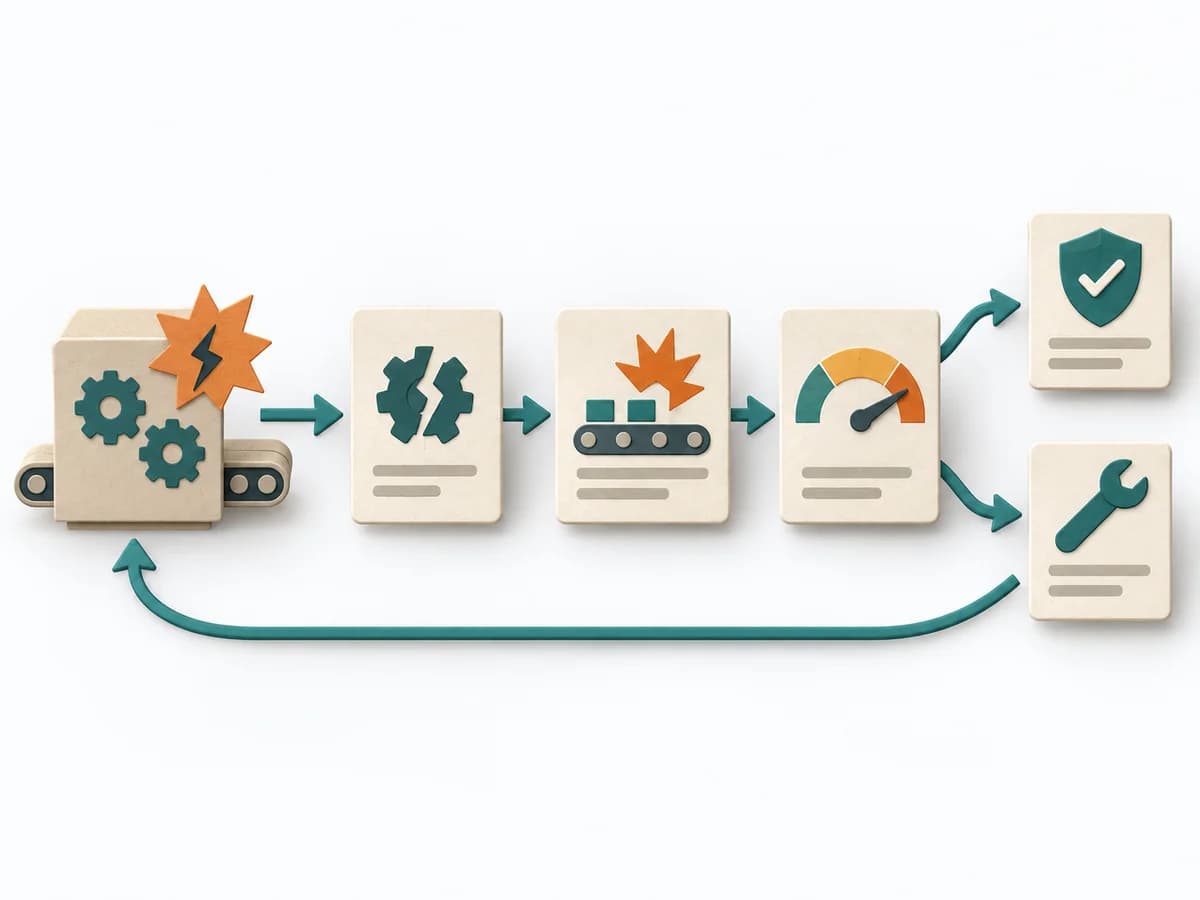 Operations Failure Mode and Effects Analysis | 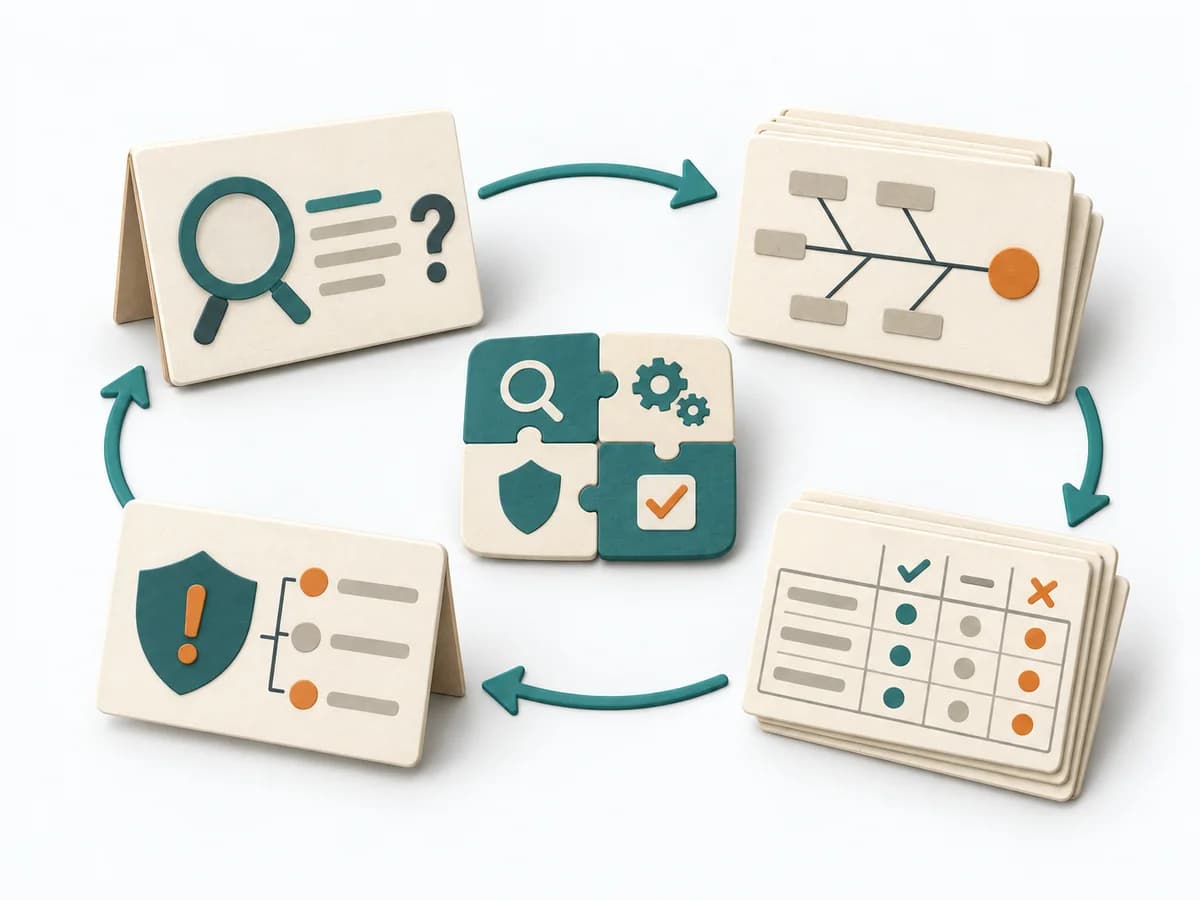 Operations Kepner-Tregoe |
|---|---|---|---|---|
Purposedifferent | For a complex deviation with several people involved, the method bundles problem, analysis, and decision onto one page. It creates a shared working space where causes, countermeasures, and follow-up fit together. | Plans often contain assumptions that were never openly stated and remain dangerous precisely because of that. Assumption Surfacing makes these silent premises visible and prioritizes which of them carry the initiative or could sink it. | For a process, product, or service with noticeable failure risks, the method assesses possible failure modes in advance. It directs attention to combinations of occurrence, effect, and detectability. | For a disturbance that's hard to pin down, the method cleanly separates problem, cause, and decision. It reduces mixing when symptoms allow several interpretations. |
Complexitydifferent | Medium | Low | High | High |
Timedifferent | 45-90 min | 45-90 min | 2-6 h | 2-8 h |
Participantsdifferent | 2-5 | 2-8 | 3-10 | 2-8 |
Formatdifferent | Workshop + async | Workshop + async | Workshop | Workshop + async |
Outputdifferent | A3 Report, Action Plan, Root Cause Analysis | Assumption List, Critical Assumptions, Learning Plan | FMEA Table, Risk Priority, Mitigation Actions | Problem Analysis, Decision Analysis, Risk Plan |
Tagsno overlap | LeanProblem solvingCoachingOperations | AssumptionsRiskDecisionDiscovery | RiskQualityOperationsRoot cause | Problem solvingRoot causeDecisionOperations |