View methods side by side.
Choose up to four methods. Add them using the search and share the comparison by copying its link.
| Criterion |  Operations 5 Whys |  Decision Making Trade-off Analysis | 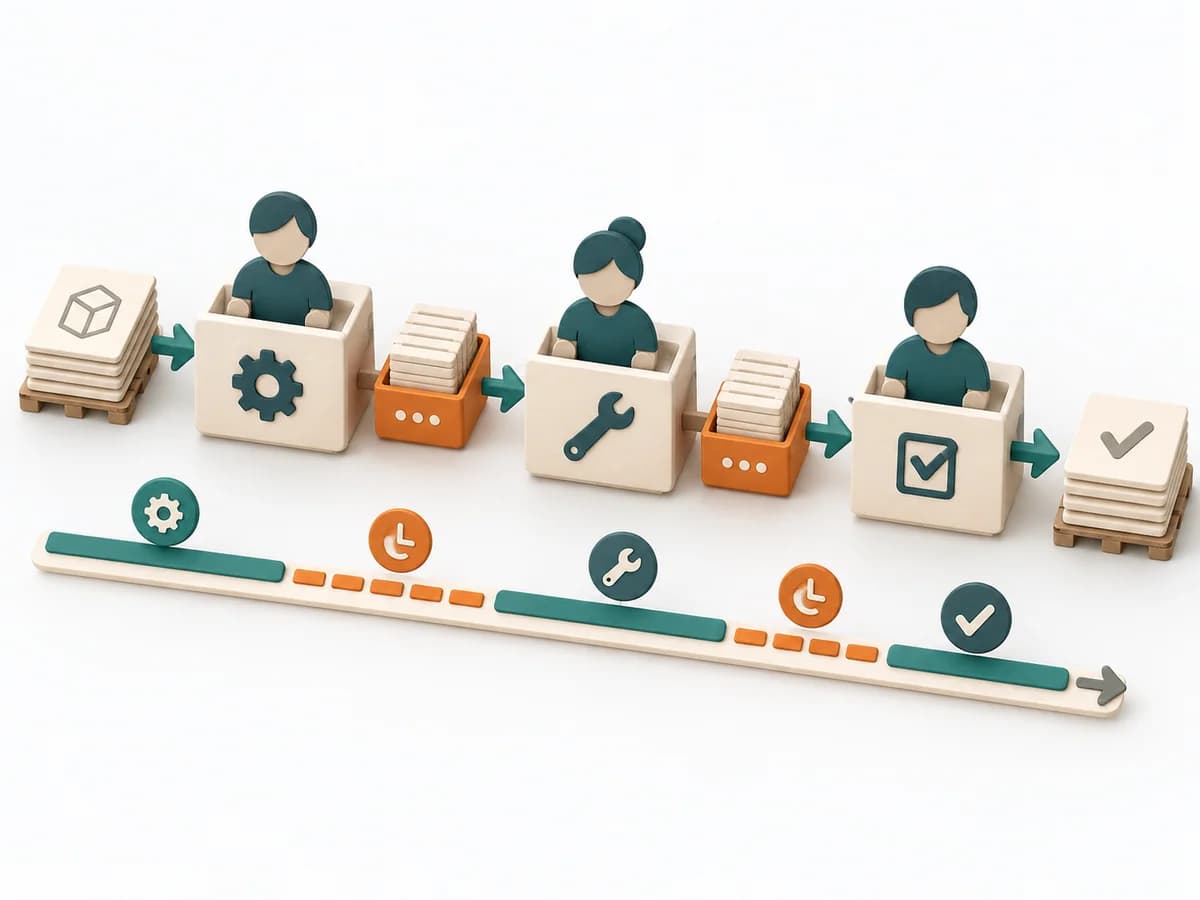 Delivery Value Stream Mapping |  Operations Root Cause Analysis |
|---|---|---|---|---|
Purposedifferent | For a single, hard-to-explain deviation, the method exposes the causal chain behind the visible symptom. It keeps the cause open until a controllable condition emerges instead of a mere description. | With limited resources, quality, speed, cost, and risk almost always compete with each other. Trade-off Analysis makes these tensions explicit and prevents decisions from producing hidden side effects. | When delivery work dissolves into wait times, handoffs, and hidden effort, Value Stream Mapping makes the actual flow visible. The method exposes bottlenecks, idle time, and feedback loops so lead time and improvement levers become tangible. | When a problem keeps recurring and the cause stays unclear, the method exposes the underlying mechanism. It separates symptom, guess, and robust explanation from one another. |
Complexitydifferent | Low | Medium | Medium | Medium |
Timedifferent | 15-30 min | 45-120 min | 1-3 h | 1-4 h |
Participantsdifferent | 2-6 | 2-8 | 4-10 | 3-8 |
Formatdifferent | Workshop | Workshop + async | Workshop | Workshop + async |
Outputdifferent | Root cause notes, Countermeasures | Trade-off Matrix, Criteria List, Decision Rationale, Accepted Downsides | Current-state map, Future-state map, Bottleneck list | Problem Statement, Cause Hypotheses, Confirmed Causes, Action Plan |
Tagsno overlap | Root causeIncidentLeanProblem solving | TradeoffsDecisionCriteriaOptions | LeanFlowWasteDelivery | Root causeProblem solvingQualityIncident |