View methods side by side.
Choose up to four methods. Add them using the search and share the comparison by copying its link.
| Criterion |  Operations 5 Whys | 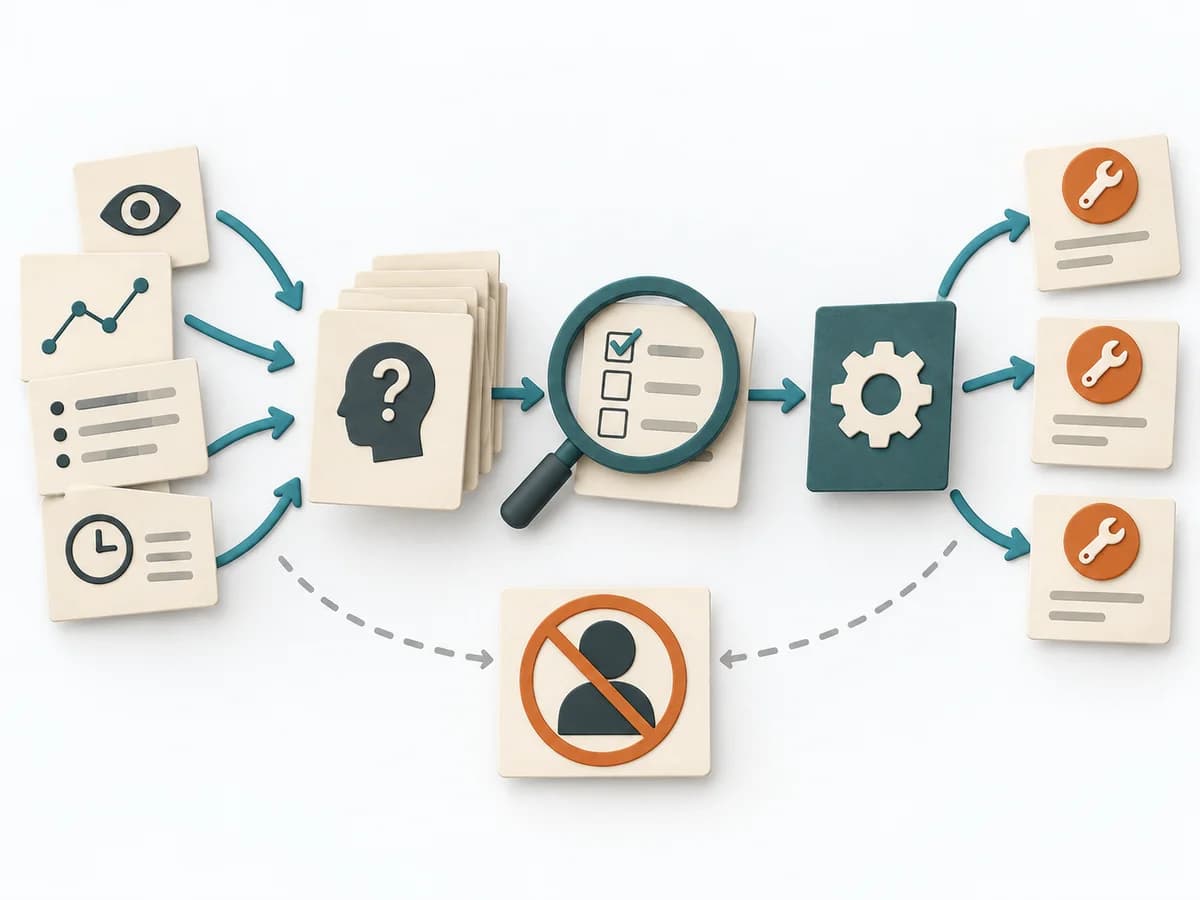 Operations Root Cause Analysis |  Facilitation Power Interest Grid |  Facilitation Stakeholder Mapping |
|---|---|---|---|---|
Purposedifferent | For a single, hard-to-explain deviation, the method exposes the causal chain behind the visible symptom. It keeps the cause open until a controllable condition emerges instead of a mere description. | When a problem keeps recurring and the cause stays unclear, the method exposes the underlying mechanism. It separates symptom, guess, and robust explanation from one another. | When many stakeholders compete for attention at once, the Power Interest Grid sorts them by influence and stake. It turns individual contributions into a visible selection. The result is captured as a Power Interest Grid and a stakeholder-specific strategy. | When an initiative depends on many people, interests, and power dynamics, Stakeholder Mapping systematically orders the environment. It shows who influences, who is affected, and where relationship management or safeguarding matters first. |
Complexitydifferent | Low | Medium | Low | Low |
Timedifferent | 15-30 min | 1-4 h | 30-60 min | 60–90 min |
Participantsdifferent | 2-6 | 3-8 | 2-8 | 2-8 |
Formatdifferent | Workshop | Workshop + async | Workshop | Workshop + async |
Outputdifferent | Root cause notes, Countermeasures | Problem Statement, Cause Hypotheses, Confirmed Causes, Action Plan | Power Interest Grid, Strategy per Stakeholder | Stakeholder Map, Engagement Plan, Risk Notes |
Tagsno overlap | Root causeIncidentLeanProblem solving | Root causeProblem solvingQualityIncident | StakeholdersFacilitationAlignmentPlanning | StakeholdersAlignmentFacilitationChange |