View methods side by side.
Choose up to four methods. Add them using the search and share the comparison by copying its link.
| Criterion |  Operations 5 Whys |  Innovation Lean Startup |  Operations Root Cause Analysis | 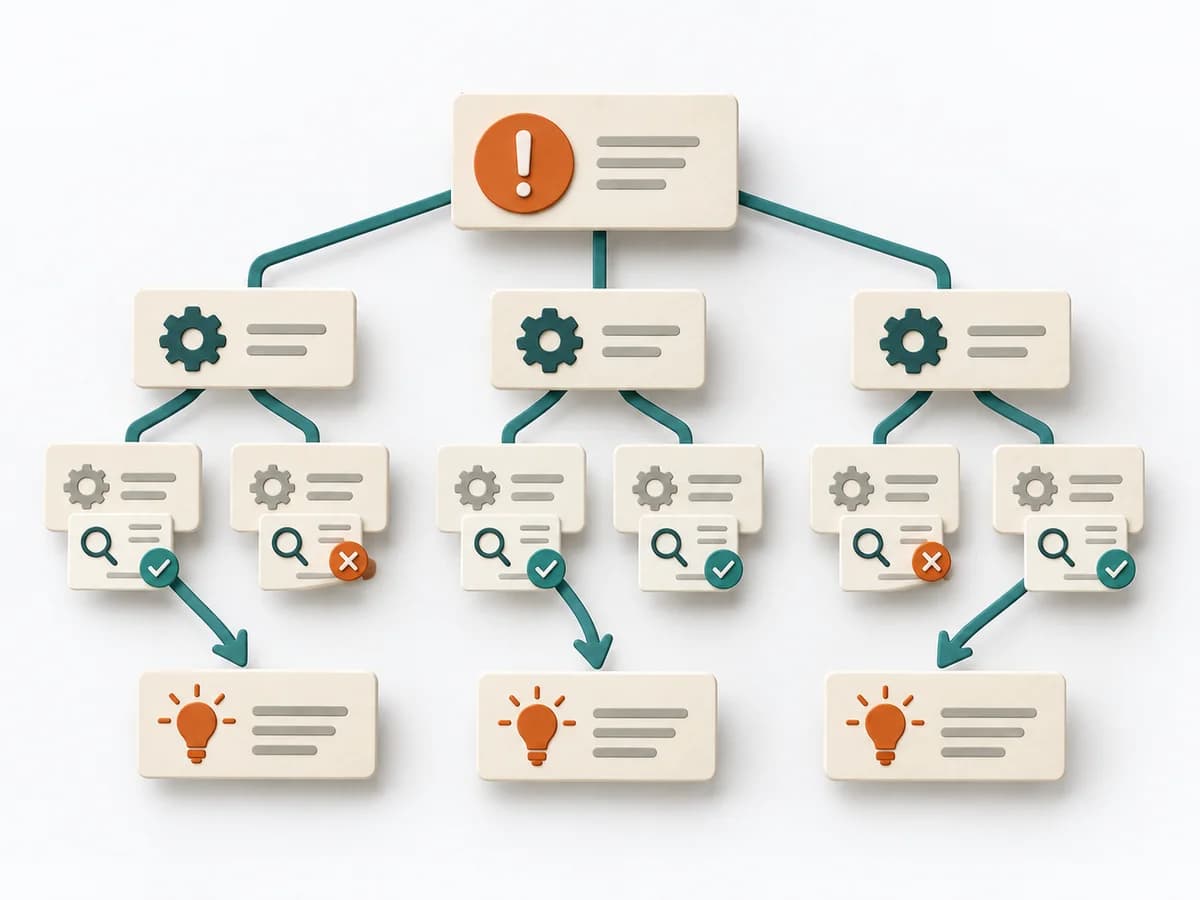 Operations Root Cause Tree Analysis |
|---|---|---|---|---|
Purposedifferent | For a single, hard-to-explain deviation, the method exposes the causal chain behind the visible symptom. It keeps the cause open until a controllable condition emerges instead of a mere description. | For uncertain business assumptions, the method forces the idea into contact with real market reactions early. It separates wishful picture, assumption, and observable behavior, so that learning becomes faster than planning. This translates uncertainty into measurable insight. | When a problem keeps recurring and the cause stays unclear, the method exposes the underlying mechanism. It separates symptom, guess, and robust explanation from one another. | For a problem with several suspected causes, the method builds a causal structure instead of a mere list. It makes visible how causes connect and where the strongest points of leverage lie. |
Complexitydifferent | Low | Medium | Medium | Medium |
Timedifferent | 15-30 min | Wochen bis Monate je Lernzyklus | 1-4 h | 1-3 h |
Participantsdifferent | 2-6 | 2-8 | 3-8 | 2-8 |
Formatdifferent | Workshop | Workshop + async | Workshop + async | Workshop |
Outputdifferent | Root cause notes, Countermeasures | Hypothesis list, MVPs, Learning reports, Pivot or persevere decision | Problem Statement, Cause Hypotheses, Confirmed Causes, Action Plan | Cause Tree, Evidence Notes, Countermeasures |
Tagsno overlap | Root causeIncidentLeanProblem solving | LeanStartupValidationMVP | Root causeProblem solvingQualityIncident | Root causeTreeIncidentQuality |