View methods side by side.
Choose up to four methods. Add them using the search and share the comparison by copying its link.
| Criterion |  Agile 4Ls Retrospective | 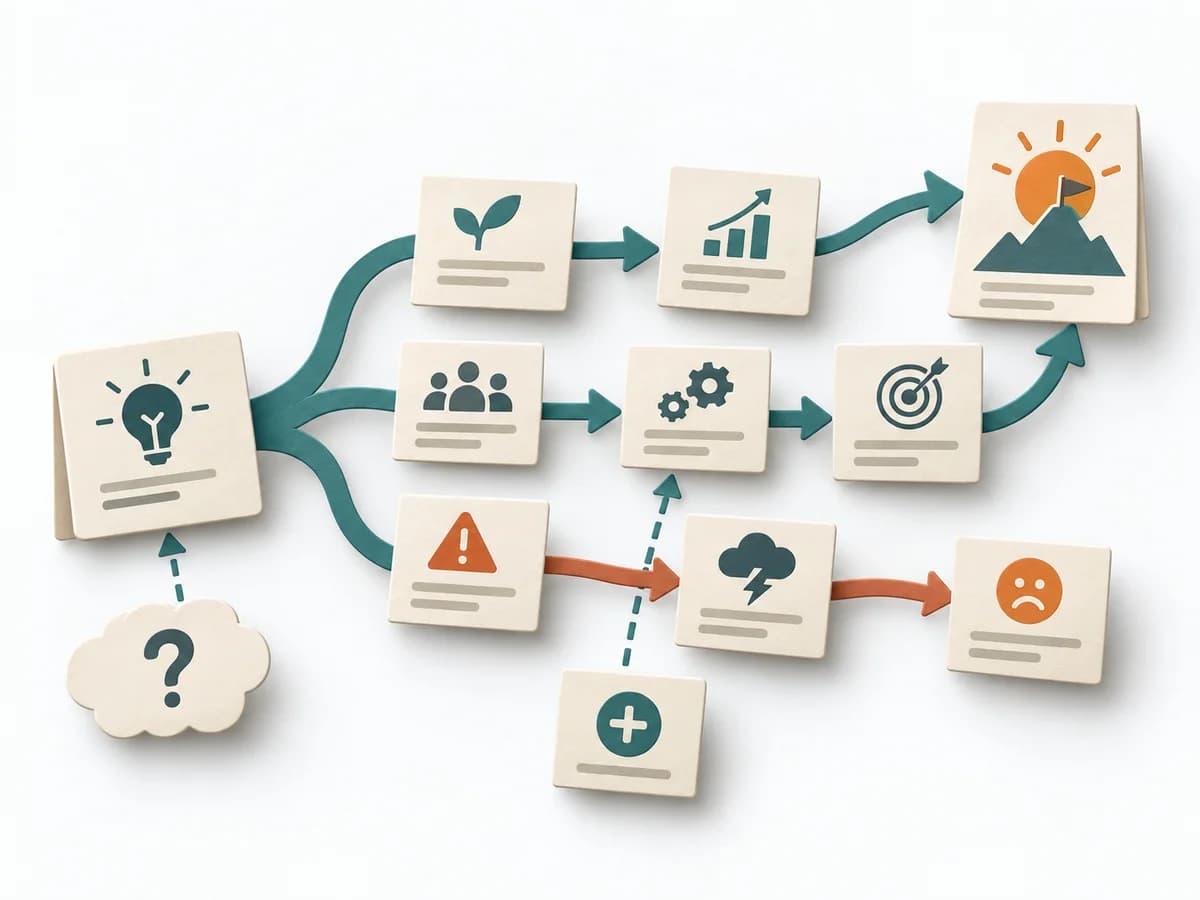 Systems Thinking Future Reality Tree |  Systems Thinking Intervention Mapping | 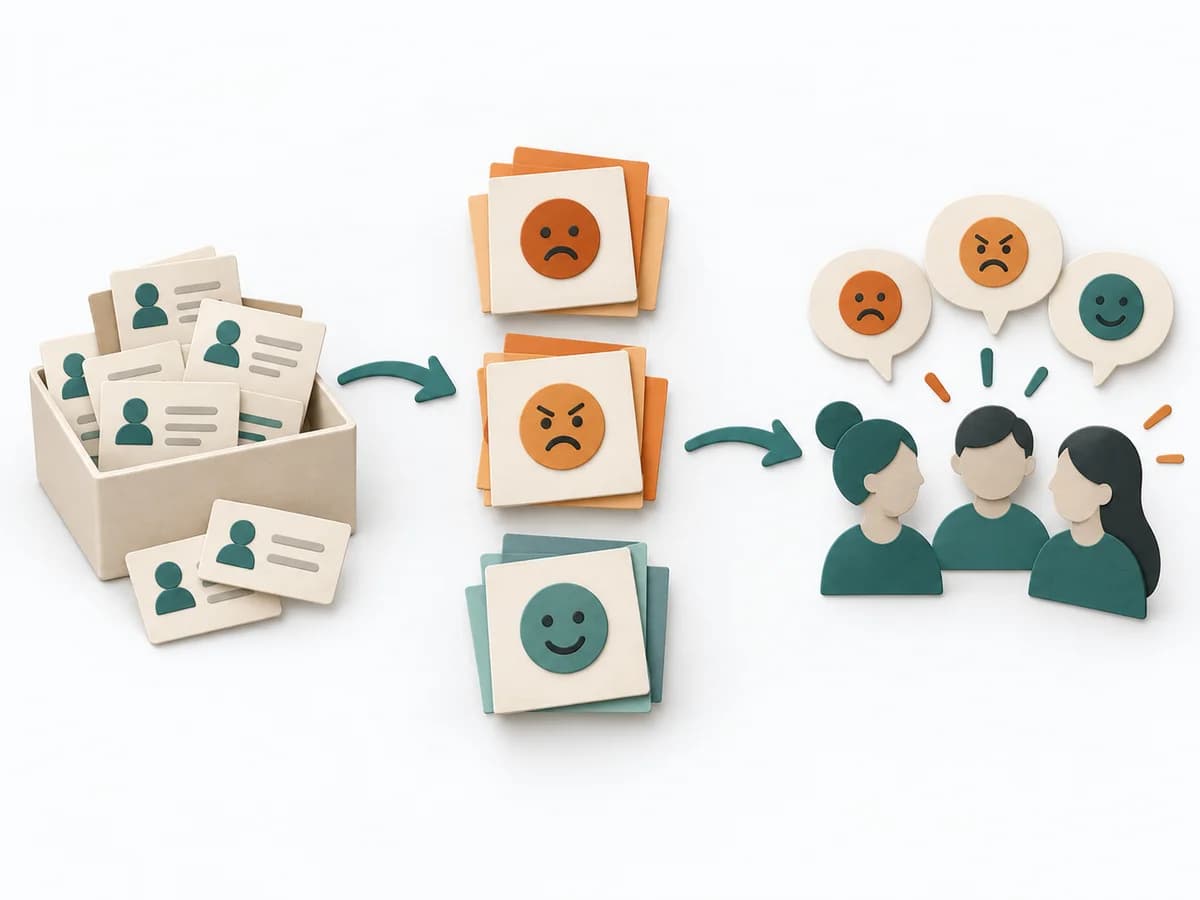 Agile Mad Sad Glad |
|---|---|---|---|---|
Purposedifferent | When a sprint should not only be assessed but also learned from, it captures experience in clear learning categories. It records what worked, what's missing, and what should run differently next time. | A Future Reality Tree shows how desired actions are meant to lead to a better system state. The method checks whether a path of change holds together logically before time flows into implementation. | Intervention Mapping translates a need for change into a planned, evaluable program. The method connects target group, determinants, actions, and measurement into a traceable chain. | When a team's or workshop's mood needs to become readable, it structures emotional signals with little setup. It makes strain, relief, and sources of energy tangible. |
Complexitydifferent | Low | High | High | Low |
Timedifferent | 45–75 min | 2-4 h | 1-5 Tage | 30-60 min |
Participantsdifferent | Team members involved | 3-8 | 4-12 | 3-10 |
Formatdifferent | Workshop | Workshop | Workshop + async | Workshop |
Outputdifferent | 4Ls Board, Learning Themes, Improvement Actions | Future Reality Tree, Negative Branches, Assumption List, Improved Injections | Logic Model, Change Objectives, Intervention Components, Evaluation Plan | Emotion Board, Themes, Action Items |
Tagsno overlap | RetrospectiveLearningReflectionTeam | Theory of ConstraintsSystems thinkingChange | ChangeSystems thinkingCapability | RetrospectiveTeamReflection |