View methods side by side.
Choose up to four methods. Add them using the search and share the comparison by copying its link.
| Criterion | 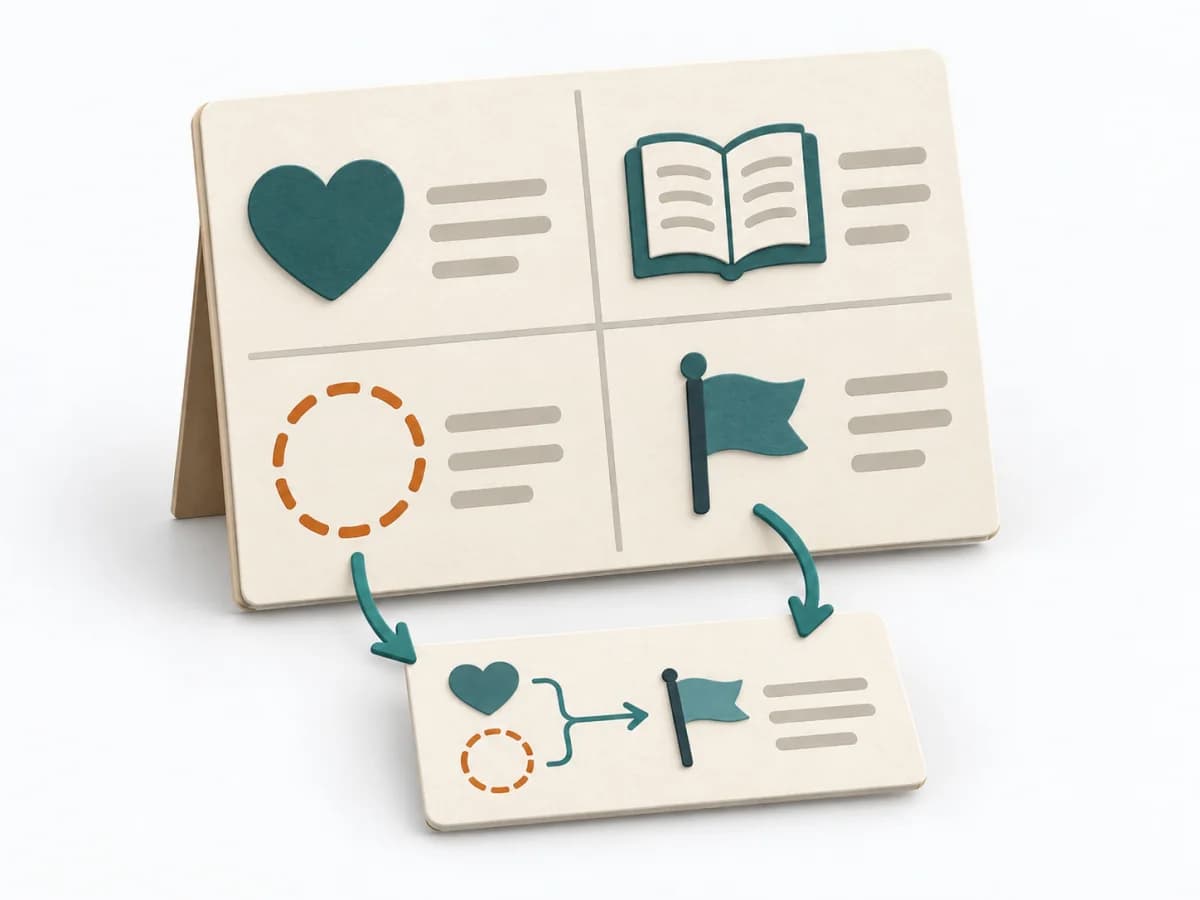 Agile 4Ls Retrospective | 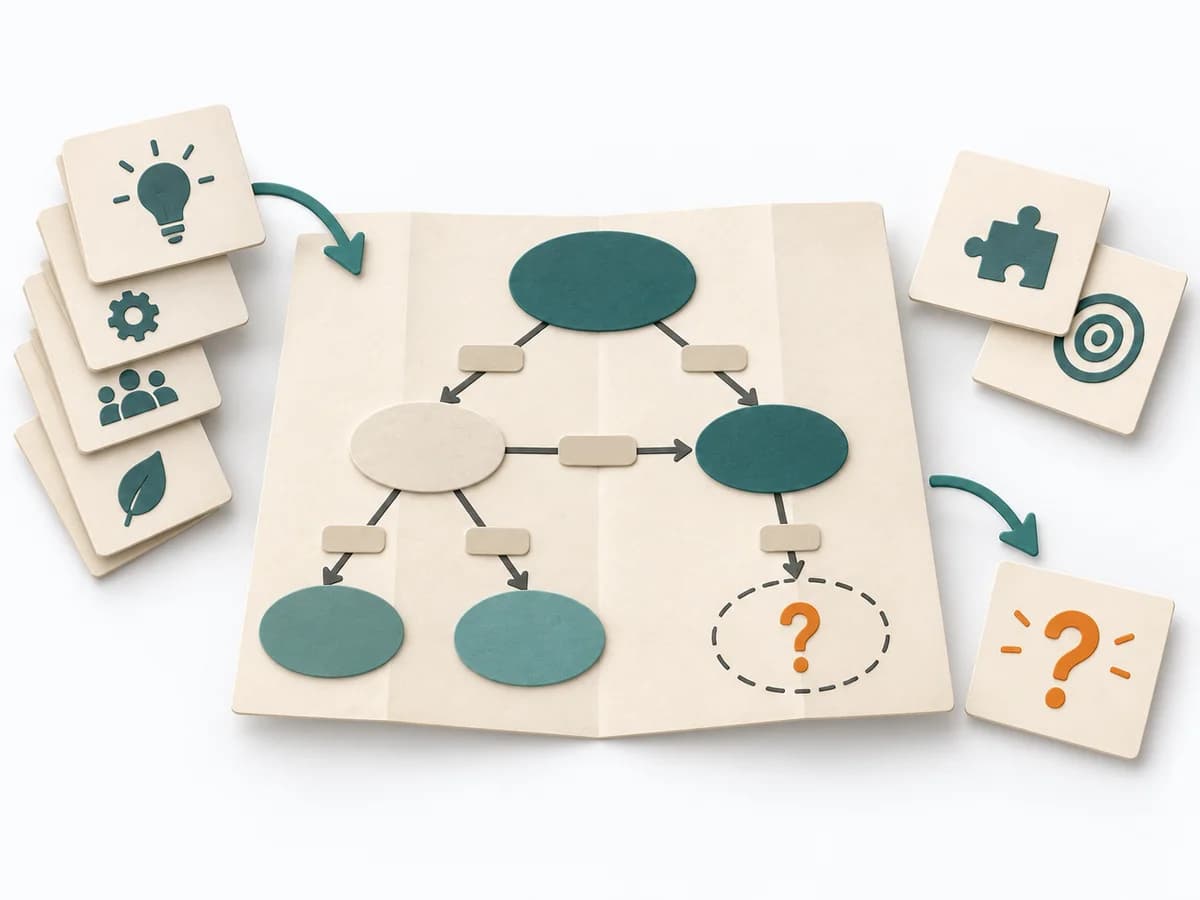 Knowledge Modeling Concept Mapping | 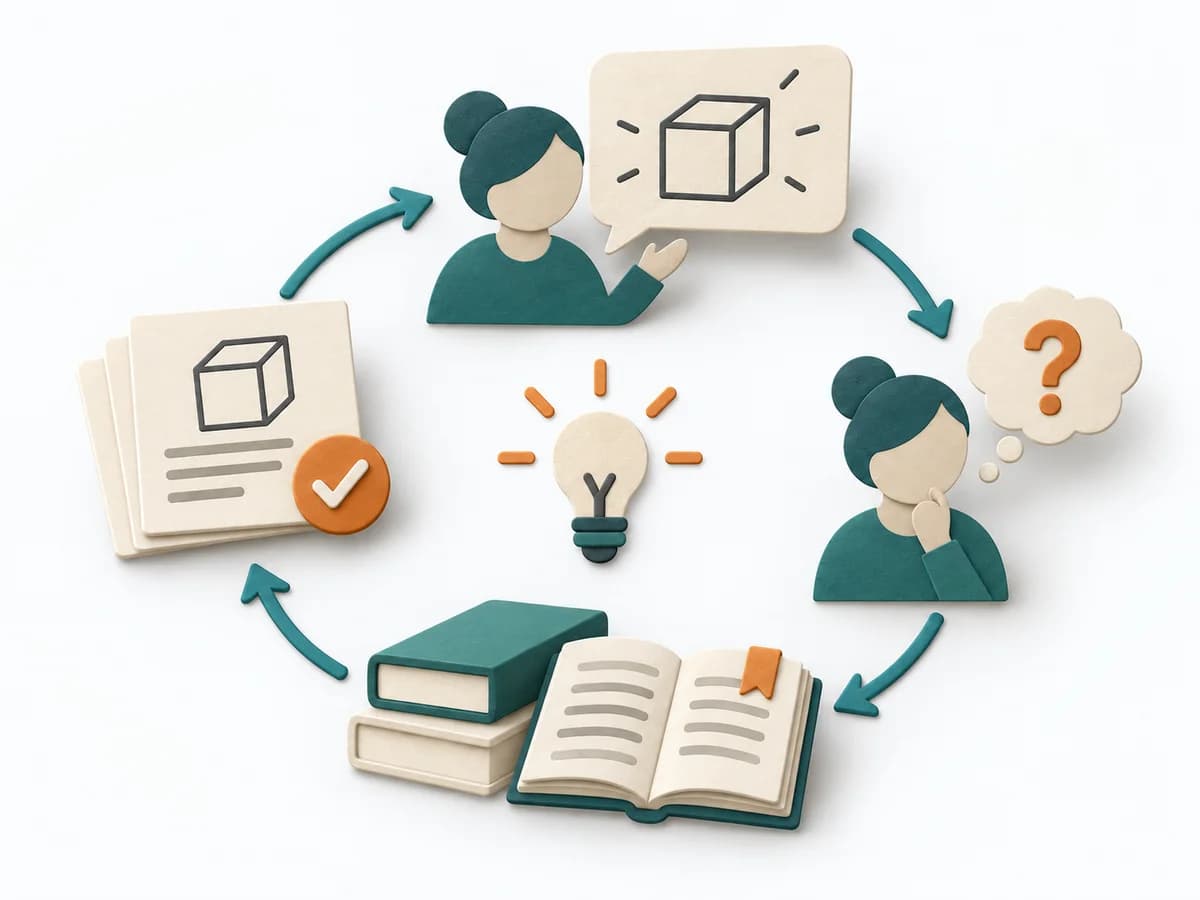 Knowledge Modeling Feynman Technique | 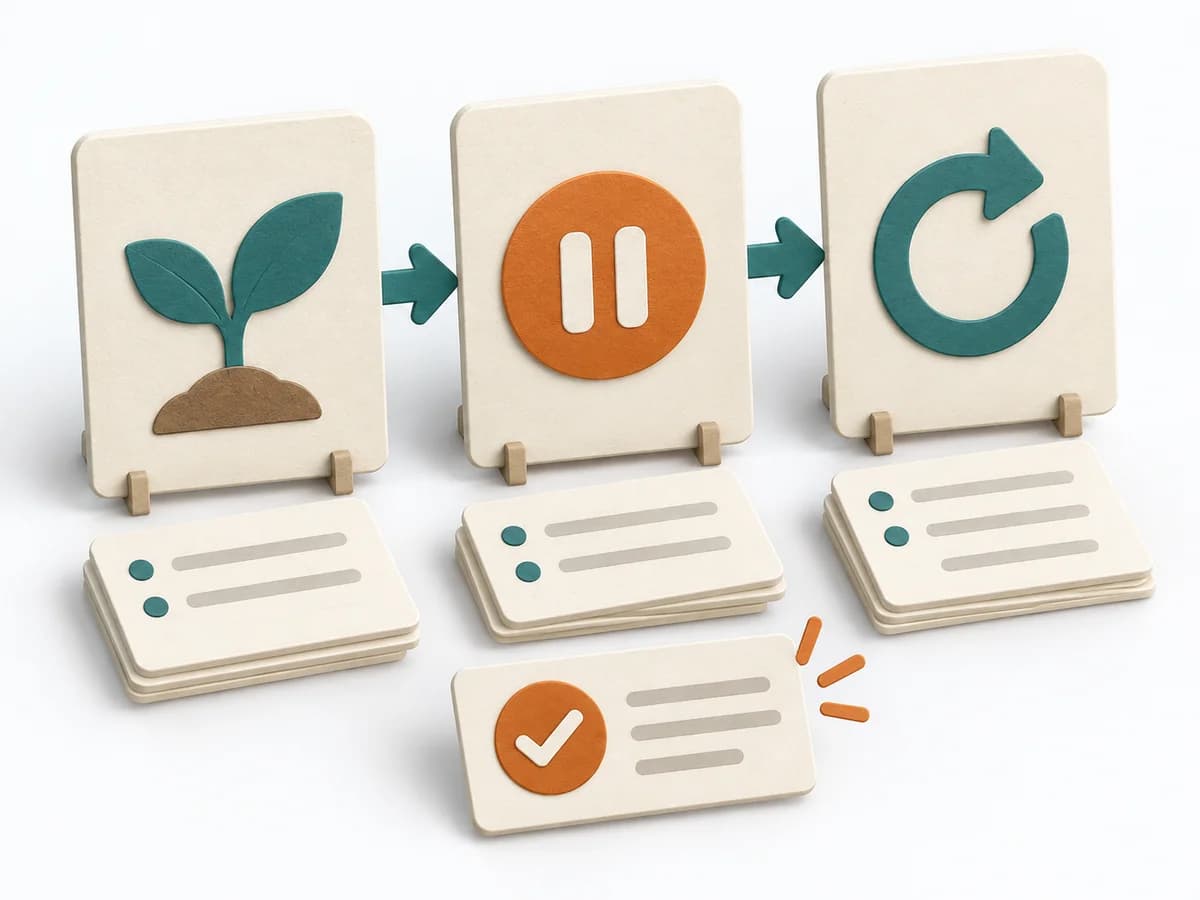 Agile Start Stop Continue |
|---|---|---|---|---|
Purposedifferent | When a sprint should not only be assessed but also learned from, it captures experience in clear learning categories. It records what worked, what's missing, and what should run differently next time. | Concept Mapping arranges terms and relationships in a network that makes subject-matter connections tangible. It fits when a topic needs to be understood structurally rather than linearly. | The Feynman Technique checks understanding by explaining a topic so that it stays easy for others to understand. It makes knowledge gaps visible before they become costly in everyday work. | When a team wants to deliberately adjust its working behavior, it makes habits visible and assessable. It focuses on concrete changes instead of diffuse mood. |
Complexitydifferent | Low | Medium | Low | Low |
Timedifferent | 45–75 min | 1-2 h | 20-60 min | 30-60 min |
Participantsdifferent | Team members involved | 1-8 | 1 | 3-12 |
Formatdifferent | Workshop | Workshop + async | Async | Workshop |
Outputdifferent | 4Ls Board, Learning Themes, Improvement Actions | Concept Map, Relationship Labels, Knowledge Gaps | Plain-language Explanation, Knowledge Gaps, Study Notes | Start Stop Continue Board, Improvement Actions |
Tagsno overlap | RetrospectiveLearningReflectionTeam | KnowledgeConceptsMappingSensemaking | LearningKnowledgeUnderstanding | RetrospectiveImprovementTeamReflection |