View methods side by side.
Choose up to four methods. Add them using the search and share the comparison by copying its link.
| Criterion | 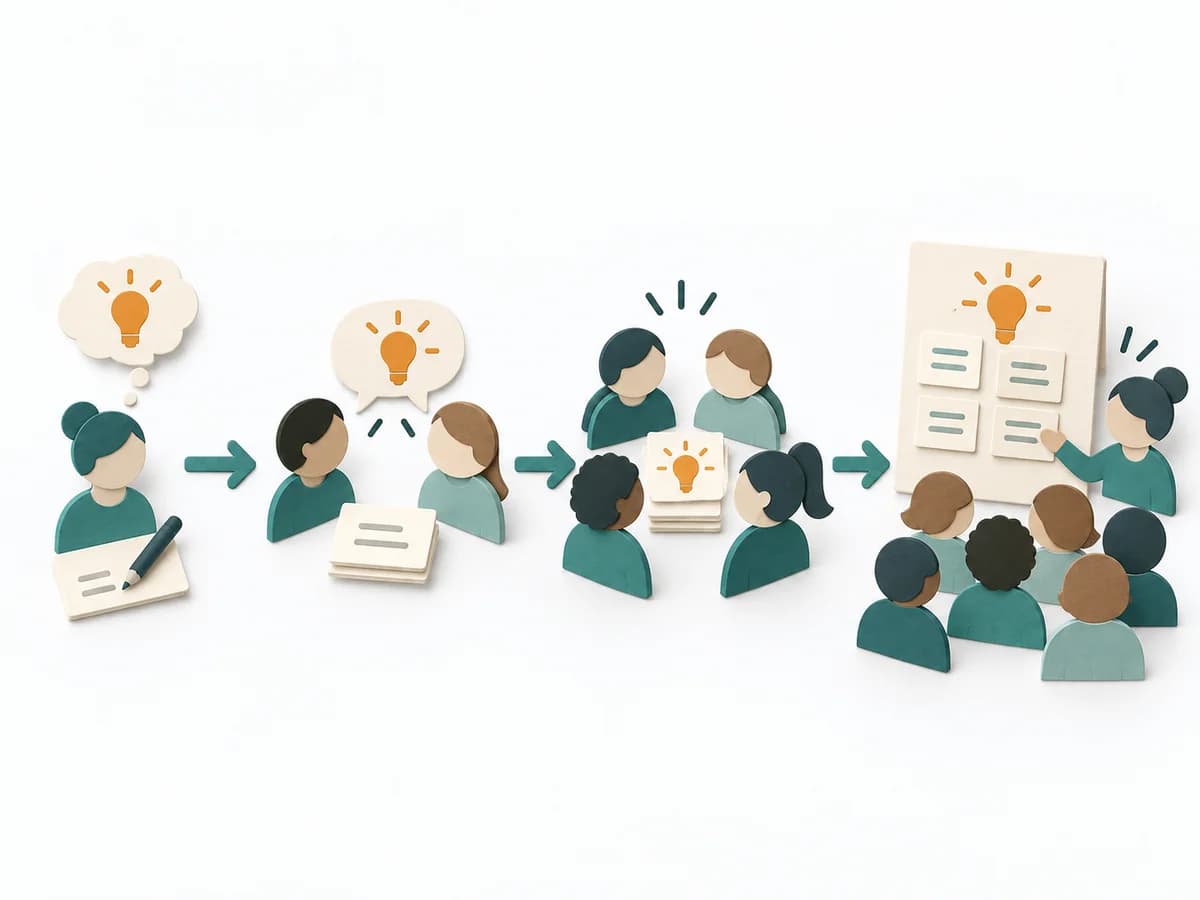 Facilitation 1-2-4-All | 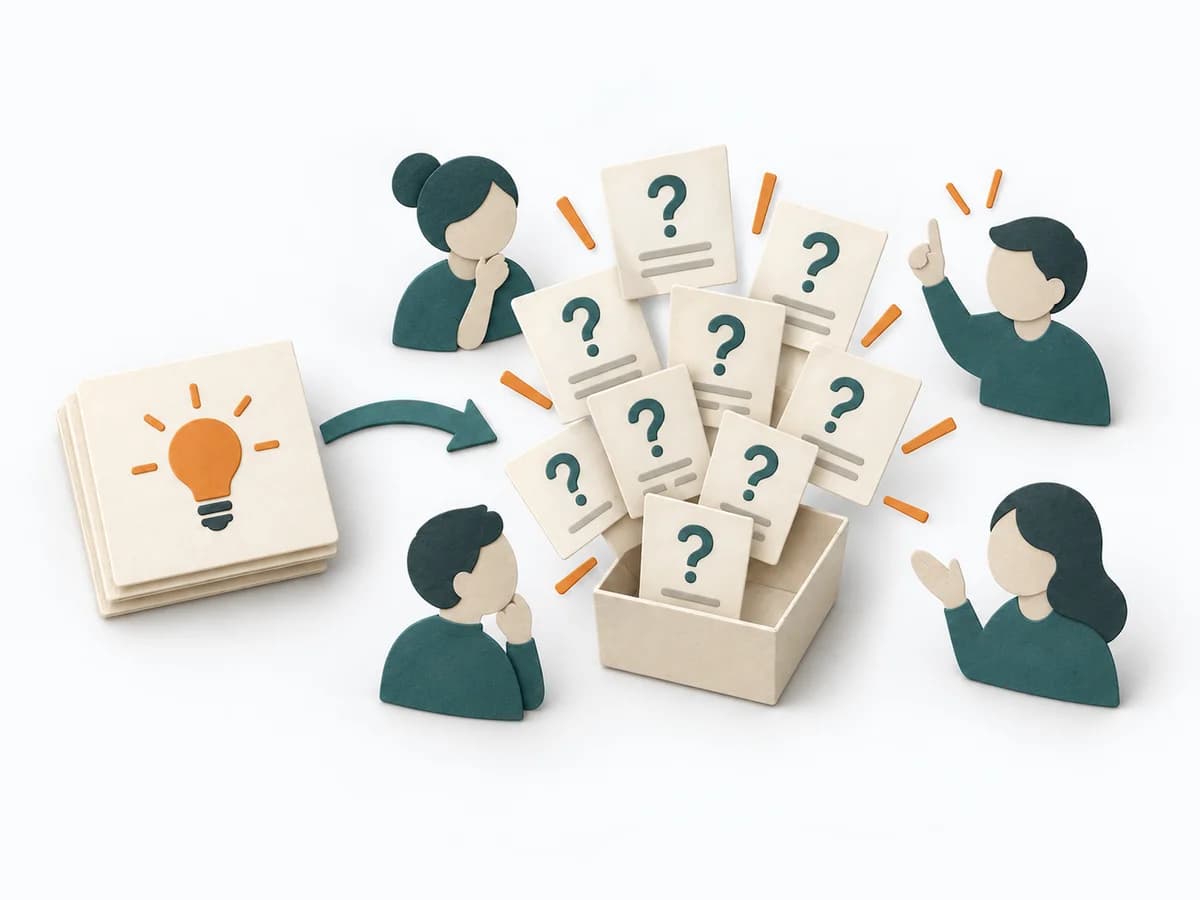 Facilitation Question Burst |  Facilitation Stakeholder Mapping |  Facilitation Power Interest Grid |
|---|---|---|---|---|
Purposedifferent | When many people in a group too rarely get to speak, 1-2-4-All distributes thinking time more fairly. The format builds participation step by step and makes quiet or still-unformed thoughts usable faster. | When a problem gets covered up too quickly with answers, Question Burst puts the better question at the center. The format opens the thinking space before the group commits to an interpretation. | When an initiative depends on many people, interests, and power dynamics, Stakeholder Mapping systematically orders the environment. It shows who influences, who is affected, and where relationship management or safeguarding matters first. | When many stakeholders compete for attention at once, the Power Interest Grid sorts them by influence and stake. It turns individual contributions into a visible selection. The result is captured as a Power Interest Grid and a stakeholder-specific strategy. |
Complexitysame | Low | Low | Low | Low |
Timedifferent | 10-20 min | 15-30 min | 60–90 min | 30-60 min |
Participantsdifferent | 4-100+ | 2-8 | 2-8 | 2-8 |
Formatdifferent | Workshop | Workshop | Workshop + async | Workshop |
Outputdifferent | Idea List, Shared Insights, Emergent Themes | Question List, Reframed Challenge, Learning Prompts | Stakeholder Map, Engagement Plan, Risk Notes | Power Interest Grid, Strategy per Stakeholder |
Tags1 shared | FacilitationInclusionIdeation | QuestionsReframingFacilitationSensemaking | StakeholdersAlignmentFacilitationChange | StakeholdersFacilitationAlignmentPlanning |