View methods side by side.
Choose up to four methods. Add them using the search and share the comparison by copying its link.
| Criterion |  Facilitation 1-2-4-All |  Product Discovery Outcome-Driven Innovation |
|---|---|---|
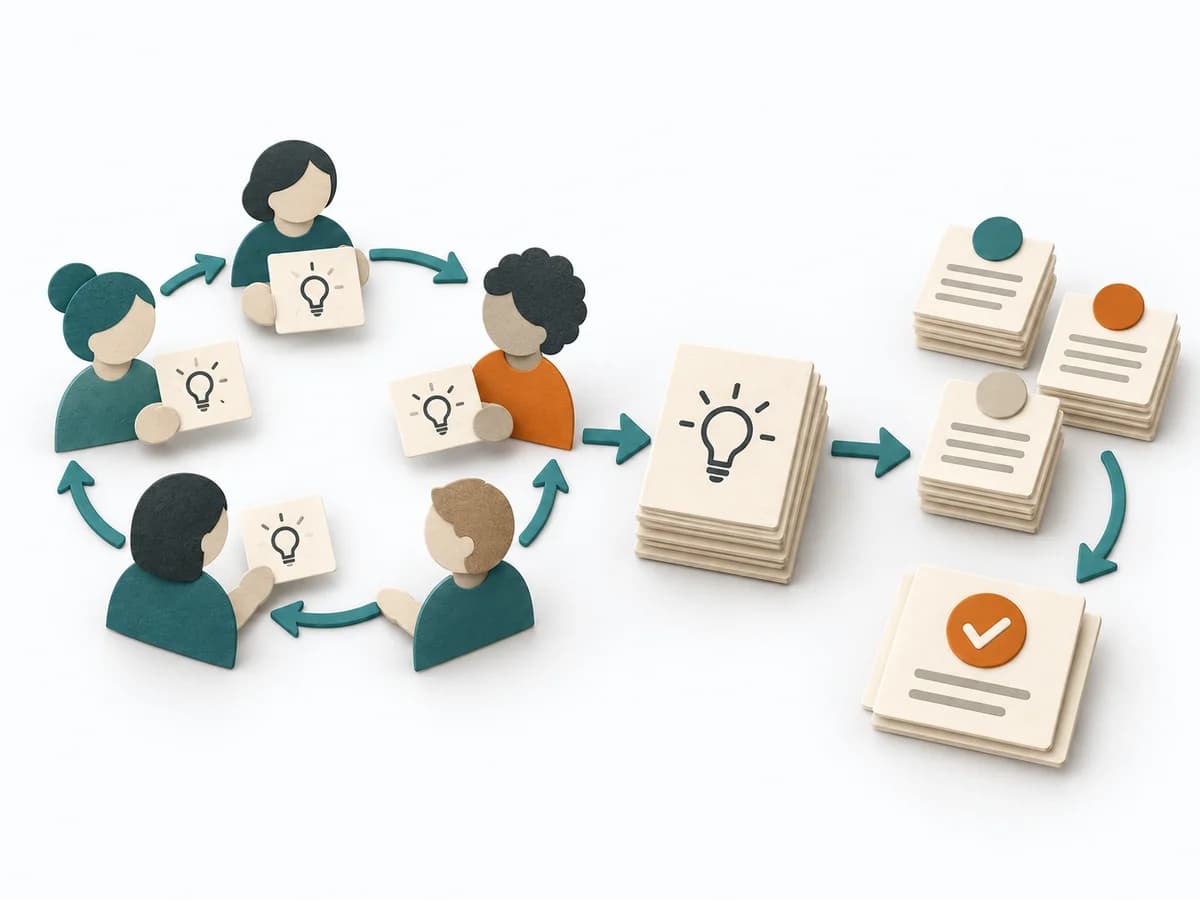
Purposedifferent | When many people in a group too rarely get to speak, 1-2-4-All distributes thinking time more fairly. The format builds participation step by step and makes quiet or still-unformed thoughts usable faster. | Outcome-Driven Innovation clarifies customer problems, solution opportunities, and evidence. It separates jobs, desired outcomes, importance, satisfaction, and opportunity, and captures results as desired outcome statements, an opportunity landscape, and segments by underserved needs. |
Complexitydifferent | Low | High |
Timedifferent | 10-20 min | Mehrere Wochen |
Participantsdifferent | 4-100+ | 2-6 researchers plus sample |
Formatdifferent | Workshop | Workshop + async |
Outputdifferent | Idea List, Shared Insights, Emergent Themes | Desired outcome statements, Opportunity landscape, Segmentation by underserved needs, Innovation hypotheses |
Tagsno overlap | FacilitationInclusionIdeation | OutcomesInnovationResearchQuantitative |
Often compared together
Methods with strong topical overlap with the current selection, not yet in the comparison.