Plan my session
Plan a concrete work block with agenda, roles, preparation, and a copyable result artifact.
Session: TRIZ
The plan translates the method into a concrete facilitated work block. Your inputs flow directly into the session brief and work artifact.
Method session with 2-8. The plan uses the existing method logic and the runsheet.
RunsheetUse the session for shared understanding. Contributions are collected visibly, assumptions are aligned, and open differences remain traceable in the artifact.
The session works directly toward Contradiction Statement. After the session, the artifact should be shareable, reviewable, or reusable.
- 1
Phase 1: Formulate problem and contradiction
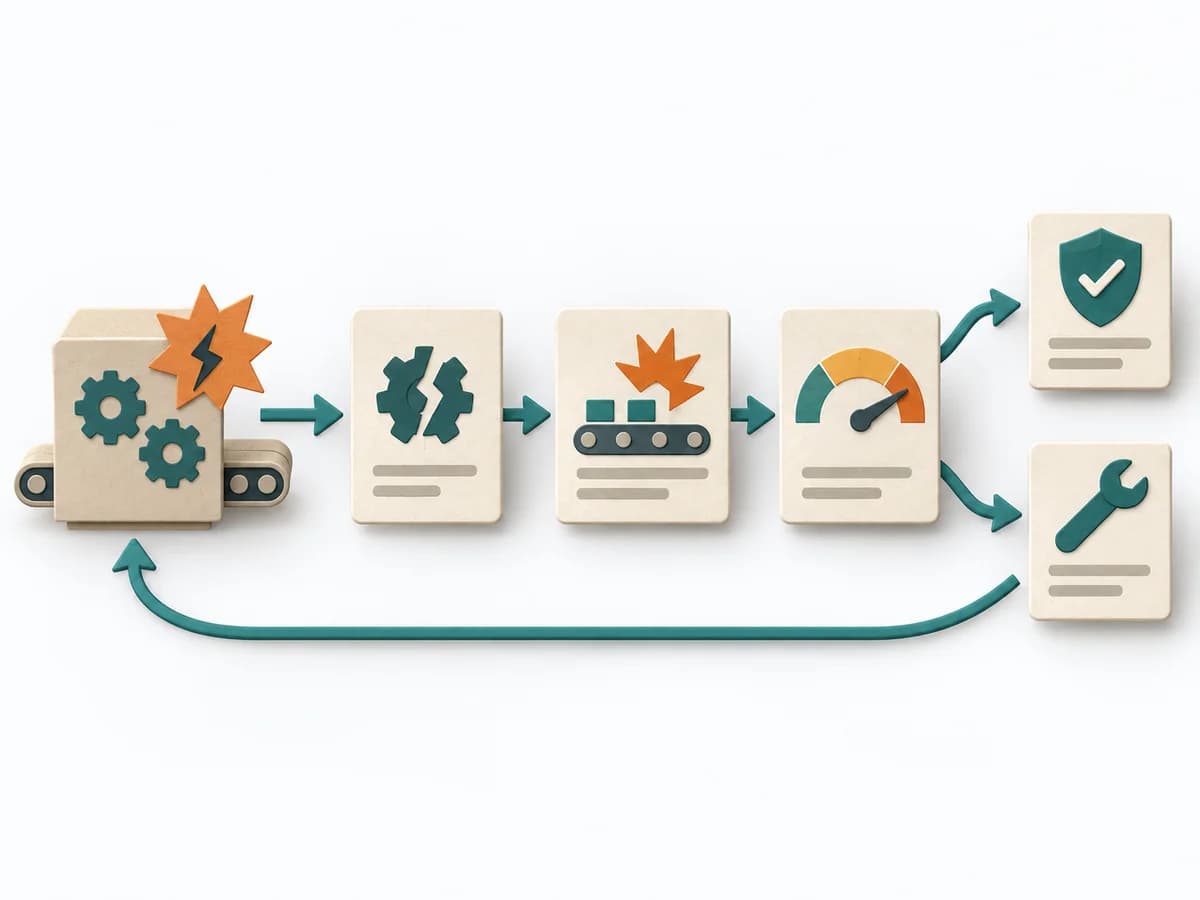
20-30 minFix problem in one sentence. Name improving and worsening parameters (for example "If we improve response time, accuracy worsens"). Map both parameters clearly to the 39 standard parameters. Hint: If no worsening parameter is found, it is not a contradiction but pure optimization. TRIZ is unsuitable; choose another method.
FacilitatorContradiction Statement - 2
Phase 2: Derive principles from matrix
15-20 minLook up the intersection of the two parameters in the contradiction matrix. Note recommended principles (typically 3-4). Read definition and generic example per principle. Hint: The matrix provides a trigger, not the answer. If recommended principles sound foreign, translate them into your domain knowledge before rejecting them.
FacilitatorInventive Principles - 3
Phase 3: Develop solution ideas
30-60 minPer principle, solo sketching for 5 min: ideas for applying the principle to the concrete problem. Then gallery, short presentation, cluster parallel ideas. Hint: Principles such as "segmentation" or "prior action" sound abstract. An analogous example from another industry helps create the aha moment.
FacilitatorSolution Concepts - 4
Phase 4: Feasibility and selection
20-30 minEvaluate top-3 concepts with three criteria: technical feasibility, cost, impact. Decider selects one direction with rationale. Note open assumptions as spikes. Hint: Concepts that feel "too wild" in this phase are often real innovations. Before discarding, evaluate again with a longer horizon.
OwnerContradiction Statement - 5
Publish artifact
10 minCheck the artifact for completeness, define location, set version or status, and name review recipients.
OwnerContradiction Statement
Session Brief
For invitations, boards, tickets, PR descriptions, or workshop notes.
session-brief.md
Session Brief: TRIZ
Goal
Artifact: Contradiction Statement
Working Question
Which inventive principles resolve the identified contradiction, and which concrete concepts emerge when these principles are applied to the problem?
Context
Problem statement as one sentence; known previous solution attempts and why they hit a tradeoff; constraints; availability of contradiction matrix as table or online tool.
Setup
- Format: Method session
- Duration: 1-4 h
- Mode: Workshop or async
- Participants: One facilitator with TRIZ experience who formulates the contradiction cleanly and interprets principles; two to eight participants from domain and technology; one scribe for solution concepts.
- Owner: One facilitator with TRIZ experience who formulates the contradiction cleanly and interprets principles
- Participation mode: Team round, shared work and alignment
- Outcome logic: Finish artifact
Participation Logic
Use the session for shared understanding. Contributions are collected visibly, assumptions are aligned, and open differences remain traceable in the artifact.
Outcome Logic
The session works directly toward Contradiction Statement. After the session, the artifact should be shareable, reviewable, or reusable.
Input
TRIZ contradiction matrix (39x39); list of the 40 inventive principles with examples; whiteboard or Miro board with three areas (contradiction, principles, solution ideas); pens; timer.
Preparation
Mark three areas on the board. Provide contradiction matrix. Rule: first clean contradiction, then principles, then concepts. Keep examples for principles visible.
Agenda
-
Phase 1: Formulate problem and contradiction (20-30 min) Owner: Facilitator Action: Fix problem in one sentence. Name improving and worsening parameters (for example "If we improve response time, accuracy worsens"). Map both parameters clearly to the 39 standard parameters. Hint: If no worsening parameter is found, it is not a contradiction but pure optimization. TRIZ is unsuitable; choose another method. Output: Contradiction Statement
-
Phase 2: Derive principles from matrix (15-20 min) Owner: Facilitator Action: Look up the intersection of the two parameters in the contradiction matrix. Note recommended principles (typically 3-4). Read definition and generic example per principle. Hint: The matrix provides a trigger, not the answer. If recommended principles sound foreign, translate them into your domain knowledge before rejecting them. Output: Inventive Principles
-
Phase 3: Develop solution ideas (30-60 min) Owner: Facilitator Action: Per principle, solo sketching for 5 min: ideas for applying the principle to the concrete problem. Then gallery, short presentation, cluster parallel ideas. Hint: Principles such as "segmentation" or "prior action" sound abstract. An analogous example from another industry helps create the aha moment. Output: Solution Concepts
-
Phase 4: Feasibility and selection (20-30 min) Owner: Owner Action: Evaluate top-3 concepts with three criteria: technical feasibility, cost, impact. Decider selects one direction with rationale. Note open assumptions as spikes. Hint: Concepts that feel "too wild" in this phase are often real innovations. Before discarding, evaluate again with a longer horizon. Output: Contradiction Statement
-
Publish artifact (10 min) Owner: Owner Action: Check the artifact for completeness, define location, set version or status, and name review recipients. Output: Contradiction Statement
Closeout
- Update result artifact: Contradiction Statement
- Define location, version, and review recipients.
- Define owner, next step, and review date.
Work artifact
Pre-filled starting point based on the matching template.
work-artifact.md
Contradiction Statement: TRIZ
Working Question
Which inventive principles resolve the identified contradiction, and which concrete concepts emerge when these principles are applied to the problem?
Context
Problem statement as one sentence; known previous solution attempts and why they hit a tradeoff; constraints; availability of contradiction matrix as table or online tool.
Participants
- Owner: One facilitator with TRIZ experience who formulates the contradiction cleanly and interprets principles
- Participants: One facilitator with TRIZ experience who formulates the contradiction cleanly and interprets principles; two to eight participants from domain and technology; one scribe for solution concepts.
Input
TRIZ contradiction matrix (39x39); list of the 40 inventive principles with examples; whiteboard or Miro board with three areas (contradiction, principles, solution ideas); pens; timer.
Template
TRIZ Working Template
Goal
Use contradiction-driven thinking to generate solution concepts for complex problems.
Context
What problem or trade-off should the group analyze?
Input
- Problem statement:
- Contradiction:
- Constraints:
- Observations:
Working area
- Improving factors:
- Worsening factors:
- Inventive principles:
- Solution ideas:
- Feasibility notes:
Output artifacts
- Contradiction statement:
- Inventive principles:
- Solution concepts:
Open questions
- ...
Decision / next step
Owner, date, and success signal.
Completion Check
- Contradiction Statement is complete enough for review:
- Location:
- Version / status:
- Review by:
- Next step:
Next Step
- Review result
- Mark open questions
- Schedule review or decision
TRIZ Working Template
View templateCompact working template for TRIZ with contradictions, inventive principles, and solution concepts.markdown
triz-working-template.md
Compact working template for TRIZ with contradictions, inventive principles, and solution concepts.
TRIZ Working Template
Goal
Use contradiction-driven thinking to generate solution concepts for complex problems.
Context
What problem or trade-off should the group analyze?
Input
- Problem statement:
- Contradiction:
- Constraints:
- Observations:
Working area
- Improving factors:
- Worsening factors:
- Inventive principles:
- Solution ideas:
- Feasibility notes:
Output artifacts
- Contradiction statement:
- Inventive principles:
- Solution concepts:
Open questions
- ...
Decision / next step
Owner, date, and success signal.
- Working question, owner, and target artifact are visible.
- The result fits Contradiction Statement.
- Own entry per problem field with date and decider. For later TRIZ sessions on the same problem, create v2 and explicitly reference previous principles.
- Open questions are noted as follow-ups.
- The next review or decision point is scheduled.