Plan my session
Plan a concrete work block with agenda, roles, preparation, and a copyable result artifact.
Session: Diary Study
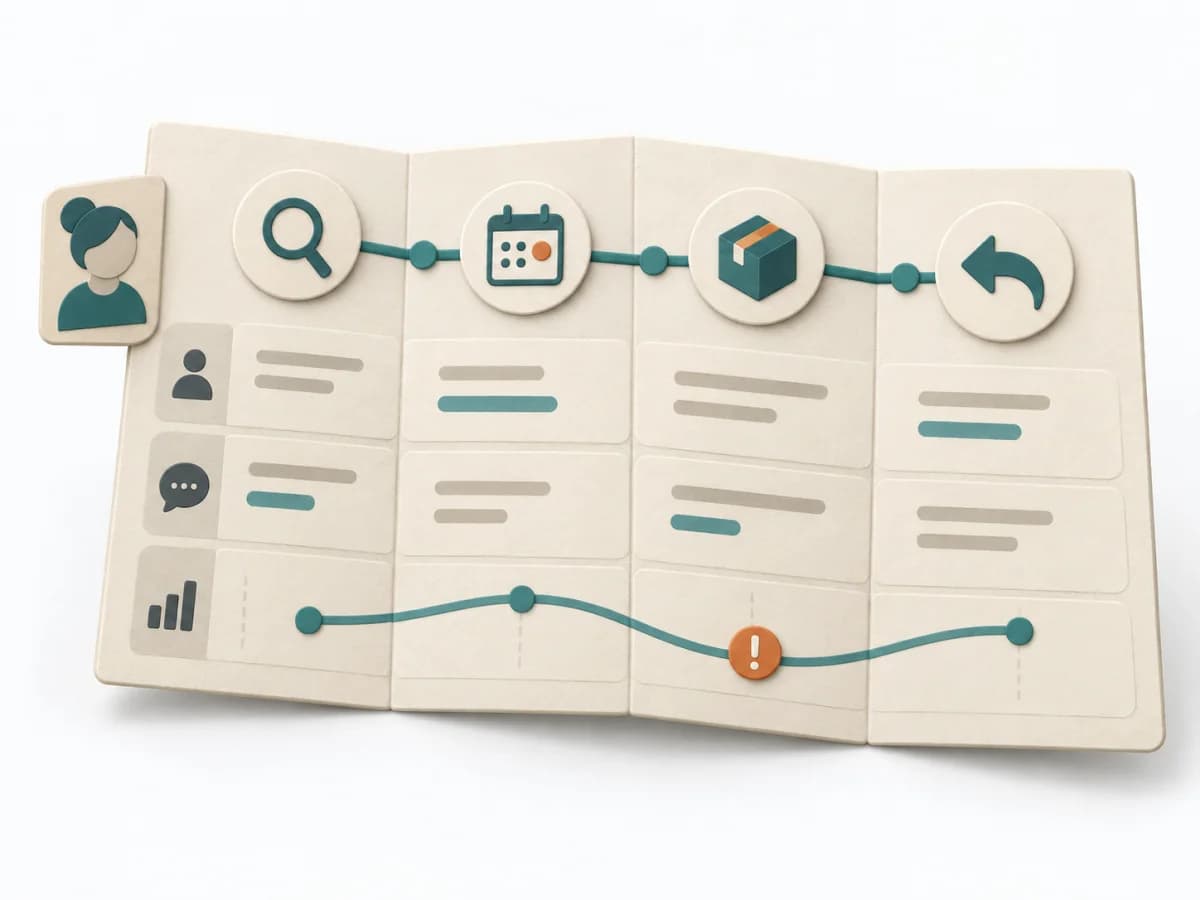
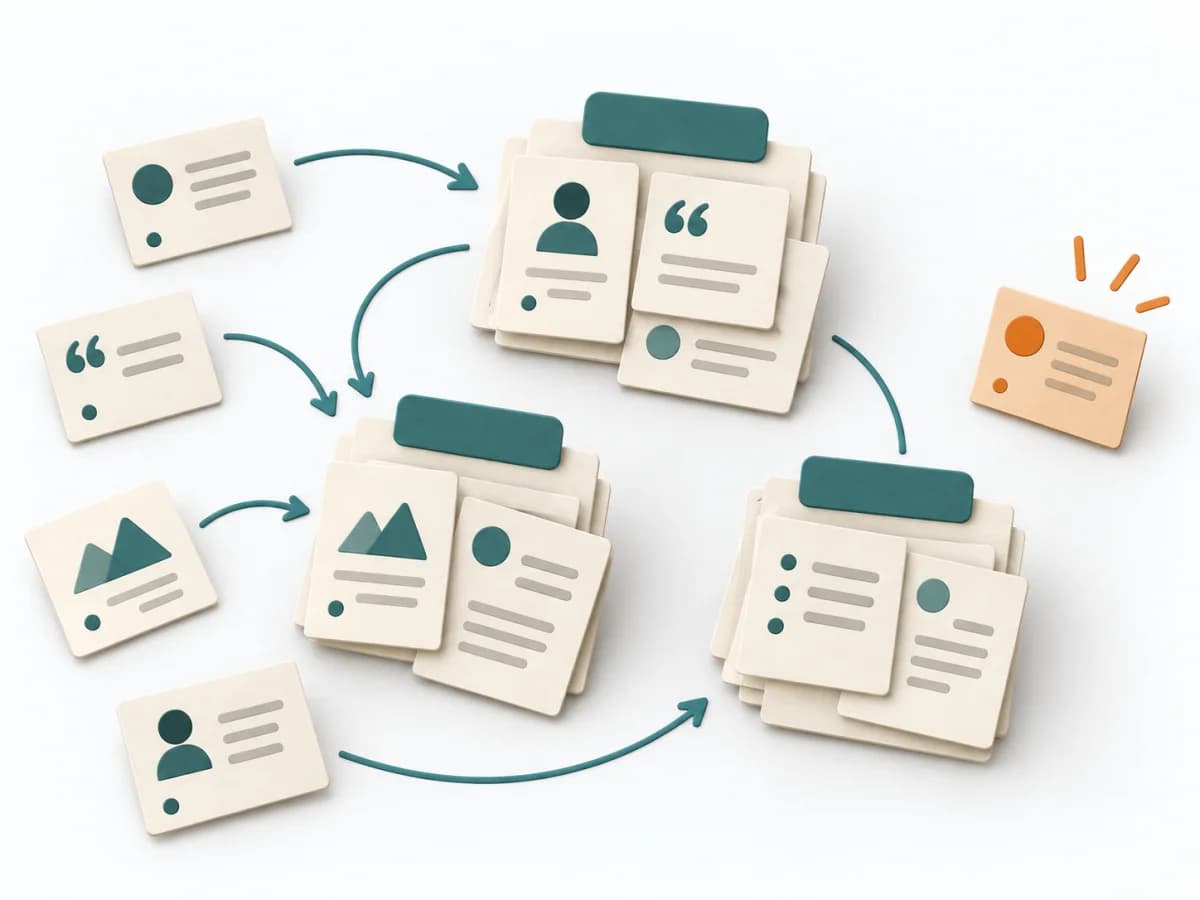
The plan distributes preparation, review, and outcome work across an asynchronous work run. Your inputs flow directly into the session brief and work artifact.
Async work run with 5-20. The plan uses the existing method logic and the runsheet.
RunsheetUse the session for shared understanding. Contributions are collected visibly, assumptions are aligned, and open differences remain traceable in the artifact.
The session works directly toward Diary Entries. After the session, the artifact should be shareable, reviewable, or reusable.
- 1
Prepare brief
15-30 minPrepare the working question, input, target artifact, and review deadline for Diary Study. Link relevant data, sources, and existing artifacts.
OwnerSession brief - 2
Work asynchronously
24 to 72 hParticipants work through the method along the template. Focus: add contributions directly to the artifact, mark assumptions, and link evidence.
ParticipantsDiary Entries - 3
Consolidate review
20-30 minCluster comments, contradictions, and open questions. Sort unclear points into decisions, risks, or follow-ups.
FacilitatorReview notes - 4
Finalize artifact
15-30 minCreate the integrated version, set status, and schedule the next review or decision point.
OwnerLongitudinal Patterns - 5
Publish artifact
10 minCheck the artifact for completeness, define location, set version or status, and name review recipients.
OwnerDiary Entries
Session Brief
For invitations, boards, tickets, PR descriptions, or workshop notes.
session-brief.md
Session Brief: Diary Study
Goal
Artifact: Diary Entries
Working Question
What patterns, events, moods, or behavior changes become visible when participants document in a structured way over multiple days, information that a one-time interview cannot capture?
Context
Study purpose, duration (typically 1-3 weeks), effort per day (10-20 min), privacy, incentive amount, entry format; onboarding call with tool walkthrough.
Setup
- Format: Async work run
- Duration: 24 to 72 h
- Mode: asynchronous
- Participants: A lead researcher who designs the study, recruits participants, reviews entries, and asks follow-up questions; 5-15 participants willing to contribute daily; one study coordinator who manages reminders and incentive payouts.
- Owner: A lead researcher who designs the study, recruits participants, reviews entries, and asks follow-up questions
- Participation mode: Team round, shared work and alignment
- Outcome logic: Finish artifact
Participation Logic
Use the session for shared understanding. Contributions are collected visibly, assumptions are aligned, and open differences remain traceable in the artifact.
Outcome Logic
The session works directly toward Diary Entries. After the session, the artifact should be shareable, reviewable, or reusable.
Input
Diary template (digital, such as Indeemo, Dscout, or analog paper diary); event- or time-based prompt list; media capability (photo, video, voice); onboarding materials for participants; reminder mechanism (app push or calendar).
Preparation
Prepare diary tool or template, define prompts per day or event. Recruit participants and confirm consent. Run a 3-day pilot with 1-2 people. Set reminder cadence and clarify the communication channel for questions.
Agenda
-
Prepare brief (15-30 min) Owner: Owner Action: Prepare the working question, input, target artifact, and review deadline for Diary Study. Link relevant data, sources, and existing artifacts. Output: Session brief
-
Work asynchronously (24 to 72 h) Owner: Participants Action: Participants work through the method along the template. Focus: add contributions directly to the artifact, mark assumptions, and link evidence. Output: Diary Entries
-
Consolidate review (20-30 min) Owner: Facilitator Action: Cluster comments, contradictions, and open questions. Sort unclear points into decisions, risks, or follow-ups. Output: Review notes
-
Finalize artifact (15-30 min) Owner: Owner Action: Create the integrated version, set status, and schedule the next review or decision point. Output: Longitudinal Patterns
-
Publish artifact (10 min) Owner: Owner Action: Check the artifact for completeness, define location, set version or status, and name review recipients. Output: Diary Entries
Closeout
- Update result artifact: Diary Entries
- Define location, version, and review recipients.
- Define owner, next step, and review date.
Work artifact
Pre-filled starting point based on the matching template.
work-artifact.md
Diary Entries: Diary Study
Working Question
What patterns, events, moods, or behavior changes become visible when participants document in a structured way over multiple days, information that a one-time interview cannot capture?
Context
Study purpose, duration (typically 1-3 weeks), effort per day (10-20 min), privacy, incentive amount, entry format; onboarding call with tool walkthrough.
Participants
- Owner: A lead researcher who designs the study, recruits participants, reviews entries, and asks follow-up questions
- Participants: A lead researcher who designs the study, recruits participants, reviews entries, and asks follow-up questions; 5-15 participants willing to contribute daily; one study coordinator who manages reminders and incentive payouts.
Input
Diary template (digital, such as Indeemo, Dscout, or analog paper diary); event- or time-based prompt list; media capability (photo, video, voice); onboarding materials for participants; reminder mechanism (app push or calendar).
Template
Diary Study Working Template
Goal
Longitudinal method in which participants document experiences, tasks, or usage moments over time.
Context
When and for what do we use this method?
Input
Which data, observations, decisions, or materials are available?
Execution
Short notes along the runsheet.
Output artifacts
- Diary Entries:
- Longitudinal Patterns:
- Experience Timeline:
Assumptions and open questions
- ...
Decision / Next step
Owner, date, and success signal.
Completion Check
- Diary Entries is complete enough for review:
- Location:
- Version / status:
- Review by:
- Next step:
Next Step
- Review result
- Mark open questions
- Schedule review or decision
Diary Study Working Template
View templateCompact working template for Diary Study with context, input, output artifacts, and next step.markdown
diary-study-working-template.md
Compact working template for Diary Study with context, input, output artifacts, and next step.
Diary Study Working Template
Goal
Longitudinal method in which participants document experiences, tasks, or usage moments over time.
Context
When and for what do we use this method?
Input
Which data, observations, decisions, or materials are available?
Execution
Short notes along the runsheet.
Output artifacts
- Diary Entries:
- Longitudinal Patterns:
- Experience Timeline:
Assumptions and open questions
- ...
Decision / Next step
Owner, date, and success signal.
- Working question, owner, and target artifact are visible.
- The result fits Diary Entries.
- Per study, create a separate folder with date and research question in the header. Use participant pseudonyms; store identifiable data separately. Archive raw data; link synthesis to source quotes.
- Open questions are noted as follow-ups.
- The next review or decision point is scheduled.