View methods side by side.
Choose up to four methods. Add them using the search and share the comparison by copying its link.
| Criterion |  Agile WSJF | 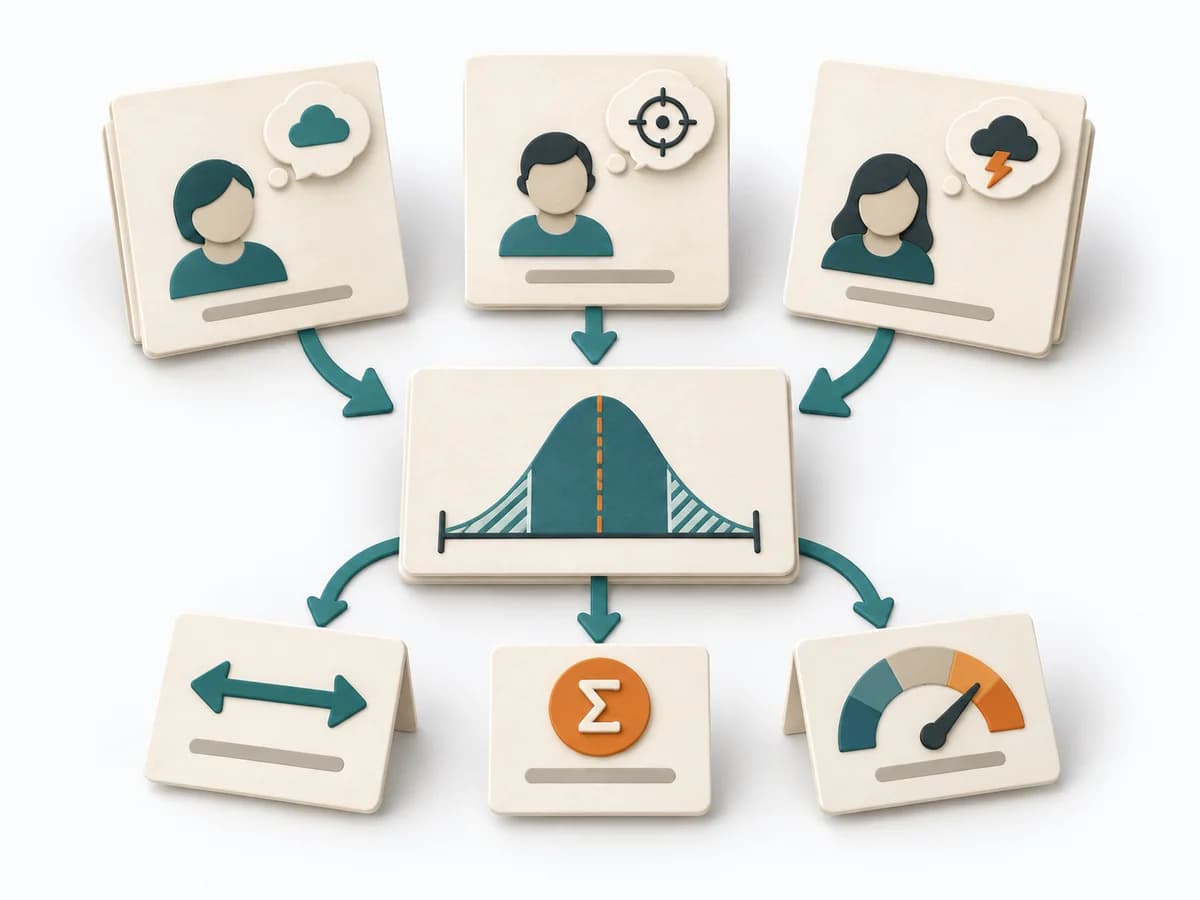 Decision Making Three-Point Estimation |  Product Strategy RICE Scoring | 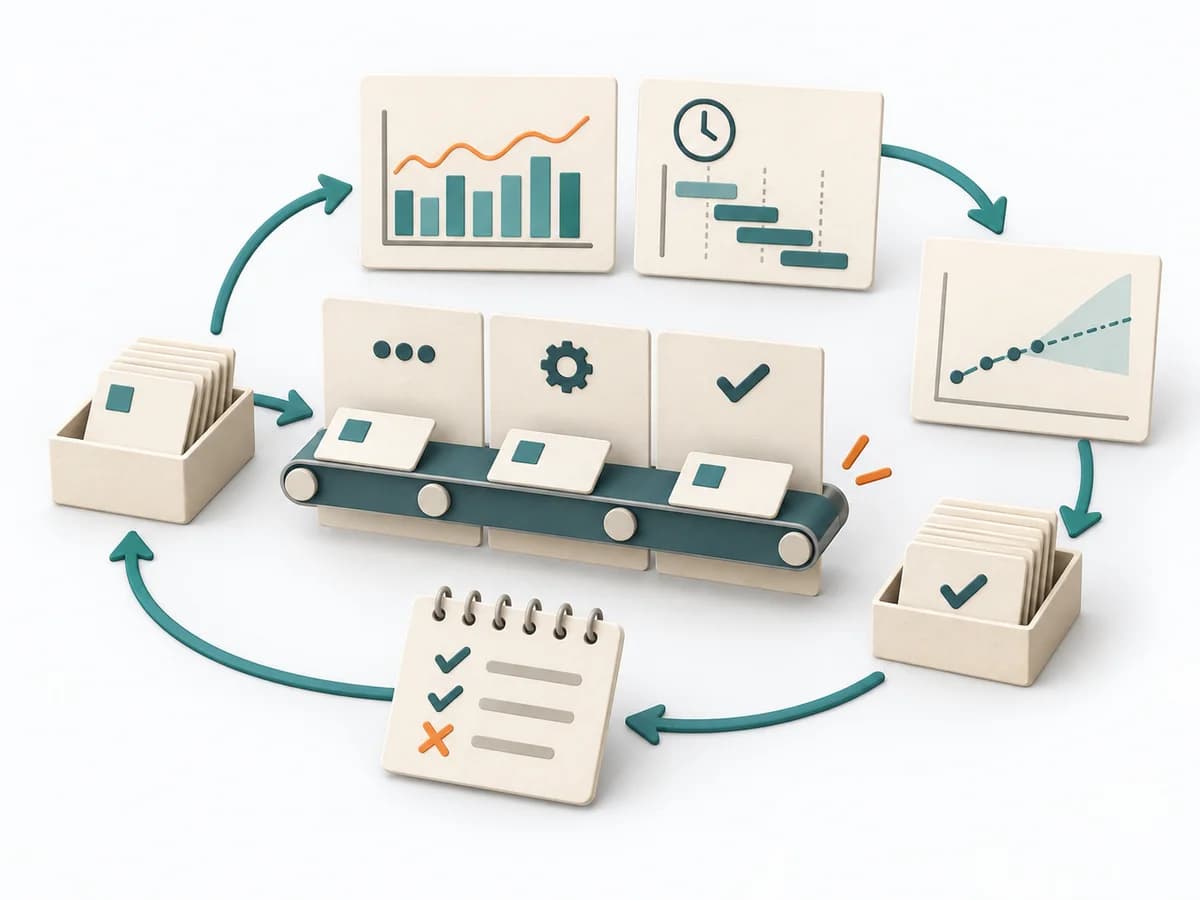 Agile NoEstimates |
|---|---|---|---|---|
Purposedifferent | When many tasks compete for the same capacity, it orders work by economic impact. It makes time lost, benefit, and effort comparable together. | A single estimate for effort, time, or risk often looks too smooth for the real uncertainty behind it. It separates options, evaluation criteria, and open risks. The result is captured as a Three-Point Estimate, Risk Range, and Assumption Notes. | When many initiatives compete for the same resources, it brings reach, impact, confidence, and effort into one shared ranking. It makes prioritization economically connectable. | When estimating slows a team down more than it helps, it shifts the focus to flow, small slices, and real lead time. It sorts work by value, risk, and delivery ability. The result is captured as Throughput Data, Flow Forecast, and Slicing Rules. |
Complexitydifferent | High | Medium | Medium | Medium |
Timedifferent | 45-90 min | 10-30 min je Item | 60-90 min | laufend |
Participantsdifferent | 3-10 | 1-8 | 2-10 | 2-12 |
Formatdifferent | Workshop | Workshop + async | Workshop + async | Workshop + async |
Outputdifferent | Ranked Backlog, Cost-of-Delay Assumptions | Three-Point Estimate, Risk Range, Assumption Notes | RICE Scores, Ranked List, Assumption Log | Throughput Data, Flow Forecast, Slicing Rules |
Tagsno overlap | LeanEconomicsSequencePrioritization | EstimationUncertaintyForecasting | PrioritizationScoringRoadmapTradeoffs | EstimationForecastingFlow |